
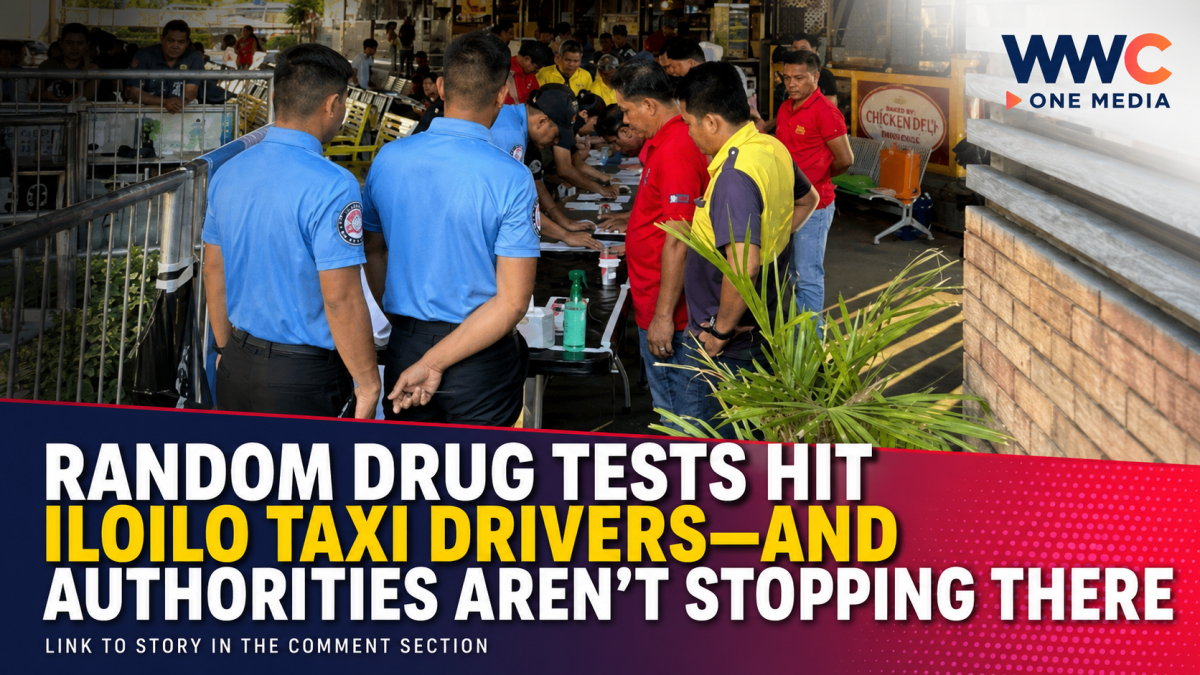
ILOILO CITY, Philippines — Authorities have intensified efforts to keep public transportation drug-free as the Philippine Drug Enforcement Agency (PDEA) and Land Transportation Office (LTO) conducted random drug testing among taxi drivers in Iloilo City.
The latest operation targeted drivers of Jhelord Taxi, which operates 154 taxi units and has about 160 drivers.
Company management coordinated with PDEA and LTO for the surprise screening, with approximately 50 to 60 drivers randomly selected through a raffle.
Jhelord president Jim Biñas said the company requested the random testing because individually monitoring all of its drivers would be difficult.
The operation used rapid urine screening, but authorities stressed an important safeguard: a preliminary positive result does not automatically mean that a driver is confirmed to have used illegal drugs.
Any preliminary positive result must undergo confirmatory testing at a PDEA drug laboratory before a final determination is made.
Part of stricter nationwide transport rules
The Iloilo testing is also part of a broader national push to strengthen drug and alcohol testing among public utility vehicle drivers.
In May 2025, the Department of Transportation issued Department Order No. 2025-008, requiring PUV drivers to undergo drug screening every six months, in addition to periodic random testing and testing when there is reasonable suspicion of drug use.
The rules cover public transport operators and drivers, with operators responsible for the cost of the required testing. Drivers are also required to carry their drug and alcohol test results while operating their vehicles.
The policy came amid heightened concern over road safety following several deadly transportation incidents in 2025.
Iloilo has already seen positive initial screenings
The latest random testing comes months after authorities conducted surprise drug-testing operations involving transport workers across Western Visayas.
During Oplan Harabas in March 2026, PDEA-6 and partner agencies subjected hundreds of drivers and other transport personnel to surprise testing at terminals and transport hubs in Iloilo and Guimaras.
On March 31, PDEA reported that two taxi drivers initially tested positive during the second day of the operation. Authorities said the results still needed to undergo confirmatory testing.
Other local reports also documented positive initial screenings involving taxi drivers during the broader Western Visayas crackdown. Panay News reported that eight public utility vehicle drivers—including two taxi drivers—tested positive during a March 30–31 operation.
The pattern is not entirely new. In an earlier 2025 Oplan Harabas operation in Iloilo City, a taxi driver and a tricycle driver initially tested positive at a terminal in Jaro, while two modernized jeepney drivers tested positive at Mohon Terminal. LTO officials said drivers with confirmed positive results could face serious consequences, including possible license revocation.
Why random testing matters
Authorities say surprise testing is designed to make it difficult for drivers who may be using illegal drugs to anticipate inspections.
The LTO has previously described random testing as part of its broader strategy to promote road safety and maintain a drug-free transport sector.
The legal framework also provides for random terminal inspections and quick random drug tests of public utility drivers under the Anti-Drunk and Drugged Driving Act of 2013.
For passengers, the objective is straightforward: the person behind the wheel must be capable of safely carrying people on public roads.
More checks could follow
For Iloilo taxi operators, the latest operation sends a clear message that drug testing is becoming a continuing part of public transport safety—not merely a one-time enforcement campaign.
Jhelord Taxi management said it plans to continue coordinating with PDEA and LTO to strengthen its drug-testing and safety protocols.
And with mandatory six-month screening and periodic random testing already part of the national framework, taxi drivers and operators can expect continued scrutiny.
For now, authorities have not publicly identified any confirmed positive result from the latest Jhelord Taxi testing. Any preliminary positive result would still have to undergo confirmatory laboratory testing before a driver can be considered confirmed positive.
The bigger question now: will more surprise drug tests be conducted across Iloilo’s public transport sector—and what will authorities find when they do?




Leave a Reply