
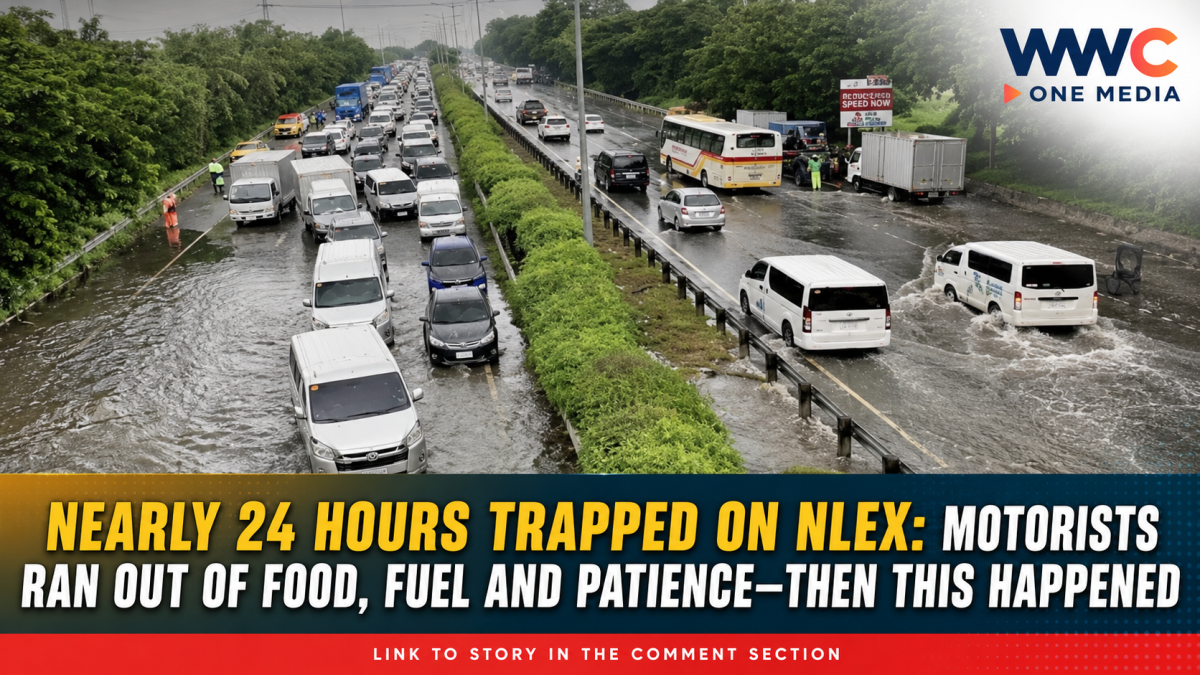
SAN SIMON, PAMPANGA — What should have been an ordinary drive through Central Luzon turned into an exhausting ordeal for hundreds of motorists after severe flooding brought traffic along the North Luzon Expressway (NLEX) to a near standstill.
Some drivers were trapped for almost 24 hours, with reports of motorists running short of food, water, fuel and money as they waited for traffic to move through the flooded San Simon area.
The crisis was concentrated around the Tulaoc portion and San Simon Interchange, where floodwaters rose amid days of heavy southwest monsoon, or Habagat, rains and the overflowing Pampanga River.
“Gutom, puyat, pagod”
Among those caught in the gridlock was truck driver Edgardo Viray, who told GMA News that he was running low on both diesel and money after spending hours trapped on the expressway.
He had only a few coins left after buying six pieces of pandesal for himself and his assistant.
“Gutom, puyat, pagod… ’yung bang halos bumigay na nga ako.”
Viray also said his family was becoming increasingly worried about him.
The GMA News team eventually provided him with food, while his companion was later able to return with diesel, allowing them to continue their journey.
His experience highlighted the human cost behind what initially appeared to be another traffic nightmare: motorists were not simply losing hours on the road—they were struggling to meet basic needs while waiting for the flood situation to improve.
From a short trip to an all-day ordeal
The congestion severely disrupted normal travel times.
A journey between San Fernando and San Simon, normally measured in minutes under ordinary conditions, stretched to roughly two hours in the latest GMA report. Other motorists reported being stuck for considerably longer.
Earlier reports documented traffic queues extending for more than seven kilometers northbound toward Candaba, while southbound congestion reached roughly five to six kilometers.
ABS-CBN also reported that a trip that normally takes around two hours to reach San Simon had stretched to approximately seven hours on Monday, with some motorists eventually being turned back because of the flooding.
For some travelers, the consequences went beyond inconvenience.
Workers risked missing shifts, students faced missed classes and cargo deliveries were delayed. One truck carrying chickens reportedly experienced losses after some of the animals died during the prolonged journey in the intense heat.
Why did NLEX flood so badly?
Authorities and officials have pointed to the extraordinary volume of water brought by the Habagat and the inability of surrounding waterways to drain the floodwaters quickly enough.
Public Works Secretary Vince Dizon said the sheer volume of water overwhelmed the area, while Pampanga officials described a backflow problem involving downstream areas where water could not readily discharge toward Manila Bay.
The problem is not entirely new.
A similar flooding incident affected the NLEX area in 2023, prompting discussions about raising portions of the expressway and improving flood protection. Senator Joel Villanueva later pointed out that recurring flooding in the San Simon area demonstrates the need for a more permanent solution rather than relying solely on emergency pumping.
NLEX rolls out flood-control measures
Metro Pacific Tollways Corporation (MPTC), which operates NLEX, apologized to motorists affected by the prolonged disruption and said emergency and flood-mitigation operations were underway.
Measures included intensified pumping, siphoning equipment and temporary flood barriers. MPTC also said approximately 300 meters of flood barriers would be installed along affected portions of the northbound and southbound carriageways, while a counterflow would be opened for emergency and response equipment.
The company has also identified a longer-term measure: raising the northbound and southbound pavement in the Tulaoc section after the elevation of the Tulaoc Bridge, subject to engineering requirements.
Motorists urged to avoid the area
Authorities have repeatedly advised motorists to avoid unnecessary travel through the affected NLEX sections while flooding persists.
On Tuesday, Malacañang itself urged motorists to stay away from the flooded portion rather than enter an area where they could become stranded for hours.
Alternative routes have included exits toward Maharlika Highway and the Central Luzon Link Expressway (CLLEX), depending on vehicle class and direction of travel. NLEX advisories have also reported temporary closures and restrictions around Santa Rita, Pulilan, Tulaoc and the San Simon Interchange.
Motorists who absolutely need to travel through affected areas have been advised to prepare for prolonged delays and carry sufficient food and drinking water.
Toll refunds now part of the debate
The ordeal has also triggered calls for relief for motorists who spent hours trapped after paying toll fees.
Senator Joel Villanueva urged NLEX management to consider waiving or refunding toll fees for motorists severely affected by the prolonged disruption. He also questioned whether adequate food, water, portable toilets and medical assistance were available to those stranded.
As of the latest reports, however, there was no confirmed blanket toll waiver.
NLEX management previously said it was discussing the issue but had not announced a decision.
Malacañang, meanwhile, said the immediate priority was assisting stranded motorists rather than imposing sanctions on NLEX management.
A traffic jam that became a warning
The NLEX crisis has exposed a problem much larger than a single traffic jam.
NLEX is a major economic corridor connecting Metro Manila with Central and Northern Luzon. When a critical section becomes impassable, the effects quickly spread to commuters, workers, buses, agricultural products, cargo shipments and businesses.
For motorists who spent nearly an entire day inside their vehicles, however, the issue was much more immediate: How long could they continue without food, fuel, sleep and a clear way out?
And as floodwaters continue to challenge the San Simon corridor, the bigger question now facing authorities is no longer simply how to clear this traffic jam—but how to prevent the next one from becoming another 24-hour ordeal.

Leave a Reply