
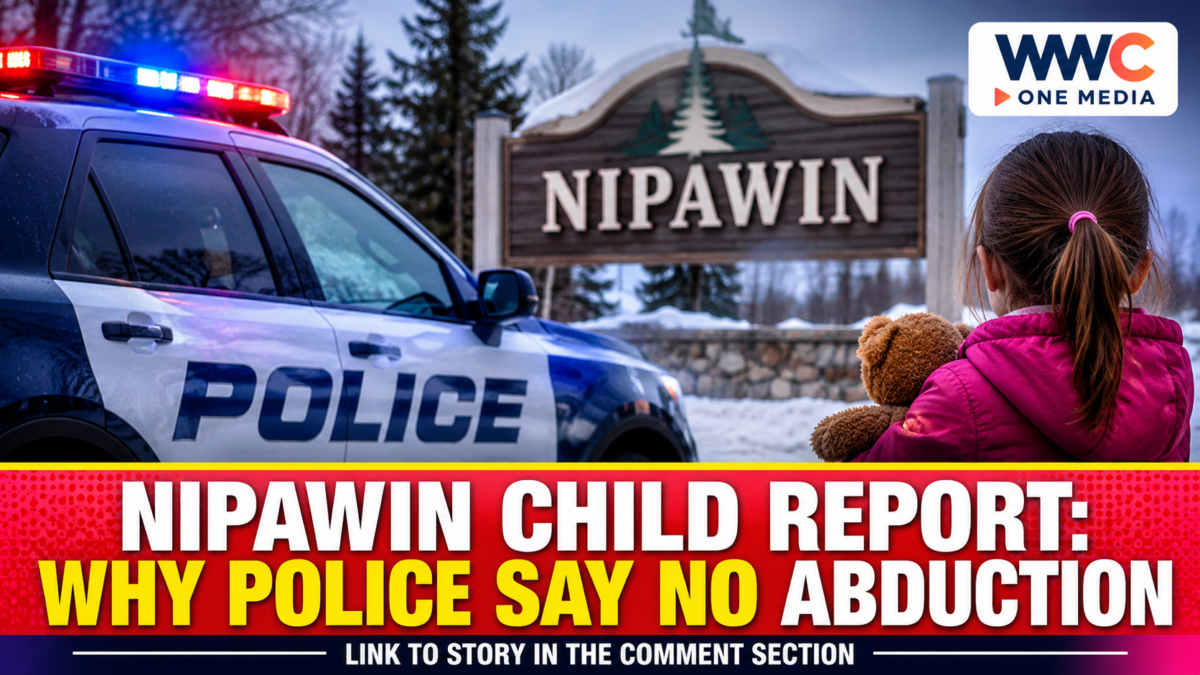
A child was found safe in Nipawin, Saskatchewan, on November 21, 2026, after police received a report that a vehicle had been stolen with the child inside. A 32-year-old woman from Cumberland House was subsequently charged with public mischief, while investigators said their inquiry found that neither a vehicle theft nor an abduction had occurred.
The case raises an important distinction between an emergency report and what investigators establish after checking the information. It also highlights why authorities must act quickly when a child may be at risk, while the public must avoid treating an initial allegation as a proven crime.
What the Nipawin child report set in motion
The reported incident began at approximately 3:05 p.m. on November 21, when Nipawin RCMP received information about a vehicle allegedly stolen with a child inside.
The call was treated as a priority. Officers from multiple RCMP detachments and units, along with Saskatchewan’s Protection and Response Team, reportedly responded.
Police also began the process of issuing an Amber Alert. The reported circumstances met the criteria for proceeding with the alert process, although the vehicle and child were located before an alert was issued publicly.
Less than an hour after the initial report, officers located the vehicle with the child inside. The child was confirmed safe.
That outcome was the most important immediate development: the child had been located, and the emergency search did not continue on the basis of an outstanding abduction report.
Why the investigation changed the initial account
The subsequent investigation changed the understanding of the incident.
The RCMP account, as reproduced in public reporting, said investigators determined that the initial information provided to police was misleading. Police concluded that neither a theft nor an abduction had occurred.
That distinction matters. An initial emergency call is information that authorities must assess; it is not, by itself, proof that the event described actually happened.
Police responses to possible child abductions must prioritize safety because delays can have serious consequences. Investigators must then establish what happened through follow-up inquiries and evidence.
In this case, the reported investigation led to a public mischief charge against a 32-year-old woman from Cumberland House.
A charge is an allegation dealt with through the justice system. It is not a conviction, and the accused must be treated as having the right to answer the allegation in court.
What a public mischief charge means
Public mischief is a criminal offence under Canada’s Criminal Code. In general terms, the offence concerns conduct that causes police to investigate an event or allegation that the person knows is false, subject to the specific elements that must be established under the law.
The charge reported in this case should not be treated as proof of guilt. The prosecution would need to establish the elements of the offence in court, and the accused has the right to respond to the case.
The distinction is especially important in a case involving a child. Public discussion should focus on confirmed developments and the legal process, rather than speculation about the accused, the child or the circumstances that led to the original call.
Police have reportedly declined to identify the accused or disclose further details about the initial call, citing the privacy of those involved, including the child. That restraint should be respected. Publishing names, photographs or identifying family details is not necessary to explain the public-interest issues in the case.
Why emergency alerts require careful handling
An Amber Alert is a public-safety tool designed to help locate a child believed to have been abducted and to face serious danger. It is not intended to replace police investigation or to serve as a general notice for every missing-child report.
The RCMP’s published guidance describes criteria that must be considered before an alert is issued. These include a reasonable belief that an abduction has occurred, a belief that the child faces imminent danger of serious bodily injury or death, sufficient descriptive information to help locate the child, and the requirement that the victim be under 18.
The reported Nipawin response illustrates why police must assess information quickly. Authorities reportedly began the alert process because the initial circumstances met the criteria for proceeding. The vehicle and child were then located before a public alert was issued.
For readers, the lesson is not that emergency alerts should be treated casually. It is that a rapid police response and a later finding that the original report was misleading can both be true.
WWC has previously examined the importance of distinguishing a police-confirmed child recovery from unanswered questions in its report on the Ameenpur child rescue and what authorities confirmed. The incidents are unrelated, but the reporting principle is the same: a safe recovery does not automatically establish every detail surrounding the original report.
Protecting children and avoiding public speculation
When a police investigation involves a minor, the child’s privacy should remain central even after the immediate emergency ends.
That means avoiding the circulation of identifying photographs, family details, addresses or unverified accounts of what happened. Such information can expose a child to unnecessary attention without helping the public understand the police response.
It is equally important not to turn a criminal charge into a declaration of guilt. The legal process exists to test allegations against evidence. Public commentary should preserve that distinction.
WWC has addressed similar questions in its coverage of how police-confirmed information should be handled in a missing-person case. Its separate report on a student found safe after a police search in Malaysia also illustrates why a child’s safe return does not justify publishing unnecessary personal information.
These are different cases and jurisdictions. They should not be connected or treated as evidence of a wider pattern. Their relevance is the shared responsibility to report only what authorities have confirmed and to protect minors from avoidable exposure.
What happens next
The reported accused is scheduled to appear in court in Nipawin on January 6, 2027.
That appearance will be an opportunity for the case to move through the court process. It should not be described as a finding of guilt. Any later update should distinguish between the filing of a charge, court proceedings and a final judicial outcome.
The police account does not publicly explain the full circumstances behind the initial call. Investigators have reportedly withheld additional details to protect the privacy of those involved, including the child.
Until more official information is released, the responsible account is limited: a child was found safe, police determined that no theft or abduction had occurred, and a woman was charged with public mischief. The remaining questions should be left to the investigation and the courts.
Frequently asked questions
Where did the incident happen?
The incident happened in Nipawin, Saskatchewan, Canada. It was not a Saskatoon incident.
Was the child found safe?
Yes. The vehicle was located with the child inside less than an hour after police received the report, and the child was confirmed safe.
Was an Amber Alert issued?
Police reportedly began the process of issuing an Amber Alert, but the vehicle and child were located before a public alert was issued.
Was anyone charged?
A 32-year-old woman from Cumberland House was reportedly charged with public mischief.
Has the accused been found guilty?
No conviction has been established in the information available for this report. The reported court appearance is scheduled for January 6, 2027, in Nipawin.










