
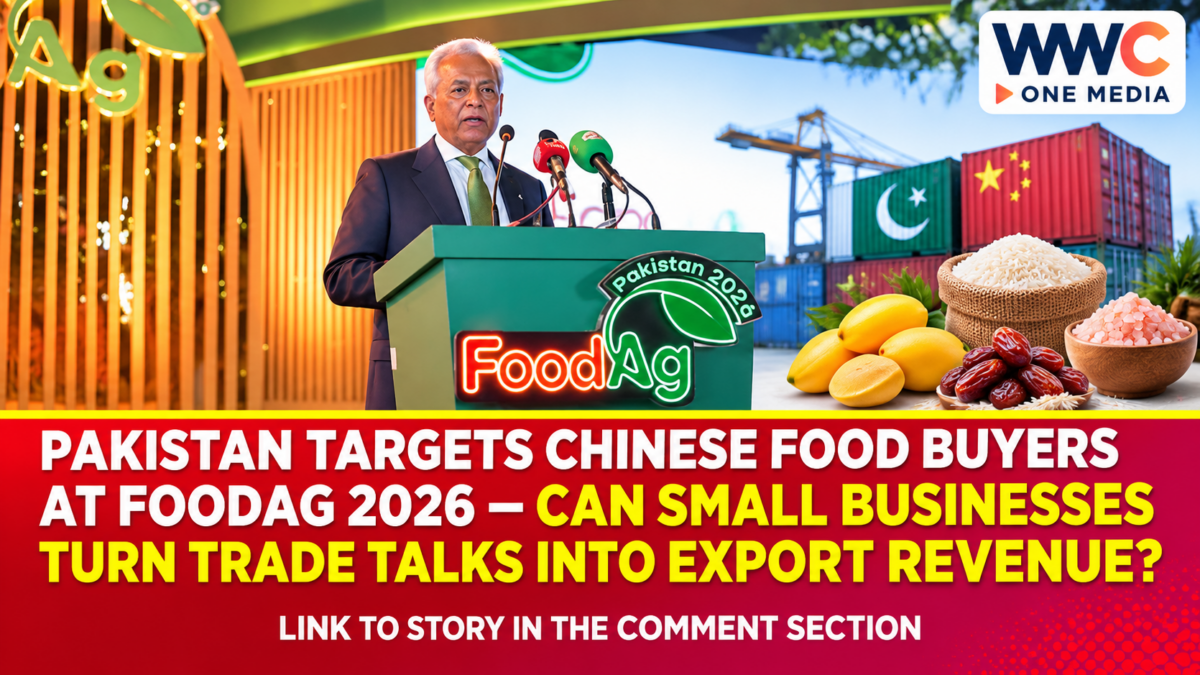
KARACHI, Pakistan — Pakistan is intensifying efforts to expand its international agricultural trade through FoodAg 2026, positioning small and medium-sized enterprises (SMEs) to explore overseas commercial opportunities, including access to the Chinese market.
The fourth edition of the international food and agriculture exhibition runs from November 23 to 26 at the Expo Centre Karachi, bringing together agricultural producers, food processors, exporters and prospective international buyers.
The initiative comes as Pakistan records double-digit growth in worldwide merchandise exports during the first four months of its current fiscal year.
However, the country’s long-term export ambitions will depend on whether commercial discussions develop into enforceable purchase agreements, completed shipments and sustainable business relationships.
For smaller agricultural businesses, attracting international buyers is only the beginning.
Pakistan China Agricultural Trade Opens Opportunities for SMEs
Organised by the Trade Development Authority of Pakistan (TDAP), FoodAg 2026 provides a platform for commercial networking, international sourcing and investment discussions across the agricultural and food-processing industries.
The exhibition’s official programme anticipates participation from more than 500 exhibitors and over 850 international buyers representing more than 80 countries.
These figures represent the organiser’s expectations rather than independently verified final attendance.
The exhibition covers 20 commercial sectors, including dried fruits, cereals, rice, dairy products, seafood, processed foods, spices, edible oils and fresh agricultural produce.
For smaller businesses, participating in international trade exhibitions can provide opportunities to introduce products directly to prospective distributors and commercial buyers.
Such opportunities can be particularly valuable for companies that lack established overseas distribution networks.
China’s importance as a prospective market is also reflected in broader international efforts to access Chinese consumers, as examined in China’s record-breaking international import exhibition and the challenges facing foreign exporters.
Nevertheless, participation in an exhibition does not guarantee successful market entry or future sales.
Pakistan’s Merchandise Exports Increase by 10.16%
The agricultural export initiative comes amid improving national merchandise export figures.
Pakistan generated US$11.507 billion in worldwide merchandise exports between July and October 2026, compared with US$10.446 billion during the corresponding period last year.
The provisional figures represent year-on-year growth of 10.16%.
October 2026 merchandise exports reached US$2.995 billion, increasing 5.16% from October 2025.
| Export indicator | Export value | Annual growth |
|---|---|---|
| July–October 2026 | US$11.507 billion | 10.16% |
| July–October 2025 | US$10.446 billion | — |
| October 2026 | US$2.995 billion | 5.16% |
| October 2025 | US$2.848 billion | — |
These figures cover Pakistan’s merchandise exports to all international markets and include agricultural and non-agricultural products.
They should not be interpreted as agricultural exports exclusively destined for China.
Pakistan’s industrial exporters are pursuing similar growth opportunities, including the textile industry’s ambition to generate US$10 billion in additional exports.
Diversifying export opportunities across industries could help businesses reduce their dependence on individual products and destination markets.
The commercial challenge will be maintaining competitive prices while improving product quality and production reliability.
Food Exports Show Encouraging Growth
Pakistan’s latest trade statistics also reveal improvements in selected food-related export categories.
Between July and October 2026, exports classified as rice other than the separately classified categories increased by 24.81% in Pakistani rupee terms.
Meanwhile, the value of fish and fish preparations exported during the same period increased by 27.63%.
These figures illustrate opportunities within selected agricultural and food-related industries, although they do not establish that every agricultural export category is experiencing comparable growth.
They also represent monetary values rather than physical shipment volumes.
For agricultural producers, the ability to generate additional revenue will depend on factors including harvest conditions, product specifications, transportation expenses and international demand.
Food-processing businesses may also seek opportunities to capture additional commercial value by selling packaged or finished products rather than relying exclusively on raw agricultural commodities.
Such strategies require investment in production capabilities, quality assurance and reliable distribution arrangements.
SMEDA and Alibaba Expand Digital Export Opportunities
Pakistan’s efforts to connect smaller enterprises with international buyers extend beyond physical trade exhibitions.
On May 24, 2026, the Small and Medium Enterprises Development Authority (SMEDA) entered into a memorandum of understanding with Alibaba.com during a Pakistani government delegation’s visit to Hangzhou, China.
The collaboration focuses on supporting the digital transformation of Pakistani SMEs, improving their readiness for international trade and expanding access to global commercial markets.
The initiative includes digital training and artificial intelligence-powered trade solutions.
For agricultural exporters, digital business-to-business platforms could provide an additional mechanism for identifying prospective customers and maintaining commercial relationships after exhibitions conclude.
However, establishing an online commercial presence does not remove the need for appropriate certification, product quality controls or effective delivery arrangements.
The opportunity is to combine direct commercial networking with digital tools that help smaller enterprises communicate with prospective buyers more efficiently.
Pakistan is pursuing wider international business relationships through initiatives such as its expanding trade engagement with ASEAN economies.
Together, these efforts illustrate different approaches to improving access to international markets.
Why Trade MoUs Are Not the Same as Export Revenue
One of the most important distinctions in international trade reporting concerns the difference between commercial intentions and completed transactions.
A memorandum of understanding can establish a framework for cooperation between prospective business partners.
Its legal effect depends on the wording of the document, applicable law and the obligations accepted by the parties.
An announced agreement value should therefore not automatically be treated as recognised revenue or confirmed export earnings.
Before a prospective agricultural transaction produces commercial returns, businesses may need to agree on product specifications, quantities, pricing, delivery schedules and payment arrangements.
Food exports can also require compliance with importing countries’ applicable food safety, quarantine, labelling and certification requirements.
The financial implications can become particularly important for smaller companies that must purchase inventory, expand production or arrange transportation before receiving payment.
Consequently, exporters must assess the commercial viability of potential agreements rather than relying exclusively on their announced monetary values.
What Happens Next for Pakistan’s Agricultural Export Strategy?
The conclusion of FoodAg 2026 will provide an opportunity to evaluate the exhibition’s commercial outcomes.
For participating businesses, the more significant milestones will involve confirmed purchase orders, regulatory clearances, production commitments and completed shipments.
Future official disclosures could establish the value and scope of agreements facilitated during the exhibition, providing a clearer picture of potential export opportunities.
Pakistan’s existing export growth offers an encouraging economic backdrop.
Its collaboration with digital trade platforms could also help smaller enterprises explore markets that might previously have been difficult to reach.
Nevertheless, sustainable agricultural trade requires more than access to prospective customers.
Businesses must demonstrate that they can meet international buyers’ expectations consistently while maintaining commercially viable operations.
The opportunity for Pakistan’s smaller food producers is substantial, but their ultimate success will be measured through actual deliveries, reliable payments and repeat business.
Frequently Asked Questions
What is FoodAg 2026?
FoodAg 2026 is Pakistan’s fourth international food and agriculture exhibition, organised by the Trade Development Authority of Pakistan.
When and where is FoodAg 2026 being held?
The exhibition runs from November 23 to 26, 2026, at the Expo Centre Karachi in Pakistan.
What is SMEDA’s role in Pakistan’s export sector?
SMEDA supports the development of small and medium-sized businesses, including initiatives intended to improve export readiness and international market access.
How much did Pakistan export between July and October 2026?
Pakistan recorded provisional merchandise exports of US$11.507 billion, increasing 10.16% compared with the corresponding period in 2025.
Does signing a trade MoU guarantee export revenue?
No. The commercial and legal significance of an MoU depends on its terms. Actual export revenue requires qualifying commercial transactions rather than an announcement of intended cooperation alone.










