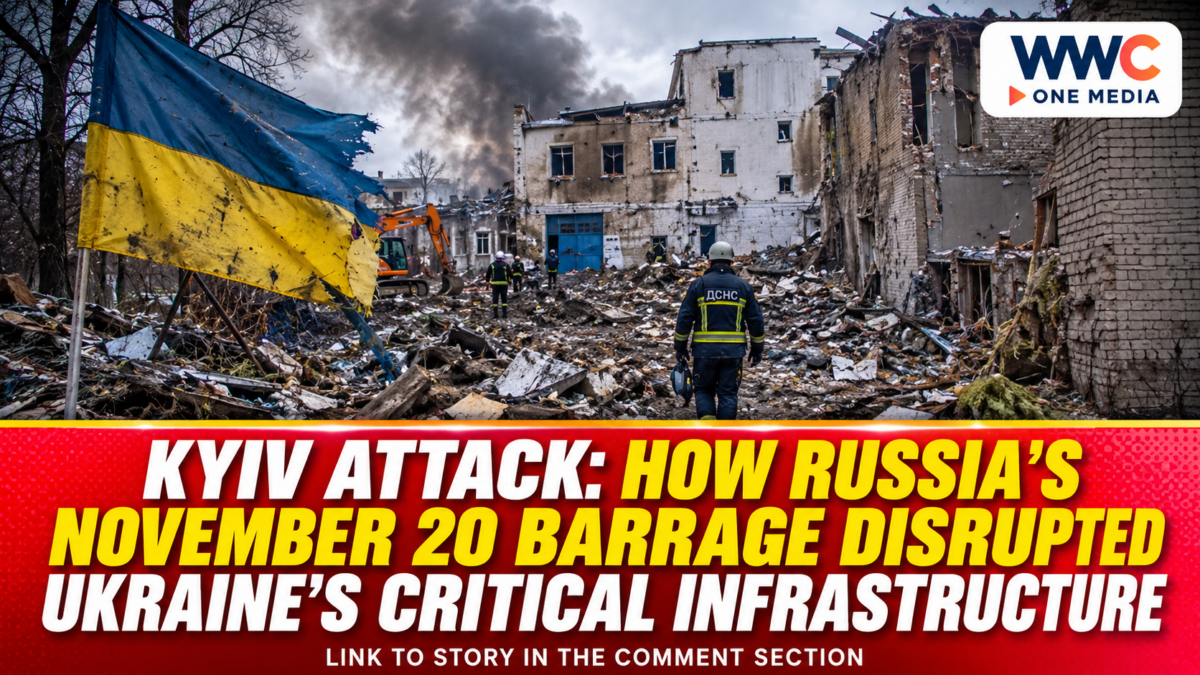
Russia launched a large combined aerial assault against Ukraine overnight on Nov. 19–20, striking locations across the country with drones, cruise missiles and other missile systems. Ukraine’s General Staff reported 404 attack drones and 84 cruise missiles, while authorities in Kyiv documented damage to bridges, electricity infrastructure and water services.
The scale of the operation matters beyond the number of weapons involved. The official records show how an aerial attack can place several essential urban systems under pressure at the same time, disrupting transport, utilities and emergency response in a capital city.
The Ukrainian military’s figures are its own assessment of the incoming attack and interception effort. They should not be treated as independently verified totals.
Kyiv attack figures show a complex weapons operation
In its operational update, Ukraine’s General Staff said the assault began at 6 p.m. on Nov. 19. The weapons identified included Iskander-M/S-400 ballistic missiles, Zircon anti-ship missiles, 84 air- and sea-launched cruise missiles and 404 attack drones.
The drone total included 123 jet-powered unmanned aircraft. The military also identified Gerbera drones and Parodiya-type decoys among the systems used. Telegram
By 10:30 a.m. on Nov. 20, Ukrainian air defences reported that they had shot down or suppressed 462 targets. The military breakdown included three ballistic missiles, 79 cruise missiles and 380 drones.
The same update recorded impacts at 23 locations and debris from intercepted targets at 10 locations. It also said the attack was continuing when the figures were released. Telegram
The distinction between weapons launched and targets intercepted is important. The 462 figure refers to the military’s reported interception or suppression total, not the number of weapons Russia launched.
Bridges became a major concern for Kyiv’s transport network
The attack affected more than buildings and military-related facilities. Kyiv’s official incident log documented damage to three major bridge crossings connecting different parts of the city.
The Podilsko-Voskresenskyi bridge crossing was closed to traffic travelling from the right bank to the left bank. Damage was also reported at the Darnytskyi Bridge, while the Southern Bridge operated under restrictions.
The city said the Southern Bridge was allowing only limited traffic from the left bank to the right bank, with vehicle weight and public transport limits in place. Officials also advised residents to avoid unnecessary private car journeys because movement between the two sides of the capital had become difficult. dnipr.kyivcity.gov.ua
The disruption illustrates why damage to a transport crossing can have effects beyond the structure itself. Bridges are essential links for commuters, public transport, deliveries and emergency services. Restrictions can force vehicles onto alternative routes and complicate movement across a city.
WWC previously examined how damage to Kyiv’s power grid and a major bridge can affect the capital’s daily operations during repeated attacks.
Water and electricity services also faced disruption
Kyiv’s incident log recorded damage to facilities operated by Kyivvodokanal, the city’s water utility. Early updates reported interruptions to water services and reduced pressure in parts of the capital.
By 9:30 a.m., the city administration said residents in the Holosiivskyi, Sviatoshynskyi, Solomianskyi and Shevchenkivskyi districts were experiencing reduced water pressure because of damage to a water utility facility. Some buildings could temporarily lose water supply.
The utility’s specialists were working to stabilise pressure and restore services, the city said. dnipr.kyivcity.gov.ua
Electricity interruptions were also recorded. An earlier city update said some residents in the Holosiivskyi, Darnytskyi, Dniprovskyi, Pecherskyi and Solomianskyi districts had lost power. Emergency outages were introduced in other districts because of equipment damage and pressure on the network.
These disruptions show why energy and water infrastructure are closely connected. Electricity is needed to operate pumps, treatment facilities, communications equipment and other services that keep a city functioning.
For residents, the impact of an attack may therefore continue after the immediate danger has passed. Repairs, inspections and the restoration of utilities can take time even when emergency crews have secured the affected locations.
Early casualty figures were provisional
The Kyiv administration’s incident log initially recorded three deaths and approximately 15 injured people at 7:28 a.m. on Nov. 20. The early update said the people killed were believed to be employees of Kyivvodokanal, although the information was described as preliminary.
A later entry said seven injured people had been taken to hospitals, while medical teams were also assisting other affected residents at the scene. dnipr.kyivcity.gov.ua
Casualty figures can change as emergency responders reach damaged sites, identify victims and confirm the condition of injured people. For that reason, an early incident update should not be presented as the final toll.
The same caution applies to infrastructure damage. The city administration said specialists would be able to assess the condition of affected bridge structures after the air alert ended.
The attack also comes amid a wider pattern of strikes affecting infrastructure during the Russia-Ukraine war. WWC has previously reported on an attack on a Ukrainian humanitarian aid centre and on drone-related damage at Russia’s Ust-Luga export hub. Those are separate incidents, but they demonstrate how infrastructure has remained a central part of the conflict’s wider impact.
Why the infrastructure damage matters
The official updates point to three immediate pressure points for Kyiv: transport access, electricity and water supply. Each system supports the others, meaning a disruption in one area can complicate recovery in another.
Bridge restrictions can slow the movement of residents and emergency personnel. Electricity interruptions can affect water distribution and other municipal services. Damage to utility facilities can also require technical inspections before normal operations resume.
This does not establish the full strategic purpose of every strike. It does, however, show the practical consequences documented by Ukrainian authorities: damage to essential facilities and interruptions affecting civilian life.
For cities repeatedly exposed to aerial attacks, the ability to maintain backup systems, repair damaged equipment and redirect traffic becomes an important part of public resilience.
What happens next
The next key developments are the results of infrastructure inspections, the restoration of water pressure and electricity, and any updated casualty information released by Ukrainian authorities.
The General Staff’s 10:30 a.m. report was an interim operational update and said the attack was still ongoing at that time. The military’s figures should therefore be understood within that reporting window rather than treated as a final assessment of the entire operation.
Kyiv’s city administration also indicated that specialists would assess damaged bridge structures after the air alert. Further official updates are needed to establish the full extent of the damage and the timeline for restoring normal services.
Frequently asked questions
How many drones did Russia launch at Ukraine on Nov. 20?
Ukraine’s General Staff reported 404 attack drones, including 123 jet-powered drones, in its update on the overnight assault.
How many cruise missiles were reported?
The General Staff reported 84 air- and sea-launched cruise missiles. It also identified ballistic and anti-ship missile systems in the attack.
How many targets did Ukraine say it intercepted?
By 10:30 a.m. on Nov. 20, Ukrainian air defences reported shooting down or suppressing 462 targets, including 380 drones, 79 cruise missiles and three ballistic missiles.
Which bridges in Kyiv were damaged?
The city administration reported damage to the Podilsko-Voskresenskyi, Darnytskyi and Southern bridge crossings. Traffic restrictions were imposed on some routes.
Were water and electricity services affected?
Yes. Kyiv’s official incident log recorded damage to water utility facilities, reduced water pressure in several districts and electricity interruptions in parts of the capital.