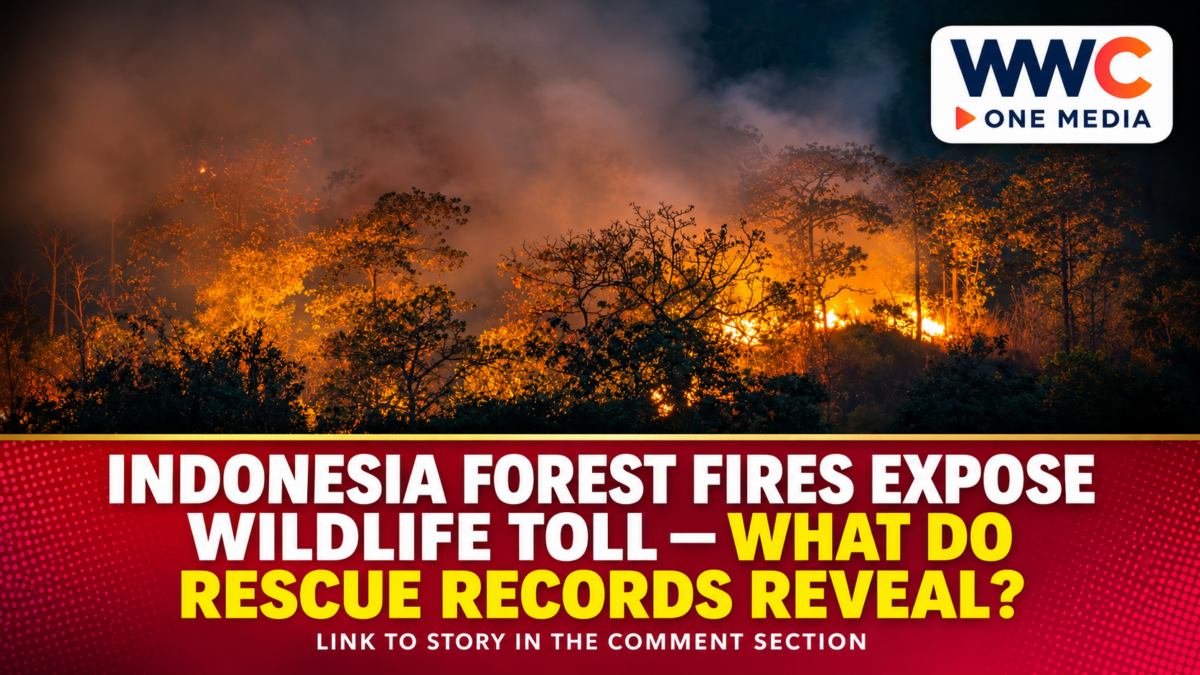
JAKARTA, Indonesia — Indonesia’s 2026 forest fires have left a documented toll on wildlife, with conservation field teams recording 137 dead animals in affected areas of Kalimantan in a September report. Indonesian forestry authorities have also recorded rescue operations involving pangolins, orangutans and other species, underscoring a conservation challenge that extends beyond putting out the flames.
The numbers are not a nationwide death toll. They describe animals that particular teams encountered, making the distinction between confirmed observations and the full ecological impact central to understanding the disaster.
Indonesia Forest Fires: What the Wildlife Count Shows
In a Sept. 18 update, the International Fund for Animal Welfare (IFAW) published findings from its supported Conservation Action Network Indonesia (CAN). Field crews documented 87 dead snakes, 23 monitor lizards, 14 Sunda pangolins, eight birds, three long-tailed macaques, one deer and one mouse deer. Together, those categories total 137 recorded deaths.
CAN and its partners reported fire-suppression work at 211 locations across Kalimantan, including 51 in protected forests or areas important to orangutans. The effort involved 43 professional firefighters and 173 community volunteers.
Crucially, the 137 figure is a field observation count, not a scientific estimate of every animal killed by the fires. Animals that were never found, moved away or died after the surveys would not necessarily appear in that tally. No reliable island-wide mortality total can be calculated from those observations alone.
WWC has previously covered Indonesia’s wider forest-fire emergency, but the wildlife records raise a separate question: how can response teams measure damage that remains largely out of sight?
Why Pangolins and Snakes Are a Particular Concern
The animal categories in the field report show how differently species experience the same fire. Sunda pangolins typically live alone, are active mainly at night and may shelter in burrows. Those behaviours can make them difficult to locate and potentially leave them exposed when flames reach their habitat.
Snakes and monitor lizards also featured heavily in the recorded deaths. The figures show which animals crews recovered, rather than proving that these species experienced the highest mortality rates across all affected habitats.
The government’s own conservation agency documented another incident in South Kalimantan. Following a Sept. 13 land fire in Balimau village, its rescue team reported 12 dead proboscis monkeys, a python and a king cobra. The agency described coordination with local authorities, checks for surviving animals and possible relocation where habitat assessments warranted it.
These observations matter because damage to smaller or less visible species can be overlooked when public attention centres on larger mammals. A burned landscape may lose animals, nesting sites and feeding opportunities even where few carcasses are recovered.
Rescues Reveal a Different Side of the Emergency
Indonesia’s Ministry of Forestry reported on Sept. 11 that its West Kalimantan conservation office had rescued 24 fire-affected wild animals from 18 locations in three districts between Aug. 1 and Sept. 10. These comprised 15 orangutans, six pangolins, one proboscis monkey, one slow loris and one banded civet.
That official count describes a defined period and operation; it should not be combined with other organisations’ figures as though each dataset covers different animals. Rescue reports may overlap in time, geography or individual cases.
A subsequent ministry release dated Sept. 17 described the evacuation of three orangutans in North Kayong. The operation involved forestry personnel, conservation partners and local communities. It also showed the importance of public reports in locating animals threatened by changing habitat conditions.
Earlier WWC reporting examined orangutan rescues as fires approached Borneo habitats. The newer field counts broaden the conservation picture beyond one highly visible species.
Putting Out Flames Does Not Restore a Forest
A fire response can establish where flames were suppressed and where animals were rescued. It cannot by itself establish whether the damaged landscape can support the same wildlife afterwards.
An analysis published by Universitas Gadjah Mada on Nov. 11 highlighted research comparing two one-hectare plots in Central Kalimantan. The natural forest plot contained 114 tree species and 2,851 tree stems; a previously disturbed and burned plot contained 80 species and 926 stems.
Those results came from two specific plots. They do not demonstrate that the fire caused 34 species to become extinct, nor should they be treated as a measure of all Indonesia’s forests. They do illustrate how a fire-affected forest may differ substantially from an intact one.
For wildlife, the practical questions include whether food remains available, whether animals can move between habitat patches and whether release areas offer safe shelter. Rehabilitation and release therefore require more than a successful rescue from immediate danger.
The ecological story also adds depth to WWC’s earlier examination of the emissions and haze dimensions of Indonesia’s wildfires. Air quality, carbon emissions and biodiversity are connected impacts, but they require different measurements.
What the Government Response Shows — and What It Does Not
At an Oct. 12 government meeting, Indonesia’s national disaster agency reported 639.23 hectares still burning and under task-force response across six priority provinces at that date. Officials identified Central and South Kalimantan as particularly serious areas and said poor visibility had constrained aerial operations.
That number was a dated operational snapshot, not the total area burned in 2026. It would be misleading to present it as today’s active-fire area or compare it directly with the wildlife field count.
What this could mean: Fire management needs two linked measures of success: suppressing active fires and establishing what happened to the habitats and species left behind. Rescue totals can show useful action, but they cannot independently prove a recovery of wildlife populations.
What Happens Next
The immediate questions are whether authorities and conservation partners publish updated, clearly defined wildlife assessments; whether affected habitat remains suitable for release; and whether future monitoring tracks surviving populations rather than only emergency rescues.
As of Nov. 22, 2026, the opened primary records do not establish a final wildlife death toll for Kalimantan or Indonesia. The confirmed evidence is serious enough without assigning a larger unverified number. A credible accounting will depend on repeated field surveys, transparent reporting periods and long-term habitat assessment.
Frequently Asked Questions
How many wild animals died in Indonesia’s 2026 forest fires?
CAN field teams reported finding 137 dead wild animals in burned or fire-affected areas of Kalimantan in a Sept. 18 update. That is not an estimate of the total deaths across Indonesia.
Were pangolins among the animals found dead?
Yes. The CAN field report recorded 14 dead Sunda pangolins, while other rescue records documented living pangolins removed from fire-affected locations.
What did Indonesia’s Forestry Ministry report rescuing?
For Aug. 1–Sept. 10, its West Kalimantan office reported 24 rescued animals, including 15 orangutans and six pangolins, across 18 locations in three districts.
Does extinguishing a forest fire make the habitat safe again?
Not necessarily. Fire may reduce vegetation, food sources and shelter. Decisions about rehabilitating or releasing rescued animals require additional assessment of their condition and available habitat.