RIYADH, Saudi Arabia — Nov. 21, 2026. Saudi Arabia’s coalition fighting Yemen’s Houthi movement reported intercepting two unmanned aircraft in the Riyadh and southern regions on Nov. 18, while a separate official account confirmed damage to a tower in the capital’s financial district on Nov. 19. The Riyadh air defence developments show why a reported interception, a public warning and a confirmed impact must be assessed as different events rather than merged into a single account of explosions.
The immediate question for residents and businesses is what officials have verified, what remains a military assessment and what consequences have actually been documented. The available statements establish specific actions and damage; they do not supply a complete public reconstruction of every launch, interception or reported noise across Riyadh.
Riyadh Air Defence: What the November Statements Establish
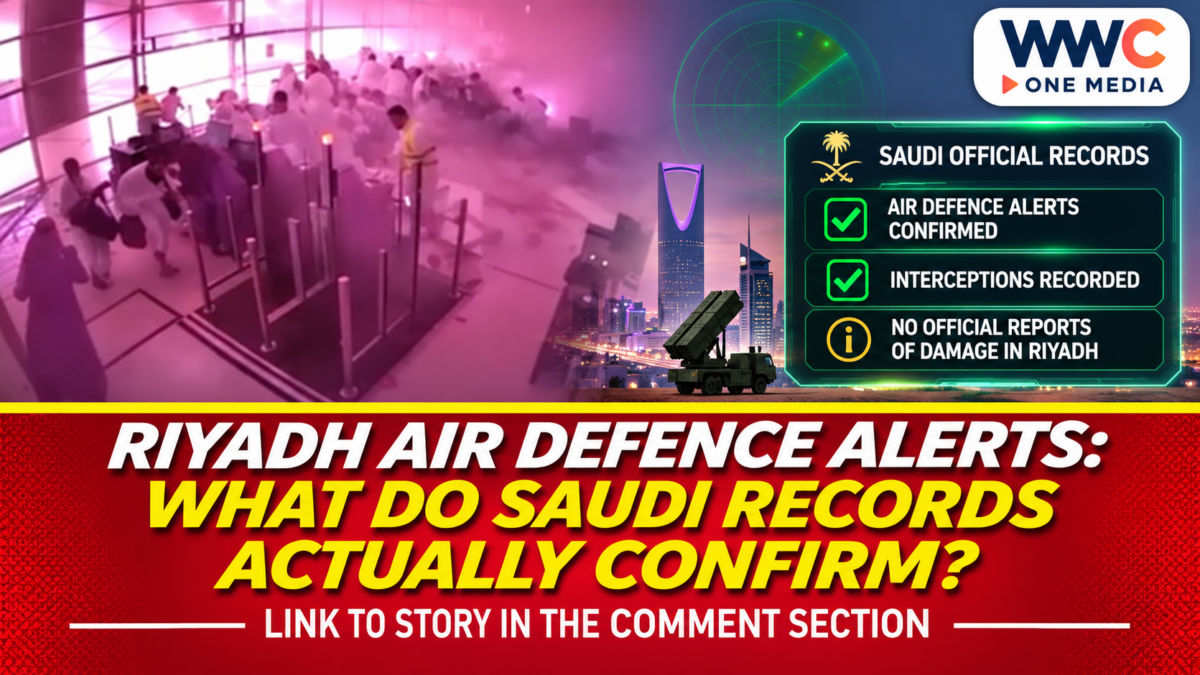
On Nov. 18, coalition spokesperson Major General Turki Al-Malki announced that air defences had intercepted and destroyed two unmanned aerial vehicles, or UAVs, attributed by the coalition to the Houthis. The announcement located the interceptions in Riyadh and Saudi Arabia’s southern regions, without assigning one drone to each named location in a detailed operational chronology.
That distinction matters. Two drones reported across two regions do not mean two drones were destroyed directly over the capital, or that both were observed by members of the public. A military statement establishes the coalition’s account, not an independently verified flight path.
Separate reports also described cruise-missile interceptions towards Riyadh on Nov. 18. The original coalition communications for the precise count and timing could not be directly examined for this report, so a numerical total for those missiles is not presented here as independently verified.
The November 19 Tower Damage Was a Different Event
On Nov. 19, Saudi Arabia’s General Directorate of Civil Defense said emergency personnel responded after a tower in Riyadh’s financial district was targeted. Its official statement recorded material damage to several floors and neighbouring buildings and no injuries reported in that incident.
The civil-defence record establishes a physical consequence, unlike a general alert or an interception announcement. It does not establish the full technical path of the projectile, the repair bill or a verified loss of electricity or financial services.
An interception may destroy an incoming threat while debris still poses risks. Conversely, damage at a building cannot be assigned to a particular interception without an official investigation connecting the events. The news desk should not assume that every report of an explosion refers to the same missile or day.
WWC previously examined the Riyadh tower attack and whether Saudi oil infrastructure was affected. That report addresses energy-market exposure; this account instead separates the official security statements and their implications for public warnings.
Military Operations in Yemen Require Separate Verification
The coalition also announced on Nov. 18 that it had carried out an operation against Houthi military capabilities in Yemen. Al-Malki claimed 60 targets had been destroyed in Sanaa, Hodeidah, Amran and Saada, including facilities associated with missiles and drones.
Those are the coalition’s own descriptions of an operation and its reported results. A statement by the force carrying out an attack is not an independent audit of every target, the extent of damage or civilian consequences.
The reported operations should also not be added mechanically to claims published by other Yemeni forces. Different forces may count missions, strikes and targets using different definitions and periods.
WWC’s earlier report on the Yemeni offensive and the coalition’s claimed targets addresses that separate military campaign. The connection here is contextual: ongoing operations in Yemen and interceptions over Saudi territory form part of the same conflict, but each claimed event still needs its own evidence.
Why Warnings Matter to People Far From the Conflict
An official air-threat warning tells the public to respond to an identified risk. An all-clear indicates that authorities consider a particular immediate alert to have ended. Neither automatically measures property damage or proves that there can be no later attack.
For businesses, the practical considerations include access to premises, staff safety, insurance records and the continuity of transport and communications. However, the reviewed official notices do not establish a specific business-closure total or a nationwide economic loss for Nov. 18–19.
Filipino families also have reason to follow credible local safety announcements. WWC’s previous report on Philippine monitoring of overseas Filipino workers after Saudi missile and drone incidents describes an earlier period; it does not establish that any Filipino was injured or evacuated during this week’s incidents.
Analysis: Reporting should distinguish between precautionary action and documented harm. Warnings can be justified even when an interception succeeds, and the absence of an injury report for one building does not establish that every incident across the kingdom caused no harm.
What the Official Record Still Cannot Answer
The government statements reviewed here do not provide a comprehensive minute-by-minute account of the explosions described in the original news lead. They also do not establish a complete incident-by-incident tally for every reported missile on Nov. 18.
Nor should the November 19 financial-district damage be presented as proof of a shutdown in Saudi crude production. A building in a financial centre and an oil production or export facility are different kinds of infrastructure.
A credible assessment of wider consequences would require separately published civil-defence investigations, damage reports, transport notices and, where appropriate, information from operators of affected facilities. Estimates of oil-market effects should be tied to verified production or shipping changes rather than the sound of explosions alone.
What Happens Next
The next useful records would identify any further interceptions by date and location, the outcome of investigations into debris or impacts, and whether civilian facilities experienced documented interruptions. Official announcements made after Nov. 19 should be treated as new developments, not retroactively folded into the Nov. 18 incident.
For now, there is a defensible factual boundary: Saudi authorities reported drone interceptions on Nov. 18 and documented material damage, without reported injuries, in a distinct Nov. 19 financial-district incident. That does not resolve every claim about missile counts or eyewitness reports, but it gives readers a reliable basis for understanding what is known.
Frequently Asked Questions
Were drones intercepted around Riyadh on Nov. 18, 2026?
Yes. The Saudi-led coalition announced that two UAVs were intercepted and destroyed across the Riyadh and southern regions. The statement did not provide a detailed trajectory for each drone.
Was a building in Riyadh damaged?
Yes. Saudi Civil Defense reported material damage to a financial-district tower and nearby buildings on Nov. 19, with no injuries reported in that incident.
Were all explosions in Riyadh caused by one attack?
The reviewed primary records do not establish that. Different dates and categories of reported threats must be kept separate.
Did these events stop Saudi oil exports?
No such interruption is established by the primary records reviewed. Damage to a financial-district building is not evidence of an oil-field or terminal shutdown.
What should Filipinos in Saudi Arabia rely on for safety updates?
They should follow current Saudi civil-defence instructions and official Philippine diplomatic or migrant-worker advisories rather than unverified social-media claims.