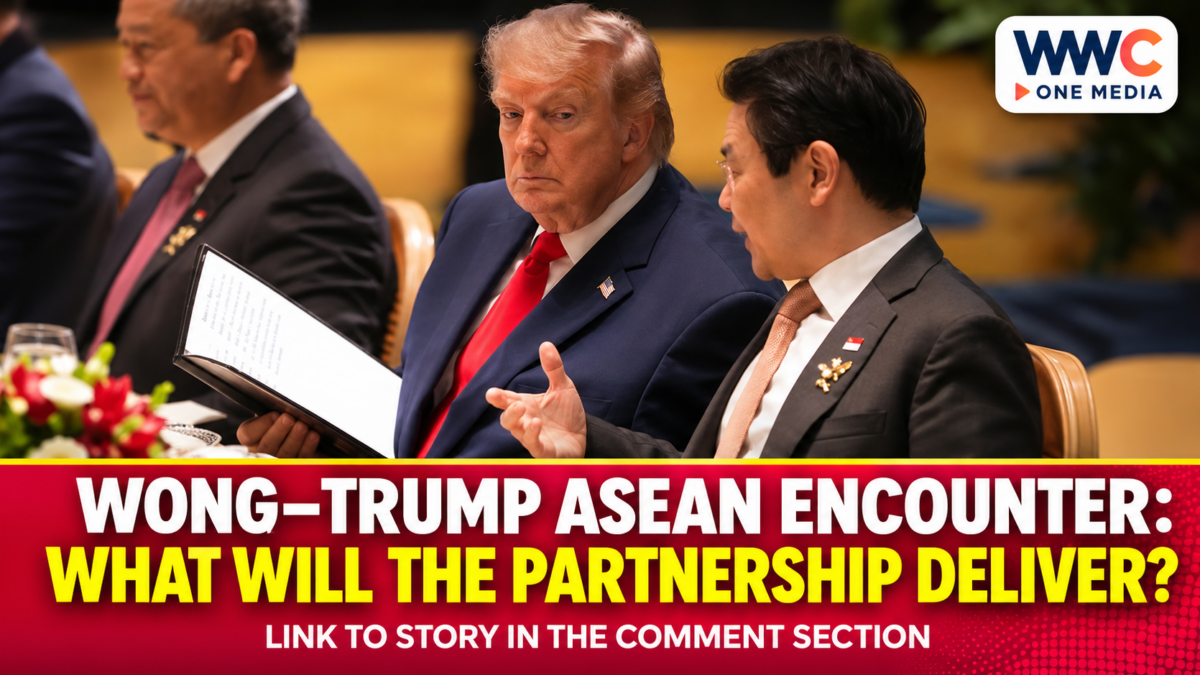
UNITED STATES— Nov. 21, 2026. Singapore Prime Minister Lawrence Wong and US President Donald Trump took part in the ASEAN–United States Special Summit in Manila on Nov. 17, as Singapore prepared to lead the regional bloc in 2027. The meeting placed the ASEAN US partnership under scrutiny at a moment when governments are expected to turn diplomatic engagement into practical regional cooperation.
The question is what the agreed work programme can deliver on regional cooperation—and how Singapore’s incoming chairmanship could carry it forward.
ASEAN US Partnership Moves From Meetings to a Work Plan
Singapore’s foreign ministry announced ahead of the summit that Wong would join ASEAN meetings in Manila from Nov. 15 to 17, including engagements with leaders from the United States and other major partners. The gathering formed part of the Philippines’ final stretch as ASEAN chair for 2026.
The official ASEAN record identifies a Comprehensive Work Plan for 2026–2030 to implement the leaders’ joint vision for a stronger, safer and more prosperous ASEAN–US relationship. A work plan matters because it creates a framework for cooperation beyond a single visit, rather than leaving implementation to ceremonial statements.
But it is not the same as a signed bilateral trade deal between Singapore and the United States. Nothing in the records examined for this report establishes a new Wong–Trump tariff agreement, investment package or security treaty arising from their Manila encounter.
That distinction is relevant to Filipino businesses as well. WWC ONE MEDIA’s earlier examination of what the Trump Manila visit could—and could not—deliver explained why summit attendance should not be confused with enforceable commercial concessions.
Online Scams Become a Concrete Area of Cooperation
Among the published summit outcomes was an ASEAN–US statement on ten public-private partnership principles for tackling online scams. The document identifies scams as a security, economic and social concern requiring coordination among governments and industries.
Its approach recognises that digital fraud often crosses borders. Detection, enforcement, consumer protection and information exchange may involve companies and public agencies operating under different laws.
The statement encourages governments and industry to elevate scams as a policy priority and strengthen regional and cross-border cooperation. They are cooperation principles, not evidence of operational deployment.
Why it matters: A shared regional framework could help participants identify practical gaps in cooperation. Effectiveness depends on national laws, resources and follow-through.
For Philippine consumers, the immediate test is not how prominently scams feature in a summit statement, but whether future cooperation improves prevention, reporting and investigations in ways people can use.
Singapore’s 2027 Chairmanship Raises Expectations
Wong used the ASEAN closing ceremony on Nov. 17 to set out Singapore’s chairmanship theme for the following year: “Deeper Integration, Wider Partnerships.” He described closer links in finance, digital technologies and energy as priorities for a more connected regional market.
The timing is significant. ASEAN turns 60 in 2027, while ASEAN–US dialogue relations reach their 50th anniversary. Those milestones offer an opportunity to review cooperation, but anniversaries alone cannot establish that trade barriers have fallen or regional projects have been completed.
Singapore’s chairmanship gives it a coordinating role, not authority to dictate national policies to other ASEAN governments. Delivering stronger regional connections will require collective decisions and implementation by member states.
WWC has already examined the priorities Singapore is carrying into its ASEAN chairmanship. The new development is that the Manila summit concluded with a documented ASEAN–US programme against which future progress can be assessed.
Trade and Security Need Different Measures of Success
Singapore’s Nov. 17 chairmanship speech also warned that major-power competition and a fragmented international economic order could affect Southeast Asia’s livelihoods, energy and food supplies. Its proposed response emphasised regional unity and wider external partnerships.
This creates two distinct tests for engagement with Washington. Economic cooperation should ultimately be assessed through rules, investment decisions, access to markets and functioning cross-border systems. Security-related cooperation requires its own evidence, including publicly defined programmes and implementation arrangements.
An ASEAN-wide framework cannot automatically replace bilateral agreements, nor does a leader-level conversation determine tariffs or defence obligations by itself. Those require separate legal and administrative steps.
The Philippine dimension is particularly important because Manila hosted the November meetings while preparing to transfer the chairmanship to Singapore. WWC’s report on the broader ASEAN Plus Three decisions in Manila shows how energy, food security and maritime logistics also featured in the regional agenda, although that is a different diplomatic grouping from ASEAN–US.
Analysis: The strongest test of effective diplomacy is whether governments keep separate agreements clear, publish follow-up decisions and give businesses enough certainty to plan. A successful photo opportunity does not, by itself, meet that standard.
Wong’s China Engagement Shows the Wider Diplomatic Balance
After the Manila summit, Wong met Chinese President Xi Jinping in Shenzhen on Nov. 20. Singapore’s official account says they discussed bilateral cooperation and its priorities for the 2027 ASEAN chairmanship, including regional integration, supply-chain resilience and the ASEAN Power Grid.
These separate encounters show Singapore engaging major partners while preparing to chair ASEAN. They do not establish that Wong carried a negotiated US position to China or brokered a new arrangement between the two powers.
The policy challenge is to preserve room for regional cooperation while major economies pursue different interests. Singapore’s stated intention to widen partnerships therefore has a practical dimension: its chairmanship will need to accommodate engagement with multiple partners without presenting ASEAN as a single country’s negotiating arm.
What Happens Next
The next useful evidence will be official updates on how ASEAN members and the United States implement the 2026–2030 work plan. For scam prevention, progress could be assessed through named initiatives, cooperation mechanisms and public reporting on their operation.
For trade, digital and energy integration, the tests will include agreements, timelines and national implementation.
The Manila encounter showed continued engagement. Its value will depend on governments’ follow-through.
Frequently Asked Questions
1. Did Lawrence Wong and Donald Trump attend the ASEAN–US summit in Manila?
Yes. The official summit record places the ASEAN–United States Special Summit in Manila on Nov. 17, 2026, and Singapore’s government confirmed Wong’s participation in the ASEAN meetings and engagements with US leaders.
2. Did Wong and Trump announce a new bilateral trade deal?
No such Singapore–US trade deal was established in the official records reviewed for this report. The published ASEAN–US work plan is a regional cooperation document, not a bilateral tariff agreement.
3. What did ASEAN and the United States agree on online scams?
They issued a statement setting out ten public-private partnership principles, including elevating scams as a policy priority and encouraging stronger cross-border cooperation.
4. When does Singapore chair ASEAN?
Singapore takes the chairmanship in 2027, when ASEAN marks its 60th anniversary and ASEAN–US dialogue relations mark 50 years.
5. Why should Filipinos care about the ASEAN–US partnership?
Its practical implementation could affect regional trade, digital-security cooperation and economic resilience. Specific benefits, however, must be demonstrated through subsequent decisions and programmes.