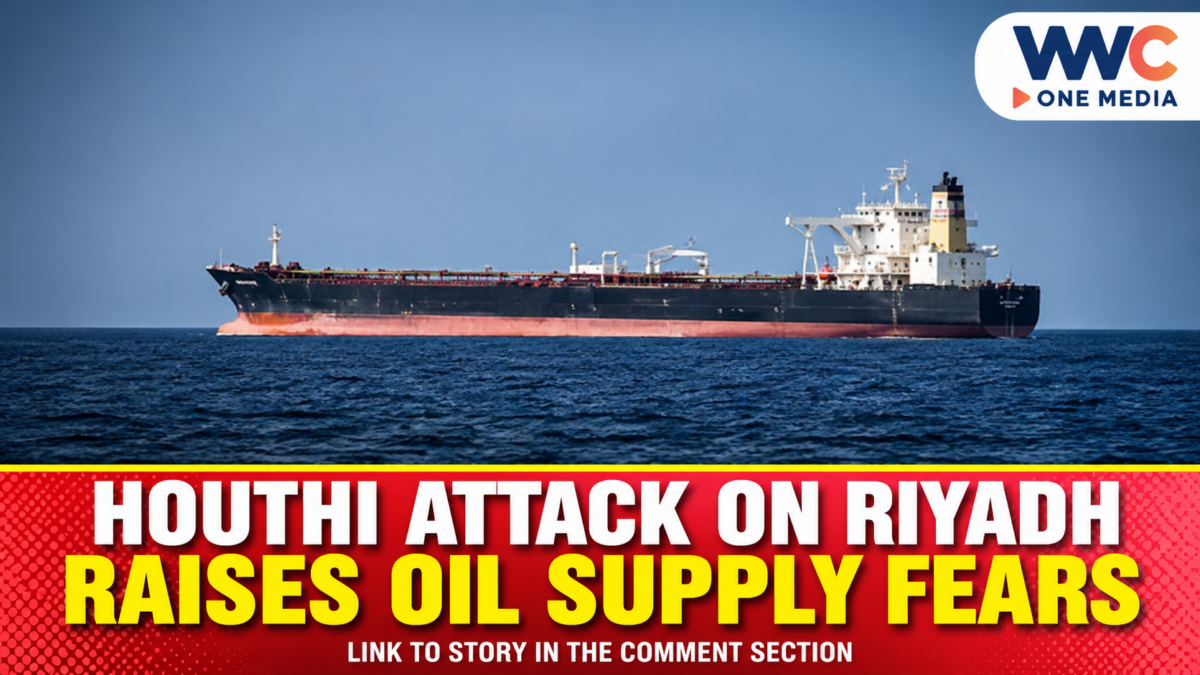
A Houthi attack damaged a tower in Riyadh’s King Abdullah Financial District on Nov. 19, while Saudi-led coalition forces reported intercepting missiles directed at the kingdom. The developments have renewed attention on the security of a region central to global petroleum exports, but Saudi Arabia’s official statements have not confirmed damage to an oil production or export facility in the latest incident.
The distinction matters for oil markets. A threat to Saudi territory can increase concern about future disruptions, but an attack on a civilian building is not the same as a confirmed interruption to crude production, pipeline operations or tanker shipments.
For countries that depend on imported petroleum, including the Philippines, the question is whether the latest escalation remains a security warning or develops into a disruption that affects the physical movement of energy supplies.
Riyadh attack puts Saudi security back in focus
Saudi Arabia’s General Directorate of Civil Defense said its teams responded on Nov. 19 after a tower in Riyadh’s financial district was targeted. The attack caused material damage to several floors of the building and neighbouring structures, but no injuries were reported.
The official statement said emergency teams responded and implemented the procedures required to protect lives and property.
In a separate announcement, the Saudi-led coalition’s spokesperson, Major General Turki Al-Malki, said a ballistic missile launcher in Dhamar, Yemen, had been destroyed. He said the Houthi militia had used the launcher in an attempted attack on Riyadh.
The coalition also reported that air defences intercepted and destroyed four ballistic missiles launched towards Saudi Arabia’s southern region on Nov. 19.
These announcements establish that Saudi authorities reported multiple security incidents. They do not, by themselves, establish that the attacks damaged oil fields, refineries, export terminals or pipelines.
That distinction is essential when assessing the potential effect on international petroleum supplies.
Why oil markets watch Saudi Arabia so closely
Saudi Arabia is one of the world’s major oil producers and a central participant in the international energy trade. Any credible threat to its production facilities or export infrastructure can therefore attract attention well beyond the Middle East.
The country’s East-West Pipeline is particularly important when shipping routes in the Gulf face disruption. It provides a route for moving crude towards the Red Sea, offering an alternative to relying exclusively on exports through the Strait of Hormuz.
However, alternative routes do not eliminate all risks. Pipeline capacity, terminal operations, tanker availability and maritime security still determine how much petroleum can reach buyers.
The International Energy Agency’s November 2026 Oil Market Report provides a useful picture of the market’s position before the latest Riyadh attack. Global oil supply rose by 2.3 million barrels per day in October to 105.4 million barrels per day, supported by stronger Gulf exports despite continuing attacks on energy infrastructure and tankers.
Gulf oil exports, excluding Oman, reached 18.4 million barrels per day in October. That was still 26% below pre-war levels, showing that a recovery in shipments had not restored normal conditions.
The agency also reported that crude flows from the Gulf had increased to 15 million barrels per day in October, equivalent to 82% of their pre-war level.
The figures show why markets can react sharply to new security developments even when production continues. The global system was recovering, but the export network remained exposed to conflict-related risks.
The latest attack has not established an oil supply interruption
There is a significant difference between a military threat near an energy-producing country and a confirmed loss of petroleum supply.
The Saudi Civil Defense announcement identified damage to a tower in Riyadh’s financial district. It did not report damage to an oil installation.
The coalition’s announcements described missile interceptions and the destruction of a launcher in Yemen. They did not confirm that the latest incidents stopped crude production, disrupted the East-West Pipeline or forced an export terminal to suspend operations.
That means claims of a new Saudi oil supply interruption would go beyond the available official record.
The wider security situation remains relevant, however. The IEA has warned that attacks on shipping can undermine maritime security and threaten the recovery in oil flows. Its November report also said that observed global oil inventories increased by 52 million barrels in October, while on-land stocks remained at their lowest level since at least 2016.
The market therefore faces two competing developments: recovering supply and continuing exposure to disruptions.
What the oil data mean for Asian buyers
Asia has a particular interest in the security of Middle Eastern energy routes. The IEA’s World Energy Outlook 2026 says that, before the current crisis, around 80% of the oil and almost 90% of the liquefied natural gas passing through the Strait of Hormuz were destined for Asia.
The report also describes the 2026 disruption to energy flows through the strait as the largest energy supply shock the world has faced, with cumulative losses of 2.8 billion barrels of oil supply from the Gulf.
That exposure makes maritime security a practical economic concern for Asian importers, not simply a regional military issue.
For the Philippines, international crude and refined-product prices can affect the cost of imported fuel. The impact on local pump prices, however, depends on more than one day’s movement in a crude benchmark. Refined-product prices, freight, the peso-dollar exchange rate, taxes and local pricing schedules also matter.
WWC previously examined why a projected global supply recovery may not immediately translate into cheaper Philippine fuel in its report on the oil market’s expected return to surplus and the limits of pump-price relief.
The country is also exposed to risks along major shipping corridors. The recent tanker incident in the Strait of Hormuz and its implications for Asian oil supply illustrates why safe passage can be as important as the amount of crude produced.
A previous nationwide rollback also showed how international market movements can eventually reach Philippine consumers. WWC’s report on the November 10 fuel-price reductions provides a recent example of how global conditions feed into domestic pricing decisions.
What happens next
The most important indicators will be whether Saudi authorities report further damage to energy infrastructure, whether pipeline and export operations continue normally, and whether shipping through major regional routes faces additional disruption.
Oil-market data will also show whether the recovery in Gulf exports continues. The IEA’s November assessment projected a return to global supply surplus in the fourth quarter of 2026, with a more substantial surplus in 2027. Those projections could be challenged if attacks materially affect production or the movement of petroleum.
For now, the latest Saudi announcements confirm damage to a civilian building and reported missile activity. They do not confirm a new interruption to Saudi oil production or exports.
That leaves the central question unanswered: will the latest escalation remain a security crisis, or will it reach the infrastructure and shipping routes that move oil to the rest of the world?
Frequently asked questions
Did the Houthis damage a Saudi oil facility on Nov. 19, 2026?
Saudi Arabia’s Civil Defense reported damage to a tower in Riyadh’s financial district. The official announcement did not identify damage to an oil production facility, refinery, pipeline or export terminal.
Were missiles intercepted over Saudi Arabia?
The Saudi-led coalition reported that air defences intercepted and destroyed four ballistic missiles launched towards the kingdom’s southern region on Nov. 19. It also reported the destruction of a launcher in Yemen that it said had been used in an attempted attack on Riyadh.
Why can attacks on Saudi Arabia affect global oil prices?
Saudi Arabia is a major oil producer and exporter. Threats to its production facilities, pipelines or export routes can raise concerns about future supply, shipping costs and the reliability of deliveries.
Does the latest Riyadh attack mean Philippine fuel prices will increase?
Not automatically. A change in international oil prices does not translate directly into an immediate local adjustment. Philippine pump prices also depend on refined-product costs, currency movements, taxes, freight and local pricing schedules.
Is global oil supply recovering?
The IEA reported that global oil supply rose to 105.4 million barrels per day in October 2026. However, Gulf exports remained below pre-war levels, and the agency warned that continued attacks on shipping could threaten the recovery.