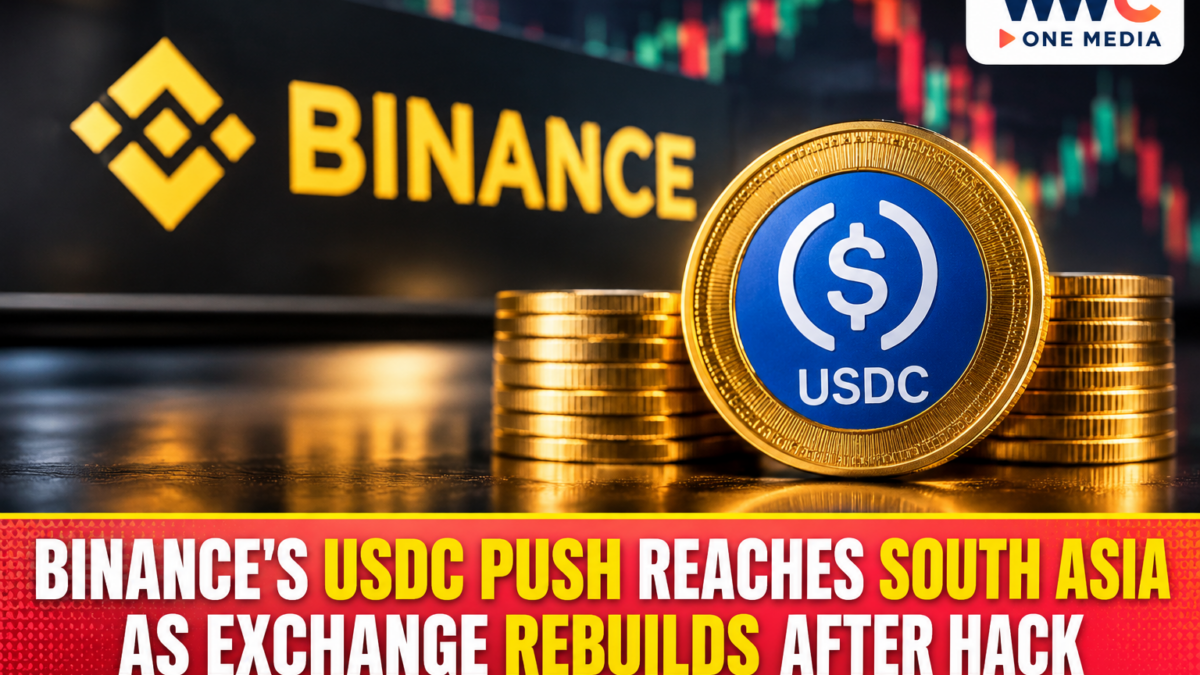
Binance has added a new South Asia promotion to its expanding USDC strategy, offering eligible users zero maker and taker fees on qualifying peer-to-peer trades from Nov. 17 to Dec. 18, 2026.
The offer follows a broader commercial agreement with Circle, the issuer of USDC. Announced on Sept. 22, the five-year agreement is designed to expand access to the dollar-linked stablecoin in emerging markets. Binance also disclosed a US$100 million strategic equity investment in Circle.
The two developments show that Binance’s commercial relationship with USDC is not limited to a short-term trading incentive. The companies have committed to a longer partnership covering promotion, awareness and integration of the stablecoin across Binance’s platform.
What the South Asia promotion actually covers
Binance’s Nov. 18 announcement says the promotion applies to verified and selected users in South Asia. Eligible makers must post new advertisements to buy or sell USDC on Binance P2P, while takers can trade through available advertisements.
The fee waiver applies to successful eligible transactions during the stated promotional period. Binance says makers retain control over their advertised prices and payment methods, while its escrow service is used for P2P transactions.
The announcement does not identify every eligible country or guarantee that the offer is available to every user in the region. It also carries a general notice that products and services mentioned in the announcement may not be available in every location.
That distinction matters for Philippine readers. A regional promotion should not be interpreted as confirmation that every Filipino Binance account can participate or that the exchange is authorised to offer every service in the Philippines.
The Circle agreement is the larger strategic commitment
The five-year Circle agreement provides a broader context for the latest promotion. Under the arrangement, Binance plans to increase USDC promotion, awareness and integration, particularly in emerging markets. Circle is to provide infrastructure services supporting the holding and use of USDC.
Binance’s US$100 million investment was made through a private placement of Circle Class A common stock. Circle’s announcement says Binance agreed not to transfer the shares for up to two years from the closing date, subject to customary exceptions.
The agreement does not mean that USDC is a bank deposit or that every transaction is free of risk. A stablecoin is designed to maintain a value linked to another asset, but users still need to consider issuer arrangements, redemption terms, platform access, custody and the possibility of fraud.
The security incident remains part of the trust question
The commercial push comes after Binance disclosed a serious security incident involving unauthorised withdrawals from its hot wallets. In its Oct. 30 update, the exchange estimated the affected token assets at approximately US$6.3 billion.
Binance said it would cover the stolen funds through its Secure Asset Fund for Users and corporate treasury. It also reported that approximately US$3 billion had been frozen on-chain at the time of that update.
In a Nov. 1 recovery announcement, Binance said it had replenished approximately 95% of affected assets and was resuming withdrawals in phases. It said the remaining portion consisted mainly of tokens outside the ten largest listed assets, which it described as less liquid and harder to acquire in the required quantities.
Those figures are the company’s own incident and recovery disclosures. They should not be confused with an independent audit of the attack or a completed public technical investigation.
What the Asian expansion claim does—and does not—establish
The latest commercial moves provide evidence of Binance pursuing broader USDC access in emerging markets and running a targeted South Asia trading promotion. They do not independently confirm a plan to enter five named Asian markets in 2027.
No country list, local licence announcement or market-entry timetable should be added unless Binance or the relevant regulators publish records confirming those details.
For the Philippines, the distinction is particularly important. Binance’s global commercial activity does not itself establish permission to offer services locally. Customers should check the applicable regulatory position and the terms of any platform service before using it.
The broader development also sits within a growing regional discussion about stablecoin payments. WWC has examined the stablecoin payment option described in RCBC’s US Virtual Account, as well as the growing role of stablecoins in Latin American crypto activity. These are separate developments, but they illustrate why access, redemption and consumer safeguards matter alongside adoption.
What happens next
The next meaningful evidence will be further official disclosures from Binance and Circle, including any country-specific launch announcements, regulatory approvals and details of how the partnership is being implemented.
Binance has also said it would publish an incident review after its security investigation. Until that report appears, the full technical sequence and contributing factors remain unresolved in the public record.
For now, the documented picture is narrower but significant: Binance has committed capital and a five-year commercial agreement to its Circle relationship, while a new South Asia promotion puts USDC trading incentives in front of selected users. Whether that develops into a wider Asian market-entry programme remains to be confirmed.