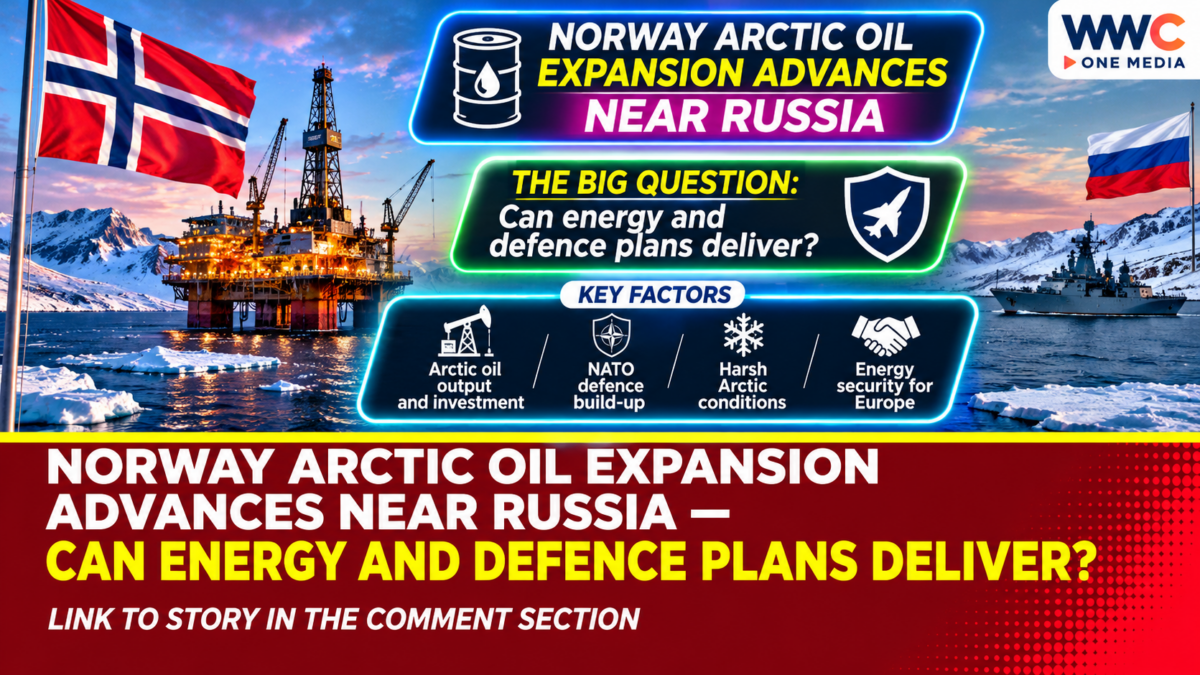
OSLO, Norway — Norway is opening more of its continental shelf to petroleum exploration while strengthening its military preparedness in the High North, two policy tracks that carry major implications for European energy security. Official announcements in 2026 added 38 Barents Sea blocks or partial blocks to an established licensing area, while the government separately proposed another NOK 115 billion for its long-term defence programme through 2036.
These are significant commitments, but they are at different stages. Exploration acreage does not mean a new oilfield has been discovered, and a defence investment plan is not evidence of an imminent armed confrontation along Norway’s border with Russia.
Norway Arctic Oil Licensing Expands in the Barents Sea
Norway announced its Awards in Predefined Areas 2026 round on May 5. The petroleum licensing area was expanded by 70 blocks or parts of blocks: 38 in the Barents Sea, 10 in the Norwegian Sea and 22 in the North Sea.
The Ministry of Energy said 21 companies applied by the September deadline, with awards targeted for the beginning of 2027. The list of applicants includes Equinor, Aker BP, Shell, ConocoPhillips, TotalEnergies and Vår Energi, among others.
A licence gives an operator and its partners defined exploration and petroleum rights within an awarded area. It is not a declaration that commercially recoverable reserves exist, that a development has been approved, or that oil and gas shipments have begun.
Europe’s Energy Security Is Central to Norway’s Case
The government explicitly frames continued offshore exploration as a way to support Norwegian jobs, public revenues and Europe’s energy security. In January, it offered 57 production licences from the previous annual round, including five in the Barents Sea.
That earlier round shows the difference between acreage available for application and licences actually offered to companies. The 2026 round’s new awards were still scheduled for early 2027 as of the official September update.
The challenge reaches beyond exploration. Buyers need pipelines, processing capacity and reliable deliveries, while available gas storage changes through the winter. WWC has examined Europe’s lower gas-storage cushion ahead of winter, a separate near-term security issue that additional exploration acreage cannot immediately resolve.
Analysis: New petroleum licences could help slow future production decline if they lead to viable discoveries. They cannot be treated as a near-term solution to this winter’s fuel prices or supply constraints.
Defence Spending Accelerates in Northern Norway
Norway’s long-term defence plan, covering 2025–2036, was adopted by parliament in 2024. In April 2026, the government proposed adding NOK 115 billion through 2036, including NOK 31 billion by 2030, while extending the planning horizon to 2040.
The proposed priorities include accelerating development of the Finnmark Brigade by two years, advancing submarine and frigate programmes, improving ammunition availability and upgrading facilities used to support allied forces.
The government also identified electronic warfare, short-range air defence and drone defence as areas for stronger capability.
An earlier High North policy document described more than NOK 50 billion of planned defence investment and over 1,700 jobs in northern Norway over ten years. These figures refer to different planning announcements and should not simply be added to the later NOK 115 billion proposal as though they represent wholly separate programmes.
WWC’s reporting on Norway’s participation in NATO’s STARLIFT satellite initiative illustrates another aspect of allied preparedness. That space-launch initiative is distinct from the Finnmark troop and infrastructure plans.
Russia’s Border Changes the Security Calculation
Norway’s published national security strategy describes maintaining a predictable Russia policy that combines deterrence with reassurance. It also calls for continued diplomatic representation and communication channels to reduce misunderstanding and unintended escalation.
Eastern Finnmark has a particular place in Norway’s civilian preparedness work. The government’s High North policy also emphasises resilient local communities and protection of Sámi culture and traditional reindeer herding when military activities expand.
Analysis: Defence readiness and cross-border communication are not mutually exclusive. Strengthening northern infrastructure may support deterrence while also raising the importance of clear operational procedures and contact with neighbouring authorities.
Arctic Development Faces Environmental and Commercial Tests
Norway’s licensing announcement records 35 consultation submissions, including responses from government agencies, organisations and the Sámi Parliament. The ministry says it considered the comments alongside the country’s integrated ocean-management arrangements.
The government also acknowledges climate and environmental considerations, with petroleum activities subject to emissions regulation and environmental and fisheries conditions. The available public record does not establish that every future drilling project has secured its individual approvals.
Commercial viability is another filter. Companies must decide whether a discovery can be developed economically under expected prices, technical demands, infrastructure limitations and regulatory obligations.
WWC’s separate analysis of the outlook for global oil supply in 2027 highlights why future production plans should not be mistaken for assured price outcomes. A global supply forecast and an Arctic licensing decision answer different questions.
What this could mean: Oslo is pursuing long-term energy production and stronger security capabilities simultaneously. Whether the approach succeeds will depend on discoveries, project economics, ecological safeguards, defence procurement and the broader security environment.
What Happens Next
Norway aims to award licences from APA 2026 at the beginning of 2027. Subsequent company work programmes, drilling results and any development submissions will establish whether the added Barents Sea acreage yields commercially viable projects.
On defence, parliamentary budget decisions and implementation reports will show how quickly the proposed investments translate into equipment, personnel and infrastructure in northern Norway.
The verified conclusion is narrower than the geopolitical headlines: Norway has expanded exploration opportunities and set out stronger northern defence priorities. Neither outcome guarantees extra near-term oil output, lower European energy prices or a change in the military situation along the Russian border.
Frequently Asked Questions
How much Arctic exploration acreage did Norway add in 2026?
The government added 38 blocks or partial blocks in the Barents Sea to the APA 2026 licensing area, within a total expansion of 70 blocks or parts of blocks across three sea regions.
Has Norway awarded the new 2026 exploration licences?
The Ministry of Energy said it aimed to award licences at the beginning of 2027. Applications from 21 companies had been received by the September 2026 deadline.
Is Norway increasing defence spending near Russia?
Yes. The government proposed an additional NOK 115 billion for its long-term defence programme through 2036, including measures to accelerate the Finnmark Brigade and strengthen allied support facilities.
Does more Arctic exploration mean more oil and gas immediately?
No. Exploration rights precede potential discoveries, development approvals, construction and production. Some prospects may never become commercially viable fields.
Is Norway preparing to attack Russia?
The official strategy describes deterrence, defence readiness and continued communication with Russia. The reviewed records do not support a claim of an imminent Norwegian attack.