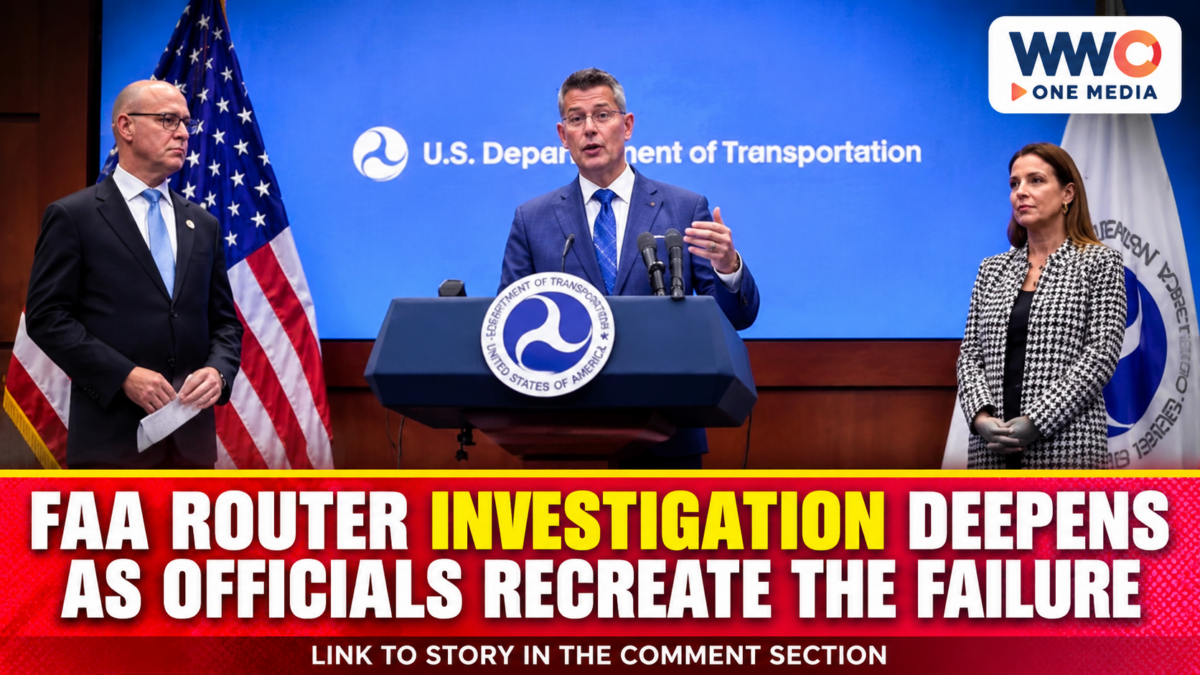
The Federal Aviation Administration’s investigation into the Nov. 13 nationwide ground stop has moved beyond identifying the equipment involved, but officials still have not established the precise technical failure that disrupted air traffic control communications.
During a Nov. 17 briefing, Transportation Secretary Sean Duffy said investigators had recreated the incident involving a router installed at the El Dorado, Arkansas, facility. The equipment was being examined at an L3Harris facility in Florida, with the FAA, L3Harris, Hewlett Packard Enterprise, Cisco and FBI personnel involved in the investigation.
Duffy said the router was the 69th installation of that type. The previous 68 installations had operated without the same reported disruption. However, he acknowledged that investigators did not yet have clarity on the root cause.
The FAA’s Nov. 15 explanation said excessive data traffic reached approximately 1,000 connection attempts every four to five seconds, destabilising legacy equipment and disrupting aircraft communications and radar feeds. The agency identified potential sources at a radar site in Amarillo, Texas, and a radio communications site in El Dorado.
The FAA disabled the broadcasting function on the new routers as a precaution and extended that measure to more than 60 other routers. It also paused further installations while the investigation continued.
The congressional questions are becoming more specific. In a Nov. 16 letter to the FAA and Transportation Department, members of the Senate Commerce Committee said information provided to their offices indicated that the wider copper-to-fibre conversion involved 3,648 Juniper devices. The letter said 400 had been installed and 69 were operational.
The senators stressed that identifying the equipment involved was not the same as determining why it failed. They called for improved operational testing, independent validation, verified failover capability and rollback procedures before installations resume.
The letter also requested a technical briefing involving the FAA, L3Harris and Juniper, with responses to its questions by Nov. 23.
Separately, Duffy and FAA Administrator Bryan Bedford advocated for an additional US$50 billion in congressional funding for a new air traffic control system. The proposed funding request adds another dimension to the investigation: lawmakers will need to assess both the immediate technical failure and whether the broader modernisation programme has adequate safeguards.
For now, the FAA says operations have returned to normal and all aircraft landed safely during the disruption. The central unanswered question remains why a network upgrade associated with dozens of earlier installations coincided with a failure serious enough to trigger a nationwide ground stop.