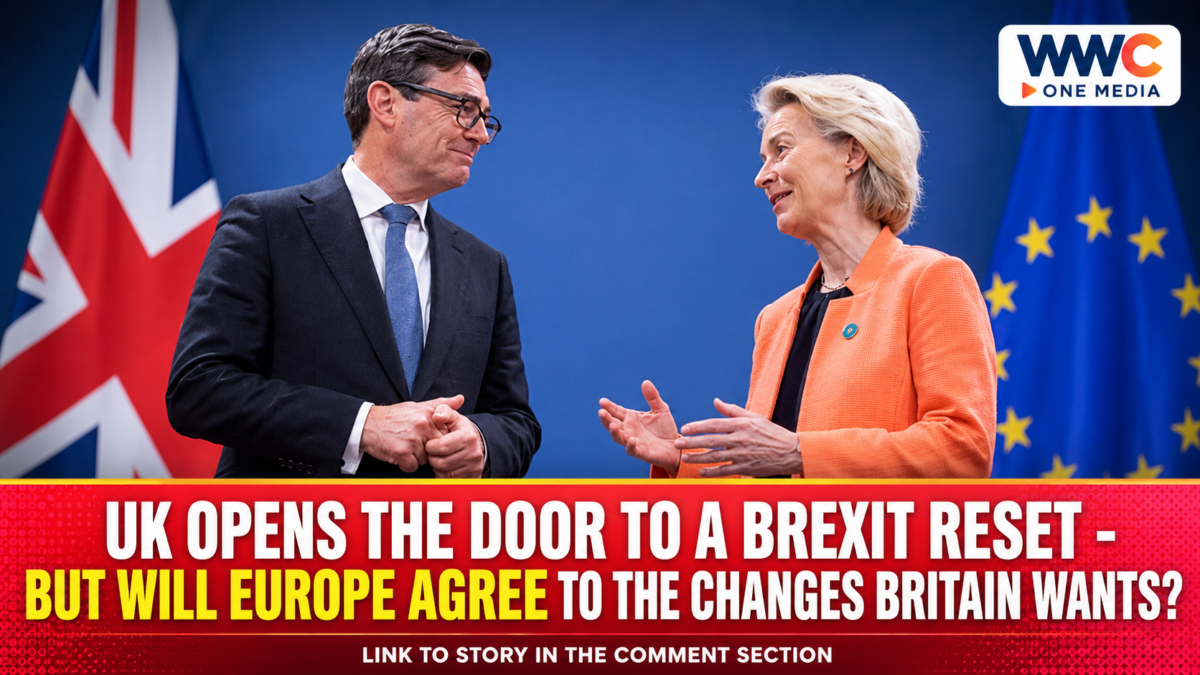
British Prime Minister Andy Burnham has called for a broader reassessment of the United Kingdom’s relationship with the European Union, arguing that the arrangements established after Brexit have not delivered the economic results many voters expected.
In a speech delivered at the Lord Mayor’s Banquet in London on Nov. 16, 2026, Burnham outlined plans to begin discussions with European partners after the UK-EU summit scheduled for Nov. 20 in Brussels. He said any immediate agreement must respect the government’s existing political commitments while delivering practical improvements for businesses, households and communities.
The distinction is important: Britain is not announcing a return to the European Union. Instead, the government is pursuing changes to its post-Brexit arrangements while keeping its current restrictions on membership of the EU single market and customs union.
The coming negotiations could influence trade costs, food prices, energy cooperation and business conditions across Europe. They also carry political implications for a country that remains divided over the decision made in the 2016 referendum.
Brexit reset: What Burnham wants to change
Burnham’s speech focused on the economic and political consequences of the UK’s relationship with Europe since it left the bloc.
He argued that the current arrangement has created difficulties for parts of the British economy, even as some industries, including financial services and technology, have adapted successfully.
The government is now looking at practical adjustments rather than immediately reopening the question of EU membership.
Burnham identified three conditions for any agreement emerging from the Nov. 20 summit:
- It must remain consistent with the government’s manifesto commitments and political red lines.
- It must improve the existing Brexit arrangements and address expectations associated with the 2016 referendum.
- It must produce measurable improvements in the daily lives of communities that have experienced economic disadvantages.
The third condition is described as the Makerfield Test, a framework Burnham presented in the same speech. It assesses government decisions by asking whether they improve conditions for less-advantaged communities.
This approach places economic outcomes at the centre of the negotiations. The government wants any agreement to demonstrate practical benefits rather than simply represent a diplomatic improvement in relations with Brussels. GOV.UK+1
The economic argument behind the Brexit reset
One of the most significant figures raised in Burnham’s speech was the Office for Budget Responsibility’s estimate of Brexit’s long-term economic effect.
The OBR’s March 2026 forecast assumes that the post-Brexit trading relationship will reduce the UK’s long-run productivity by 4% compared with remaining in the European Union.
The watchdog attributes this assumption largely to increased non-tariff barriers, which make trade between the UK and EU more difficult and restrict the ability of businesses to benefit from specialisation.
This figure needs careful interpretation. It is an estimate of the long-term productivity effect relative to a hypothetical situation in which Britain remained an EU member. It is not a measurement showing that the British economy has simply lost 4% of its current output. Office for Budget Responsibility
Burnham also referred to a potential agreement that could add up to 0.4% to GDP. That figure was presented in his speech as a possible benefit of the proposed package, not as a guaranteed economic outcome.
The difference between these figures matters. One concerns the OBR’s long-term productivity assumption, while the other describes the government’s stated potential gain from a new agreement.
For companies, the immediate concern is more practical: whether changes to border procedures, regulatory requirements and market access can reduce the time and expense involved in trading with European partners.
What is on the table at the November 20 summit?
The second UK-EU summit is scheduled to take place in Brussels on Nov. 20, 2026.
The European Council’s official announcement identifies António Costa, President of the European Council, and Ursula von der Leyen, President of the European Commission, as the EU leaders who will meet Burnham.
The discussions are expected to review progress since the first summit in London on May 19, 2025. The agenda includes defence and security, energy, agricultural and food rules, climate policy, people-to-people contacts, migration and law enforcement. Consilium+1
The previous summit established a framework for closer cooperation. Its Common Understanding covered areas such as a proposed sanitary and phytosanitary arrangement for agricultural products, energy cooperation, emissions trading, youth mobility and law enforcement.
These areas offer a practical explanation of what a closer relationship could look like without restoring EU membership.
For example, a sanitary and phytosanitary agreement could reduce certain certification requirements and routine checks on agricultural and food products. The UK government’s published explainer for the 2025 agreement estimated that removing export health certificates could save businesses up to £200 per consignment in relevant shipments. GOV.UK+1
For food producers and retailers, fewer administrative requirements could mean lower compliance expenses and more predictable deliveries.
However, any new arrangements would still need to be negotiated, agreed and implemented through the relevant legal processes. The November summit should not be treated as proof that every proposed measure will automatically take effect.
Why Britain is keeping its political red lines
Closer cooperation with Europe does not mean the government has committed to restoring the UK’s previous membership arrangements.
Burnham said the proposed deal must remain consistent with the government’s manifesto and existing red lines. He also stated that the government would not cross those boundaries before the next general election.
That position limits the scope of what can be agreed immediately.
The distinction is particularly relevant to the single market and customs union. Membership of the single market would involve a different set of economic and regulatory obligations, while a customs union would establish common external trade arrangements.
The government is instead pursuing cooperation in selected areas where it believes the economic benefits could justify closer alignment.
After the summit, Burnham said discussions would begin with EU partners about possible options for Britain’s longer-term relationship with the bloc. He added that the government would present its assessment to inform decisions in the next Parliament, with the British public having the final say at every stage. GOV.UK
This leaves the question of Britain’s long-term relationship with Europe open, rather than resolving it through the November meeting.
What the debate means beyond Europe
The UK’s changing relationship with the EU also matters to countries that trade and invest with Britain.
For the Philippines, Britain remains an important commercial and diplomatic partner. Changes in British trade policy could influence how UK companies approach suppliers, exporters and investment opportunities across Southeast Asia.
The British Chamber of Commerce Philippines and ASEAN Business Advisory Council Philippines recently formalised a partnership intended to strengthen business cooperation and regional commercial engagement. The agreement illustrates how British businesses are also developing relationships outside Europe. The partnership’s potential implications for Philippine businesses are part of a wider effort to expand economic connections across ASEAN.
Security cooperation is another dimension of Britain’s international relationships. The Philippines and the UK have also opened negotiations on a proposed visiting forces agreement, demonstrating that bilateral engagement extends beyond trade. The proposed Philippines-UK troop agreement reflects the growing importance of partnerships across different regions.
Trade opportunities can also move in both directions. Japan’s efforts to promote regional products in Britain, including Hiroshima’s push to expand oyster and sake exports into the UK market, show why changes to market access and trade procedures matter to exporters beyond Europe.
For Philippine companies, the relevant issue is whether Britain’s evolving trade relationships create new opportunities for suppliers, distributors and investors. Any benefit will depend on the specific agreements, product requirements and commercial conditions involved.
What happens next
The immediate focus is the Nov. 20 UK-EU summit in Brussels.
The leaders are expected to review existing cooperation and discuss practical next steps. The outcome will help determine which proposals move forward and which require further negotiations.
After the meeting, the British government intends to open a wider discussion about the country’s long-term relationship with the EU. That process is expected to take time, with options and assessments presented for consideration in the next Parliament.
For now, the government’s position is a closer working relationship without an immediate return to the single market or customs union.
The real test will be whether the proposed changes produce measurable improvements in trade, business costs, household expenses and economic opportunities.
Britain has opened a new conversation about Brexit. Whether that conversation leads to a lasting change in its relationship with Europe will depend on what both sides are prepared to agree — and what the British public ultimately accepts.
Frequently Asked Questions
1. Is the United Kingdom rejoining the European Union?
No. The government is pursuing closer cooperation with the EU but has not announced plans to rejoin the bloc.
2. When is the next UK-EU summit?
The second UK-EU summit is scheduled for Nov. 20, 2026, in Brussels.
3. What does Andy Burnham want from the Brexit reset?
He wants practical changes that improve trade, reduce business costs, support economic growth and deliver benefits to communities.
4. What is the Makerfield Test?
It is a framework Burnham introduced to assess government policies by examining whether they improve the lives of less-advantaged communities.
5. Could the Brexit reset benefit businesses in the Philippines?
Potentially. Changes to British trade and investment policies could affect commercial opportunities for Philippine exporters and businesses, but any benefits would depend on the final agreements and their implementation.