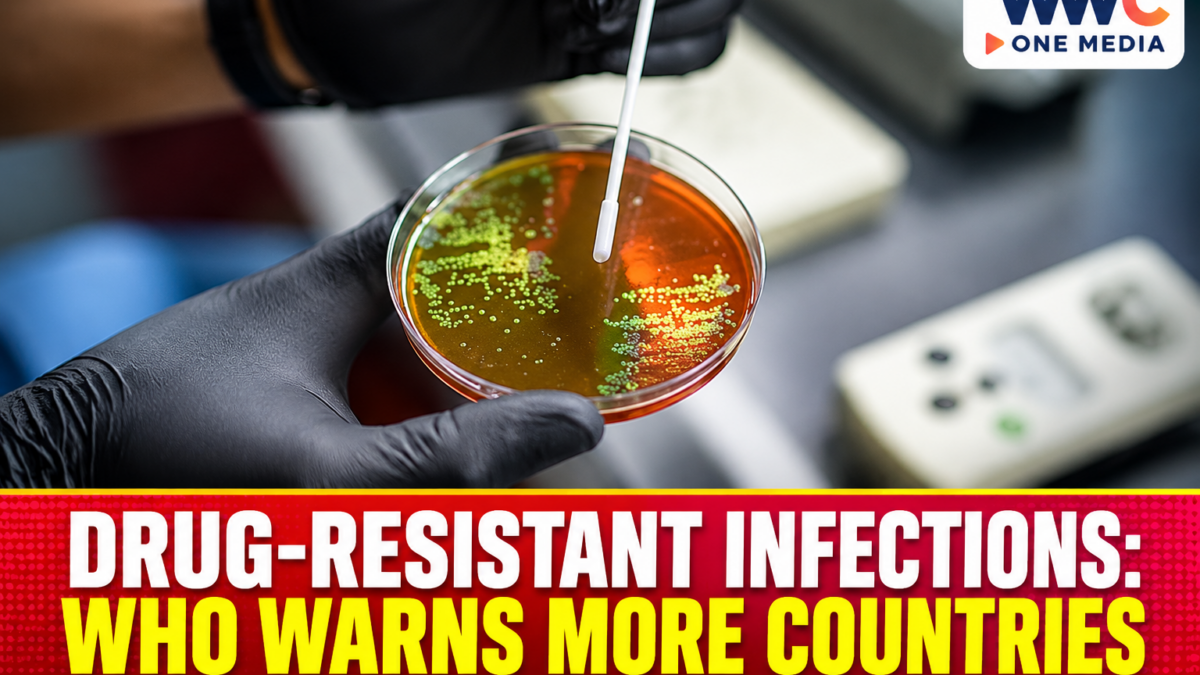
On Nov. 16, 2026, the World Health Organization (WHO) warned that the global fight against antimicrobial resistance (AMR) is advancing on paper faster than many health systems can deliver testing and treatment to patients. Its latest international assessment found that 173 countries had developed national AMR plans, but only 22% reported having both the funding and full implementation needed to put those plans into practice.
The warning comes ahead of World AMR Awareness Week, which runs from Nov. 18 to 24. It highlights a difficult gap in public health: governments may recognise the danger of drug-resistant infections, but without functioning laboratories, trained personnel and access to appropriate medicines, patients can still face infections that are harder to treat.
The WHO findings also carry implications for the Philippines, which has its own national action plan running through 2028. The country’s challenge is not simply to maintain policies against drug resistance, but to expand the diagnostic and surveillance capacity needed to make those policies work.
Antimicrobial resistance is already affecting common infections
Antimicrobial resistance occurs when bacteria, viruses, fungi or parasites stop responding to medicines intended to treat them. Antibiotic resistance is one part of this broader problem and concerns bacteria that no longer respond to antibiotic medicines.
The consequences can extend beyond an individual infection. When effective treatments become harder to find, routine medical procedures such as surgery, childbirth and cancer care can become riskier because infections associated with those procedures may be more difficult to manage.
The scale is already measurable. WHO reported that approximately one in six laboratory-confirmed bacterial infections worldwide in 2023 were resistant to antibiotics.
Its Global Antibiotic Resistance Surveillance Report 2025 analysed more than 23 million bacteriologically confirmed cases involving bloodstream, urinary tract, gastrointestinal and urogenital infections. The data came from 104 countries reporting in 2023, while 110 countries contributed information covering the 2016–2023 period. World Health Organization+1
These figures do not mean that one in six people worldwide has a resistant infection. They describe the proportion of laboratory-confirmed bacterial infections in the dataset that showed resistance, an important distinction when interpreting the global statistics.
More countries have plans, but implementation remains the problem
The latest WHO assessment draws on the 2026 round of the Tracking Antimicrobial Resistance Country Self-assessment Survey, known as TrACSS.
A total of 183 countries completed the assessment, representing 94% of WHO Member States. The number reporting national AMR plans reached 173, compared with 79 in 2017.
However, only 22% of countries said they had both the necessary funding and full implementation of their national plans.
This difference matters because a national strategy is not the same as an operational healthcare programme. A government can establish targets, publish guidelines and assign responsibilities, but patients benefit only when hospitals and laboratories have the resources to carry out the work.
The survey also found that just 36% of countries reported having a national reference laboratory equipped to test selected bacteria and fungi. That falls well short of the global target of 80% of countries having comprehensive bacterial and fungal resistance testing capacity by 2030.
Only 63% reported having guidelines on the appropriate use of antimicrobials. Just over half reported having surveillance systems to monitor national antibiotic use and track resistance levels. World Health Organization
Why diagnostic testing can change treatment decisions
A major part of the problem is knowing what is causing an infection and which medicines are likely to work against it.
Symptoms alone do not always identify the responsible microorganism. Laboratory testing can help clinicians determine whether an infection is bacterial or fungal, identify the organism and assess its susceptibility to particular medicines.
Without that information, patients may receive treatment that is ineffective or unnecessary. Resistant infections may also go undetected, making it harder for health authorities to recognise emerging patterns and respond to outbreaks.
To address these gaps, WHO released two practical resources on Nov. 16.
The first is an essential package of diagnostic tests for bacterial and fungal infections and AMR. It provides a prioritised catalogue of rapid, microscopy, culture-based, serological and molecular tests, with recommendations linked to different levels of the health system.
The second is a toolkit of standard operating procedures for bacteriology, mycology and antimicrobial susceptibility testing. It covers laboratory processes ranging from specimen collection and transport to organism identification, susceptibility testing, reporting, quality control and biosafety.
These resources are intended to help countries improve laboratory practices and expand access to reliable testing. Their publication, however, does not mean that every hospital or clinic now has the equipment and personnel to provide those services. World Health Organization+1
What the WHO warning means for the Philippines
The Philippines already has a national framework for addressing antimicrobial resistance.
The Philippine National Action Plan on Antimicrobial Resistance 2024–2028, developed by the Inter-Agency Committee on Antimicrobial Resistance, adopts a One Health approach. This recognises that drug resistance is connected to human health, animal health and the environment.
The plan identifies stronger surveillance, monitoring and laboratory capacity as key priorities. It also recognises the importance of responsible antimicrobial use, access to quality-assured medicines and public awareness.
Its targets include increasing the number of human-health surveillance sites under the Antimicrobial Resistance Surveillance Program from a baseline of 26 to 34.
The plan also sets out an expansion programme for 2026 involving eight additional surveillance sites across Luzon, the Visayas and Mindanao, with an estimated allocation of ₱24 million.
For 2027 and 2028, it identifies a further programme to establish rapid molecular diagnostic testing capacity in selected Level 3 laboratories. The plan estimates ₱80 million for this activity, based on two laboratories per year over two years.
These are planned activities and budget estimates in the national action plan, not confirmation that all targets have already been completed. Their implementation and funding will determine how much additional diagnostic capacity becomes available. World Health Organization+1
The issue is relevant to everyday healthcare, too. WWC has previously examined why antibiotics are not appropriate for every respiratory illness, including the distinction between bacterial infections and viral conditions.
The pressure on hospitals during infectious-disease surges also illustrates why prevention and reliable diagnosis matter. In its report on the rise in leptospirosis patients at San Lazaro Hospital, WWC examined how rapidly demand for hospital services can increase during a public-health emergency.
Similarly, efforts to strengthen tuberculosis services in Lapu-Lapu City show why screening, diagnosis and sustained treatment capacity remain important parts of infectious-disease control. Tuberculosis is a separate disease with its own treatment and resistance challenges, but it demonstrates the broader importance of maintaining functioning public-health services.
Why the One Health approach matters
AMR cannot be addressed by hospitals alone.
Antimicrobial medicines are used in human healthcare and in animal and agricultural settings. Resistant microorganisms can move through people, animals, food systems and the environment, making cooperation across these sectors important.
WHO’s 2026 World AMR Awareness Week theme is “One Health, one action: Prevent AMR now”. The campaign, scheduled for Nov. 18–24, calls for coordinated action involving governments, healthcare professionals, farmers, veterinarians, environmental experts and communities.
The updated Global Action Plan on Antimicrobial Resistance 2026–2036, adopted by Member States at the 79th World Health Assembly in May, provides the international framework for that work. It emphasises prevention, surveillance, responsible antimicrobial use, sustainable financing and cooperation across sectors. World Health Organization+1
For the Philippines, this means that progress cannot be measured only by the existence of a national plan. The availability of laboratory services, the quality of surveillance data, responsible medicine use and coordination between agencies will all matter.
What happens next
The next test for governments is whether they can turn policy commitments into working services.
For the Philippines, the milestones in the 2024–2028 national action plan provide a framework for assessing progress in surveillance expansion, laboratory training and diagnostic capacity. Public reporting on completed activities, actual funding and the availability of testing services would help show whether the planned improvements are reaching healthcare facilities.
Globally, WHO’s new diagnostic resources give countries practical guidance, but their impact will depend on implementation and sustained investment.
The central issue is no longer whether governments recognise antimicrobial resistance as a serious threat. The latest assessment shows that most have already developed plans. The harder question is whether patients can access the tests and appropriate treatment needed before resistant infections become more difficult to control.
Frequently Asked Questions
What is antimicrobial resistance?
Antimicrobial resistance occurs when microorganisms such as bacteria, viruses, fungi and parasites stop responding to medicines designed to treat them. Antibiotic resistance is the bacterial component of this wider problem.
How common is antibiotic resistance worldwide?
WHO reported that approximately one in six laboratory-confirmed bacterial infections worldwide were resistant to antibiotics in 2023. This figure describes infections in the surveillance data, not the proportion of the entire global population affected.
Why are laboratory tests important in treating infections?
Laboratory tests can help identify the microorganism responsible for an infection and determine which medicines are likely to be effective. This supports more appropriate treatment and helps health authorities monitor resistance.
Does the Philippines have a national plan against antimicrobial resistance?
Yes. The Philippine National Action Plan on Antimicrobial Resistance 2024–2028 sets priorities for surveillance, laboratory capacity, responsible antimicrobial use and cooperation across human, animal and environmental health sectors.
Can antibiotics treat viral infections such as the common cold?
No. Antibiotics work against susceptible bacteria, not viruses. A healthcare professional can assess symptoms and determine whether an antibiotic or another form of treatment is appropriate.