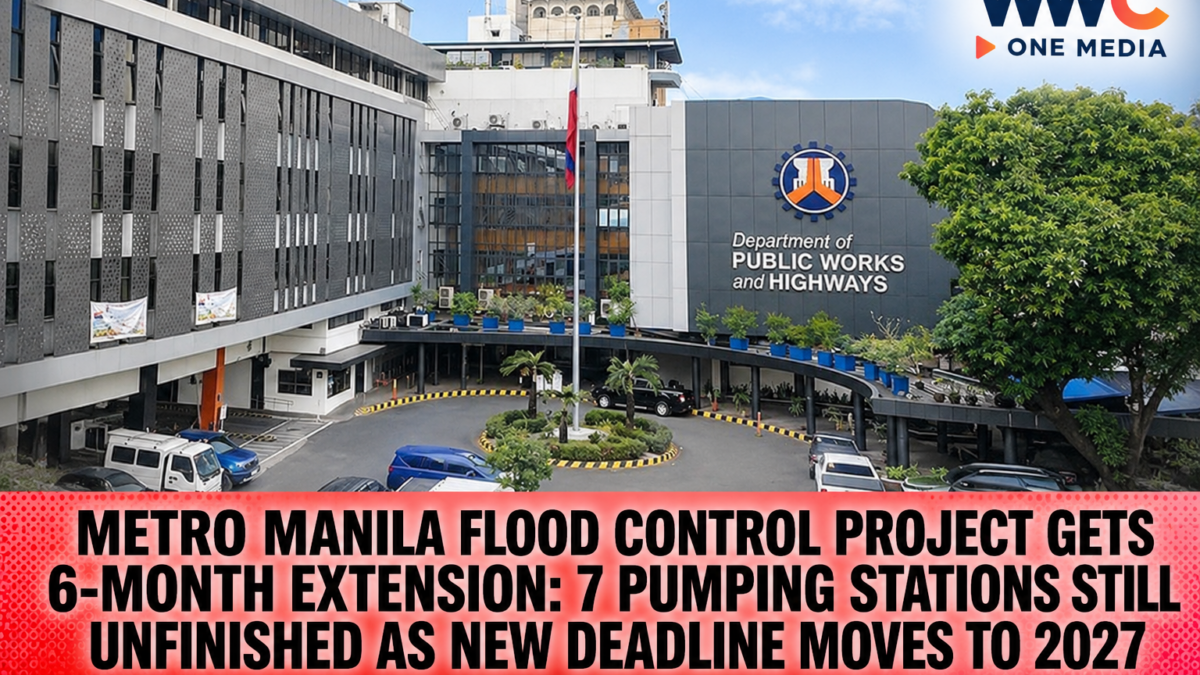
MANILA, Philippines — November 12, 2026 — Metro Manila residents will have to wait another six months for the completion of a major government flood-control initiative, as authorities move the deadline of the Metro Manila Flood Management Project (MMFMP) Phase 1 from December 2, 2026, to May 31, 2027.
The extension covers seven remaining pumping stations that have yet to complete construction, testing and turnover under the project, which was originally designed to strengthen flood protection across the National Capital Region.
The development was discussed during the 12th meeting of the Economy and Development Council at Malacañang, chaired by President Ferdinand Marcos Jr.
According to the Presidential Communications Office (PCO), the additional time will allow the Department of Public Works and Highways (DPWH) and the Metropolitan Manila Development Authority (MMDA) to finish the remaining works and ensure the facilities are ready for actual operation.
The approved project scope and total cost will remain unchanged, while the extension is described by the government as the project’s second and final adjustment.
But with Metro Manila repeatedly experiencing dangerous flooding during intense rainfall and typhoons, the latest deadline adjustment raises an important question: Will the remaining pumping stations be ready before another major weather emergency puts the capital’s flood defenses to the test?
Seven Pumping Stations Still Need to Be Completed
The seven unfinished pumping stations are part of the project’s original target of 38 facilities across Metro Manila.
Once operational, these facilities are expected to increase the capacity of the capital’s flood-management system, particularly in communities vulnerable to rising water levels and heavy rainfall.
The additional six months are intended to cover several essential stages:
- Completion of remaining construction works.
- Testing and inspection of pumping equipment.
- Formal acceptance of the facilities.
- Turnover to the responsible government agencies.
- Preparation for full operational use.
The distinction matters because completing construction does not automatically mean a pumping station is ready to protect nearby communities.
The facilities must be properly tested, connected, maintained and capable of moving floodwater when heavy rainfall overwhelms drainage systems.
The PCO said the extension would provide DPWH and MMDA with sufficient time to complete these remaining requirements.
Why Has the Metro Manila Flood Management Project Been Delayed?
The latest extension comes after years of implementation challenges involving one of the country’s major urban flood-mitigation initiatives.
The project was originally approved in 2017, with an estimated total cost of $500 million. It was designed to improve flood protection in selected areas of Metro Manila through pumping station rehabilitation, new facilities, drainage improvements, solid-waste management and resettlement initiatives.
However, implementation did not proceed as originally planned.
Previous reports by the Manila Bulletin, citing World Bank assessments, identified several factors behind the delays, including procurement bottlenecks, contractor-related issues, permitting requirements, resettlement concerns, technical difficulties and changes in project design.
The COVID-19 pandemic also disrupted implementation, while frequent leadership changes within the MMDA affected procurement and project disbursement activities.
In November 2024, the government and the World Bank amended their financing agreement, extending the implementation period by two years.
Despite those adjustments, critical infrastructure remained unfinished, eventually requiring another extension.
The latest adjustment is therefore significant because it represents another opportunity for implementing agencies to complete facilities that were supposed to improve flood protection much earlier.
World Bank Previously Flagged Delays Despite Progress
The World Bank has continued monitoring the project’s implementation and its ability to deliver the intended flood-protection benefits.
In a June 2026 implementation update reported by the Manila Bulletin, the lender maintained a moderately satisfactory rating for both overall implementation progress and achievement of the project’s development objectives.
However, the World Bank also identified continuing administrative, resettlement and technical challenges at several project sites.
The same report showed measurable progress.
As of May 2026, the number of people benefiting from improved flood protection had increased to 766,228, from 675,455 in January.
The area of flood-prone land that could be cleared of water within 24 hours after major rainfall also increased to 1,709 hectares, compared with 1,540 hectares in the previous assessment.
These figures indicate that some project components are already delivering improvements.
However, the remaining seven pumping stations are still important to completing the project’s intended infrastructure package.
The World Bank’s earlier assessments also emphasized the need for DPWH and MMDA to closely monitor implementation and ensure that remaining activities are completed according to agreed action plans.
The Bigger Problem: Pumping Stations Alone Cannot Stop Metro Manila Flooding
Even after the remaining facilities become operational, Metro Manila’s flooding problem will not automatically disappear.
Flooding in the capital is influenced by several interconnected factors, including drainage capacity, clogged waterways, improper waste disposal, land development, water levels in rivers and esteros, and increasingly intense rainfall.
President Marcos highlighted the garbage problem during his August 20 inspection of the Tripa de Gallina Pumping Station in Pasay City.
The facility is the largest among the MMDA’s 73 pumping stations in Metro Manila.
During the inspection, Marcos said that pumping stations must have sufficient capacity to handle the increasing volume of rainfall. He also emphasized that accumulated garbage can obstruct drainage systems and interfere with the movement of floodwater.
The facility’s trash-rake system, which collects waste and debris from waterways, was also inspected.
This concern reflects a larger issue: even modern pumping equipment can become less effective when drainage channels are blocked or water cannot reach the facilities efficiently.
WWC ONE MEDIA previously examined this issue in its report, Marcos Says 13 Pumping Stations Could Help Fight Metro Manila Floods by Next Year—But One Problem Could Still Render Them Useless.
The report discussed how aging drainage networks, garbage accumulation and inadequate coordination between flood-control infrastructure can undermine the effectiveness of pumping stations.
Government’s Flood Strategy Is Expanding Beyond Pumping Stations
The administration is also exploring additional infrastructure intended to temporarily store excess rainwater instead of relying entirely on pumping and drainage systems.
These include underground detention basins, rainwater storage facilities, drainage rehabilitation and improvements to waterways.
In a separate report, WWC ONE MEDIA covered the government’s planned detention-basin projects in Metro Manila, which aim to temporarily hold excess rainwater and reduce pressure on existing drainage networks.
Read: DPWH to Begin Metro Manila Water Detention Basin Projects by January as Flood Strategy Shifts.
Another WWC report examined the proposed 39 flood-detention sites being studied by the University of the Philippines and MMDA.
These initiatives highlight a broader shift toward combining conventional flood-control infrastructure with temporary water storage, better drainage planning and improved flood management.
However, proposed facilities and projects under development should not be confused with completed and operational infrastructure.
Flood-Control Spending Faces Renewed Public Scrutiny
The extension also comes amid wider public scrutiny of government flood-control spending.
Investigations into alleged irregularities involving flood-control projects have raised questions about project implementation, public funds and whether infrastructure promised to vulnerable communities is actually being delivered.
One prominent case involves the alleged ₱92.8-million flood-control project in Pandi, Bulacan, which is the subject of criminal proceedings involving former senator Ramon Bong Revilla Jr. The allegations remain subject to judicial determination.
WWC ONE MEDIA previously reported on the latest court development in the case: Sandiganbayan Rejects Bong Revilla’s Bid to Dismiss ₱92.8-Million Flood Control Case — But What Happens When His Defense Takes the Stand?.
Although the Pandi case is separate from the Metro Manila Flood Management Project, both developments reinforce the importance of transparency, effective project monitoring and accountability in the use of public funds.
For residents who experience flooding every rainy season, the most important measure of success is not the number of projects announced or the amount of money allocated.
It is whether the infrastructure actually works when communities need it.
What Happens Next? May 31, 2027 Becomes the Critical Deadline
The remaining months will be crucial for DPWH and MMDA as they work to complete the seven pumping stations.
The government’s stated objective is to use the additional period to finish construction, conduct the necessary tests and formally turn over the facilities.
The extension is described by the PCO as the project’s second and final extension, placing greater pressure on implementing agencies to deliver the remaining work within the revised schedule.
The public will also be watching whether the government provides regular progress updates, addresses remaining construction problems and ensures that the completed facilities are properly maintained.
For millions of Metro Manila residents, the stakes are particularly high.
Flooding can disrupt transportation, damage homes and businesses, interrupt classes and work, and expose communities to health and safety risks.
Every delay means communities must continue relying on existing flood-control infrastructure while waiting for the remaining facilities to become operational.
The Bottom Line: Another Six Months, but Will Metro Manila Finally Be Better Protected?
The extension of the Metro Manila Flood Management Project gives the government additional time to finish seven pumping stations that are expected to strengthen flood protection across the capital.
But the larger challenge goes beyond completing construction.
The government must ensure that pumping stations, drainage networks, waterways, detention facilities and waste-management systems function together as an effective flood-control network.
May 31, 2027, is now the deadline to watch.
For residents living in flood-prone communities, the question is no longer simply when the government will finish the project.
It is whether the completed infrastructure will finally deliver the protection they have been waiting for — before the next major downpour exposes the same weaknesses all over again.