WASHINGTON, UNITED STATES / DOHA, QATAR / TEHRAN, IRAN — November 10, 2026 — US President Donald Trump has delivered one of his strongest signals yet that Washington may avoid another major military offensive against Iran, raising hopes that more than eight months of devastating conflict could finally move toward a diplomatic settlement.
But the apparent breakthrough comes with a dangerous condition: America’s military remains ready to strike, and the naval blockade squeezing Iran’s economy is not going away.
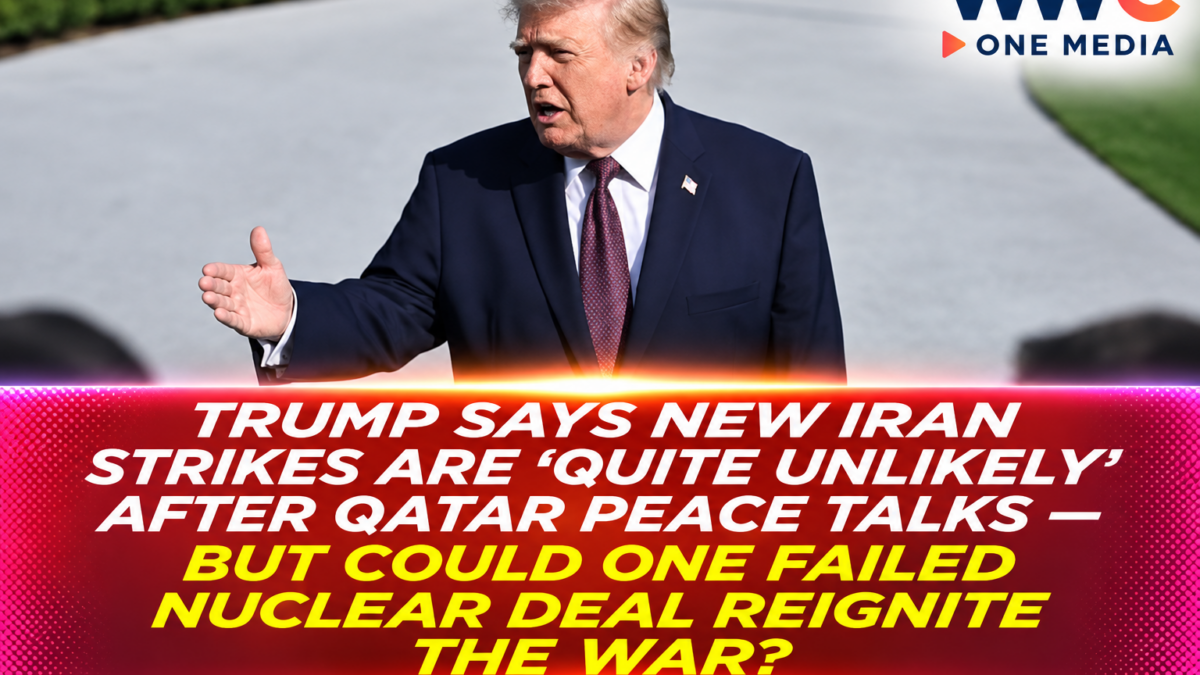
Speaking after meeting Qatari Prime Minister Sheikh Mohammed bin Abdulrahman Al Thani at the White House on November 9, Trump said renewed US attacks on Iran appeared unnecessary under current circumstances.
He described additional military strikes as highly unlikely while emphasizing that Washington would retain the ability to resume operations if negotiations failed or conditions changed.
The remarks followed urgent diplomatic appeals from Qatar, Saudi Arabia and other Gulf governments seeking to prevent another escalation across the Middle East.
Financial markets responded with cautious optimism.
Brent crude fell almost 6% to settle at $92.57 per barrel on Monday as traders reassessed the risk of renewed disruptions to Middle Eastern oil supplies.
However, Tehran continues demanding an end to US maritime restrictions, sanctions relief and assurances against further military action.
That leaves the central question unanswered: Can Trump transform a temporary reduction in military pressure into a lasting peace agreement, or will unresolved disputes over Iran’s nuclear program and the Strait of Hormuz push both countries back toward confrontation?
Trump Signals Military Strikes Are No Longer Necessary
Trump’s latest remarks represent an important change in tone after months of confrontation between Washington and Tehran.
During his White House appearance, the president said he no longer believed major new strikes were necessary at present.
He also characterized the conflict as militarily almost finished, arguing that American operations had substantially weakened Iran’s capabilities.
But Trump stopped short of declaring a formal end to the war.
He maintained that American forces remained ready to act if Iran failed to meet Washington’s security demands.
In a separate Reuters interview, Trump emphasized that the United States could resume military operations if necessary.
His comments suggest that Washington is pursuing a strategy combining diplomatic engagement with continued military and economic pressure.
The difference is important.
A decision not to launch additional major strikes immediately is not the same as a ceasefire agreement.
Nor does it mean that American forces have withdrawn from the region or that previous military restrictions have been lifted.
For now, Trump’s position is best understood as a conditional pause in potential escalation rather than a definitive declaration of peace.
Qatar’s Prime Minister Emerges as a Key Peace Mediator
The diplomatic shift followed Trump’s meeting with Sheikh Mohammed bin Abdulrahman Al Thani, who serves as both Qatar’s prime minister and foreign minister.
Qatar has played a central role in communicating between Washington and Tehran during the conflict.
Its ability to maintain diplomatic relationships with different parties has made it an important intermediary.
Before traveling to Washington, the Qatari prime minister visited Tehran as part of efforts to narrow disagreements over a possible settlement.
Following his White House discussions, he described the exchanges as positive and expressed hope for progress toward regional peace.
Vice President JD Vance has also been involved in diplomatic engagement with Qatar.
The negotiations come at a delicate moment because Gulf countries face substantial security and economic risks from continued fighting.
Qatar, Saudi Arabia, the United Arab Emirates, Bahrain and Kuwait have all urged restraint.
These governments are concerned that another major offensive against Iran could trigger retaliatory attacks affecting their territory, energy facilities or shipping routes.
Trump’s remarks suggest that those appeals have influenced Washington’s immediate military calculations.
Saudi Arabia and Gulf States Push Trump Away From Escalation
The Gulf states’ involvement reflects their growing concern about the consequences of prolonged conflict.
Countries across the region depend on the uninterrupted movement of petroleum, natural gas and commercial goods.
Military escalation can threaten ports, airports, energy installations and shipping lanes.
Even when fighting occurs outside their borders, Gulf economies may suffer from higher insurance costs, disrupted transportation and reduced investor confidence.
Saudi Arabia and Qatar have therefore encouraged Washington to pursue a negotiated resolution.
Turkey has also urged restraint.
President Recep Tayyip Erdogan said Ankara continued advocating dialogue to prevent further regional escalation.
However, Gulf support for negotiations does not guarantee that Tehran will accept Washington’s proposals.
Iran’s leadership has repeatedly insisted that any agreement must address economic sanctions, security guarantees and the restrictions imposed on its maritime trade.
Regional mediators must therefore find a formula acceptable to both sides.
The US Naval Blockade Remains the Biggest Immediate Obstacle
Despite Trump’s softer military rhetoric, the United States is maintaining its naval blockade targeting Iran’s maritime trade.
The restrictions are intended to preserve economic pressure on Tehran while diplomatic negotiations continue.
Washington views the blockade as leverage.
Iran considers it a major obstacle to any meaningful peace agreement.
The dispute is particularly important because of the Strait of Hormuz, one of the world’s most strategically significant maritime passages.
Large volumes of crude oil, petroleum products and liquefied natural gas normally move through the waterway.
Disruptions can quickly influence global energy markets and shipping costs.
Iran has demanded changes to the blockade and related restrictions as part of a settlement.
Washington, however, wants assurances concerning Iran’s nuclear activities and regional security before surrendering major sources of pressure.
As previously examined by WWC ONE MEDIA in its report on the stalled US-Iran negotiations and Trump’s readiness for additional strikes, the disagreement over maritime restrictions has been central to the diplomatic deadlock.
The latest White House meeting has improved the atmosphere surrounding negotiations, but it has not resolved this fundamental dispute.
Iran Rejects Claims That Peace Is Already Secured
Iranian officials have pushed back against suggestions that the war is effectively finished.
Tehran argues that military pressure, sanctions and restrictions on shipping must end before a durable agreement is possible.
Iran’s Supreme National Security Council secretary, Mohsen Rezaei, disputed American descriptions of the negotiations and reiterated Tehran’s demands.
The Iranian position reflects a broader disagreement over the sequence of concessions.
The United States wants Iran to make credible commitments concerning its nuclear program and regional activities.
Iran wants tangible relief from the measures imposed by Washington.
Neither side wants to surrender its bargaining advantages first.
That leaves negotiators trying to determine whether an interim arrangement could reduce tensions while broader disagreements are addressed.
The diplomatic uncertainty is significant because the conflict has already produced extensive military, economic and humanitarian consequences.
Could a Seven-Day Interim Deal Unlock Peace?
One possibility under discussion is a temporary arrangement based on an Iranian proposal from September.
According to the Financial Times, mediators have examined a framework that could establish an initial period of reduced hostilities and improved maritime access.
The proposal reportedly includes steps involving shipping through the Strait of Hormuz, the US blockade, oil exports and some frozen Iranian assets.
Such an arrangement could provide time for negotiations on more difficult issues.
But it remains a proposal rather than an agreement accepted by both countries.
The greatest challenge is sequencing.
Washington is reluctant to remove restrictions without assurances that Iran will meet its obligations.
Tehran is reluctant to make major concessions while American military and economic pressure continues.
Even a short-term arrangement would require a credible process for verifying commitments and responding to alleged violations.
For that reason, Qatar’s mediation may be essential, but it cannot guarantee success.
Iran’s Nuclear Program Could Derail Negotiations
One of the most sensitive remaining issues concerns Iran’s stockpile of highly enriched uranium.
The Financial Times reported that negotiators remain divided over approximately 440 kilograms of highly enriched uranium and the conditions for international inspection.
Washington is seeking restrictions designed to ensure that Iran cannot develop nuclear weapons.
It also wants credible verification of relevant nuclear activities and facilities.
Tehran rejects demands that it considers incompatible with its sovereignty and nuclear rights.
The dispute is further complicated by damage to nuclear-related facilities during the conflict.
Inspectors may face challenges assessing material and equipment at damaged or inaccessible locations.
A lasting agreement would therefore require more than political assurances.
It would need detailed technical commitments and verification mechanisms.
The issue has become a major factor separating optimistic White House statements from the reality of the negotiations.
In related coverage, WWC ONE MEDIA examined Trump’s claim that the Iran war was militarily effectively over and the unresolved uranium dispute following the Qatar meeting.
The central challenge remains unchanged: both countries must agree not only on the desired outcome, but on how compliance will be demonstrated.
Fighting Continues Despite Trump’s Peace Signals
The situation on the ground remains volatile.
Reuters reported that Iranian media described further US strikes involving Qeshm Island around November 8–9.
The United States had not publicly confirmed the details of those specific reports at the time.
Meanwhile, attacks involving commercial vessels in the Gulf and Strait of Hormuz have continued to raise concerns about maritime security.
Iranian sources have described incidents involving tankers and naval restrictions, although not every claim has been independently verified.
The continued violence underscores the difference between diplomatic optimism and an actual cessation of hostilities.
Even if Washington avoids another large-scale bombing campaign, smaller military incidents could still threaten negotiations.
A strike on a vessel, an attack on energy infrastructure or a confrontation involving regional forces could change political calculations quickly.
As WWC ONE MEDIA previously reported on escalating attacks against shipping and the threat to global markets, the conflict has repeatedly demonstrated how localized military incidents can influence international commerce.
The risk of renewed escalation remains one of the largest obstacles to a durable settlement.
Oil Prices Plunge as Traders Bet on Reduced War Risks
Energy markets have reacted strongly to the possibility of progress.
Brent crude settled at approximately $92.57 per barrel on November 9, a decline of 5.85%.
US West Texas Intermediate also fell, closing near $86.85 per barrel.
The selloff reflected expectations that reduced military confrontation could improve the outlook for oil supplies and maritime shipping.
However, prices remain vulnerable to further developments.
A successful settlement could reduce geopolitical risk premiums and improve confidence in Middle Eastern energy transportation.
A breakdown in talks could revive fears of supply disruption.
As WWC ONE MEDIA reported in its coverage of the almost 6% oil-price collapse following Trump’s Iran remarks, traders are increasingly responding to diplomatic signals rather than only the immediate military situation.
But lower oil prices do not establish that the conflict has ended.
Until maritime access and security conditions improve sustainably, the market may remain volatile.
Trump’s Midterm Defeat Adds Political Pressure
Trump’s comments also come after the November 3 US midterm elections delivered a major setback for the Republican Party.
The conflict with Iran and its effect on fuel prices became significant political issues during the campaign.
Higher gasoline costs have increased pressure on households and businesses.
The administration has also faced criticism concerning the war’s duration, cost and objectives.
In a separate report, WWC ONE MEDIA examined how Trump’s midterm defeat increased pressure for a change in Iran policy as global oil prices fell sharply.
Political pressure may encourage renewed diplomacy.
However, electoral losses do not automatically determine military policy.
Trump retains significant executive authority over American military operations.
Congressional oversight and public opinion may influence his decisions, but the outcome will also depend on negotiations with Iran and regional security developments.
Why the Philippines Has a Major Stake in the Outcome
Although the conflict is far from Southeast Asia, its economic consequences are significant for the Philippines.
The country imports much of the petroleum it consumes.
Changes in world oil prices can therefore influence domestic fuel costs.
Expensive fuel can increase transportation expenses, shipping costs and operating costs for businesses.
These pressures can eventually affect consumer prices and household budgets.
A sustained decline in international oil prices could provide relief, although pump prices also depend on exchange rates, taxes, inventory costs and domestic market conditions.
For overseas Filipino workers employed in the Middle East, regional security is another major concern.
Further military escalation could disrupt travel, employment and personal safety.
For Philippine businesses, a stable settlement could improve confidence in energy supplies and international trade.
But the economic benefits would depend on whether the diplomatic progress proves durable.
What Happens Next? Five Developments to Watch
Several issues will determine whether the current diplomatic momentum becomes a lasting settlement.
First, Qatar’s mediation. Negotiators must determine whether Washington and Tehran can agree on initial confidence-building measures.
Second, the Strait of Hormuz. The US blockade and restrictions on maritime access remain central disputes.
Third, Iran’s nuclear program. The treatment of enriched uranium and independent verification could determine whether a broader deal is possible.
Fourth, military incidents. Further attacks on vessels, installations or military positions could undermine negotiations.
Fifth, regional security guarantees. Gulf states want protection from renewed confrontation, while Iran is seeking assurances that military attacks will not resume.
A successful agreement would require progress across several of these issues.
Failure in even one could prevent the parties from reaching a durable settlement.
The Bigger Picture: Trump’s Strongest Peace Signal Yet Still Comes With a Warning
Trump’s latest comments indicate that Washington is increasingly willing to explore a diplomatic path after more than eight months of conflict.
The president says another major military offensive is unlikely under current conditions.
Qatar is actively mediating.
Saudi Arabia and other Gulf governments want to avoid further escalation.
Oil markets have responded to the possibility of reduced military risk.
But several crucial facts have not changed.
The United States continues its naval blockade.
Iran wants sanctions relief and security guarantees.
The two countries remain divided over uranium and nuclear inspections.
And military incidents continue despite the diplomatic activity.
For the region, the difference between a temporary reduction in fighting and a comprehensive agreement could be enormous.
A lasting settlement could protect shipping routes, reduce risks to civilians and ease pressure on international energy markets.
A collapse in negotiations could quickly reverse those gains.
Donald Trump now says fresh military strikes against Iran appear unnecessary after talks with Qatar. But with the Strait of Hormuz still under pressure and Tehran refusing to surrender its biggest demands, will this become the diplomatic breakthrough that finally ends the war—or could one failed nuclear negotiation bring the Middle East back to the brink?