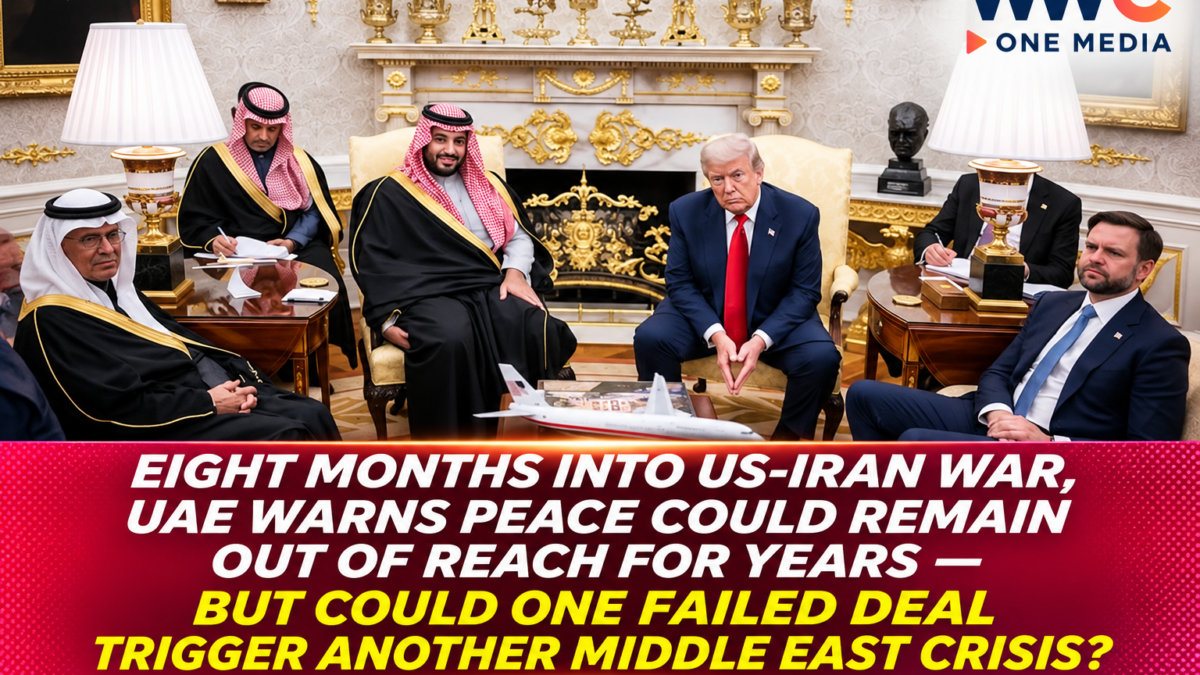
ABU DHABI, UNITED ARAB EMIRATES — November 10, 2026 — After more than eight months of conflict between the United States and Iran, one of Washington’s most important Middle Eastern partners has delivered a sobering warning: Even if the fighting subsides, the region may remain unstable for years.
The United Arab Emirates says a comprehensive political settlement between Washington and Tehran remains difficult to achieve, despite renewed diplomatic efforts and signs that US President Donald Trump is moving away from another immediate round of large-scale military strikes.
Anwar Gargash, diplomatic adviser to UAE President Sheikh Mohamed bin Zayed Al Nahyan, issued the warning during the Abu Dhabi Strategic Debate on Monday, November 9.
His remarks underscored a growing concern among Gulf governments that the conflict could leave lasting security problems, even if negotiations eventually produce a ceasefire.
The UAE, which opposed the American war against Iran from its beginning, has already faced the consequences of regional military escalation.
Iranian attacks earlier this year exposed the vulnerability of Gulf countries, including states that have sought to avoid direct participation in the conflict.
Now, as Washington and Tehran remain divided over sanctions, nuclear restrictions and the Strait of Hormuz, Gulf leaders are preparing for the possibility that uncertainty could become a long-term reality.
And the most dangerous question may no longer be when the fighting stops—but whether the next agreement can prevent it from starting again.
UAE Warns Middle East Could Face Years of Instability
Speaking at the Abu Dhabi Strategic Debate, Gargash warned against assuming that the war would produce either a clear military outcome or a lasting regional security arrangement.
The UAE official said the consequences of the conflict could continue long after the current confrontation.
His assessment reflected the difficulties facing countries that have spent months navigating Iranian military threats, American operations and disruption to regional commerce.
Gargash said the UAE would need to continue strengthening its defensive capabilities, maintaining credible deterrence and expanding international security partnerships.
Those measures are designed to protect the country against future threats while preserving its ability to pursue diplomatic solutions.
The warning also suggests that Abu Dhabi does not view a temporary reduction in military activity as sufficient to guarantee stability.
Even if Washington and Tehran reach a limited agreement, unresolved disagreements over regional security could remain.
Gulf states would still need to manage risks involving missiles, drones, maritime transport, energy infrastructure and the possibility of renewed confrontation.
For the UAE, diplomacy and defensive preparedness are increasingly being treated as complementary parts of its national security strategy.
UAE Opposed the War but Still Faced Iranian Retaliation
One of the most significant elements of Gargash’s remarks was his acknowledgment that the UAE had opposed the US military campaign against Iran from the beginning.
Despite that position, the Emirates faced threats and attacks during the conflict.
According to Associated Press reporting from the November 1 Manama Dialogue in Bahrain, the UAE experienced more than 3,000 incoming drones and missiles during the war.
The attacks demonstrated how countries outside the immediate US-Iran confrontation could nevertheless become exposed to its consequences.
At the same forum, Gargash warned that military solutions offered no quick route out of the crisis.
The UAE has therefore continued supporting diplomacy while preparing for additional security risks.
Its approach reflects a difficult strategic position.
Abu Dhabi maintains important defense relationships with Washington while also needing to preserve communication with Tehran.
Iran remains a major regional power, and geography makes disengagement impossible.
The UAE and Iran share the Persian Gulf, where energy exports, commercial shipping and strategic military facilities operate within a relatively concentrated area.
Even when the two countries disagree, their economic and security interests remain closely connected.
That helps explain why Gargash continues emphasizing diplomatic contact with Iran rather than relying exclusively on military deterrence.
Marco Rubio Says US-Iran Peace Breakthrough Is Not Imminent
Washington’s own diplomatic assessment has reinforced the UAE’s concerns.
On November 8, US Secretary of State Marco Rubio said he did not expect an imminent breakthrough in negotiations aimed at ending the war.
The statement came as Qatar and other regional governments continued efforts to narrow disagreements between Washington and Tehran.
The central disputes involve Iranian nuclear activities, American economic sanctions, restrictions on maritime trade and the future of the US naval blockade.
Each issue is politically sensitive.
The United States wants credible guarantees that Iran will not develop nuclear weapons and that commercial shipping will be protected.
Iran, meanwhile, is demanding sanctions relief, an end to American military pressure and changes to restrictions affecting its maritime trade.
Tehran also wants security assurances intended to prevent future attacks.
Those demands create a difficult negotiating environment because concessions on one issue may depend on progress across several others.
Neither government wants to surrender its bargaining advantages before securing commitments from the other side.
As previously reported by WWC ONE MEDIA, Iran and the United States remain deeply divided over the conditions for a peace agreement.
That diplomatic stalemate helps explain why Gulf officials are preparing for prolonged uncertainty rather than predicting a rapid return to normality.
Trump Says Iran War Is Militarily ‘Effectively Over’ — But the Blockade Remains
The UAE’s cautious outlook contrasts with a more optimistic assessment recently delivered by President Donald Trump.
On November 9, following discussions with Qatari Prime Minister Sheikh Mohammed bin Abdulrahman Al Thani, Trump indicated that the war was militarily effectively over.
The president suggested that the United States was unlikely to resume major bombardments immediately and signaled a willingness to allow diplomatic efforts more time.
However, the American naval blockade against Iran remains in place.
US military forces also continue operating in the region, and limited military incidents have not entirely ceased.
The distinction is crucial.
A reduction in planned military strikes does not automatically establish a ceasefire, a peace agreement or an end to the conflict.
Trump’s comments suggest a change in the immediate military posture, but important disagreements remain unresolved.
Related WWC ONE MEDIA report: Trump Says Iran War Is ‘Effectively Over’ After Qatar Peace Talks — But Could 440 Kilograms of Enriched Uranium Derail the Deal?
The contrast between Trump and Gargash highlights two different assessments.
Washington is emphasizing the possibility of ending the conflict through negotiations.
The UAE is warning that even an agreement may not immediately restore regional stability.
Both positions can coexist.
An end to large-scale combat would be a significant development, but rebuilding confidence among Gulf governments could take considerably longer.
Qatar Emerges as a Critical Mediator
Qatar has become one of the most important diplomatic intermediaries in the effort to resolve the US-Iran conflict.
Its officials have maintained contacts with both Washington and Tehran and have helped transmit proposals designed to reduce tensions.
A central part of the negotiations concerns the reopening of the Strait of Hormuz and the sequencing of American and Iranian concessions.
Iran has previously proposed a phased arrangement under which restrictions on maritime transit could be eased in exchange for changes to the US blockade and other economic measures.
Such an agreement could create space for wider negotiations concerning nuclear activities, security guarantees and sanctions.
However, agreeing on the sequence of concessions remains difficult.
Washington wants assurance that Iran will meet its commitments before major restrictions are removed.
Tehran argues that it cannot be expected to make substantial concessions while military and economic pressure continues.
WWC ONE MEDIA has previously examined Qatar’s efforts to restart US-Iran peace negotiations as mediators seek a breakthrough.
The diplomatic effort demonstrates that negotiations remain possible.
But as UAE officials have emphasized, maintaining communication is not the same as reaching a comprehensive political settlement.
Strait of Hormuz Remains One of the World’s Biggest Economic Risks
The conflict has also transformed the Strait of Hormuz into one of the most closely watched waterways in global markets.
Located between Iran and Oman, the strait connects the Persian Gulf with the Gulf of Oman and the wider international shipping network.
It serves as a strategically important route for oil and liquefied natural gas exports from Gulf producers.
Military operations, shipping restrictions and attacks against commercial vessels have increased concerns about the safety and reliability of maritime trade.
The effects extend far beyond the Middle East.
Countries that depend heavily on imported energy, including the Philippines and other Asian economies, are vulnerable to sustained disruption of Gulf energy supplies.
Higher shipping costs, more expensive insurance and reduced availability of oil can eventually place pressure on fuel prices and transportation expenses.
The situation has also created challenges for companies operating commercial vessels through contested waters.
On November 9, Iranian state media reported a claim by an Islamic Revolutionary Guard Corps naval official that no unauthorized vessels had successfully passed through the strait overnight following the destruction of navigational aids.
That account was an Iranian claim and should not be interpreted as an independently verified description of every vessel movement.
Related WWC ONE MEDIA report: Iran Says No Unauthorized Ships Crossed Strait of Hormuz After Navigation Systems Destroyed.
The continued maritime tension demonstrates why diplomats consider freedom of navigation essential to any durable settlement.
Without a credible arrangement protecting commercial shipping, even reduced military hostilities may leave global energy markets exposed to disruption.
Oil Prices Fall as Trump Signals a Pause in Military Strikes
Financial markets have reacted quickly to signs that another major US attack on Iran may be avoided.
Brent crude prices fell sharply on November 9 as traders reassessed the likelihood of renewed military escalation.
WWC ONE MEDIA reported that Brent crude settled at approximately $92.57 per barrel on Monday, a decline of about 5.85%, while US West Texas Intermediate crude fell to approximately $86.85.
The decline reflected changing expectations about supply disruptions rather than confirmation that the war had ended.
Related WWC ONE MEDIA report: Oil Prices Crash Nearly 6% to $92 as Trump Pauses Iran Strikes — But Could One Tanker Attack Send Brent Back Above $100?
Oil markets are particularly sensitive to developments involving Iran because of the country’s position in the Gulf and the strategic significance of the Strait of Hormuz.
An easing of military tensions can reduce the risk premium embedded in energy prices.
However, another serious maritime incident or breakdown in negotiations could quickly change that assessment.
For Gulf governments, the economic challenge is especially complicated.
Energy producers want stable export routes and predictable revenues.
Importing countries want reliable supplies at manageable prices.
A prolonged period of uncertainty could make planning difficult for both groups.
The UAE’s warning therefore carries important economic implications as well as security concerns.
UAE Strengthens Security Relationships With the United States and Other Partners
Gargash said the war had demonstrated the importance of the UAE’s defense and security cooperation with Washington.
He also thanked France, Israel, Greece, Egypt and India for their support and solidarity during the conflict.
Some international partners assisted in defending the UAE against Iranian attacks earlier this year.
The acknowledgement illustrates the increasingly international nature of Gulf security.
Although the conflict centers on the United States and Iran, numerous countries have interests in maintaining stability across the region.
For the UAE, international defense cooperation helps provide additional capabilities and deterrence.
However, Gargash’s remarks also suggest that Abu Dhabi recognizes the limitations of depending solely on external military assistance.
The UAE intends to continue investing in its own defensive capabilities while maintaining diplomatic channels and international partnerships.
That combination could shape Gulf security policy even after the immediate confrontation ends.
UAE and Iran Have Already Demonstrated That Dialogue Is Possible
Despite the military confrontation, the UAE and Iran have continued engaging through regional diplomatic forums.
In September, the two countries supported common language on Middle Eastern security during the BRICS summit in New Delhi.
The development was notable because earlier disagreements had made it difficult for the group to establish a common position.
WWC ONE MEDIA previously reported on Iran and the UAE supporting the same BRICS statement after months of diplomatic disagreement.
That cooperation did not resolve the countries’ wider differences.
However, it demonstrated that diplomatic engagement could continue despite serious security concerns.
For Gargash, maintaining communication with Iran is a practical necessity.
A future regional security arrangement would almost certainly require some form of sustained engagement among Gulf governments and Tehran.
The challenge is determining whether that engagement can produce commitments strong enough to survive another crisis.
Why the US-Iran War Matters to the Philippines
Although the fighting is centered in the Middle East, its economic and humanitarian consequences extend to the Philippines.
The country depends heavily on imported petroleum products, making domestic fuel prices sensitive to changes in international energy markets.
Prolonged instability around the Strait of Hormuz can also affect freight costs and supply-chain planning.
These pressures may eventually influence transportation expenses, electricity-related costs and the prices of imported goods, depending on the duration and scale of the disruption.
Another concern involves overseas Filipino workers living and working in Gulf countries.
The UAE is an important destination for Filipino professionals and workers in healthcare, hospitality, aviation, construction and other industries.
Any substantial regional escalation could increase security risks, disrupt travel and create additional challenges for Filipino communities abroad.
These risks do not mean a new evacuation or emergency has been announced.
They demonstrate why the Philippine government and Filipino households have a direct interest in developments involving Gulf security.
A lasting peace agreement would potentially reduce uncertainty for workers, businesses and consumers.
Continued instability could prolong those risks.
Could Another Military Incident Destroy the Peace Process?
The greatest immediate danger may be the possibility of escalation before negotiators reach an agreement.
American and Iranian forces remain in a tense operating environment.
Military incidents involving ships, drones, aircraft or coastal facilities can create pressure for retaliation.
A limited confrontation could become more serious if either government interprets an attack as evidence that the other side has abandoned diplomacy.
This risk is particularly significant when negotiations remain incomplete.
Both Washington and Tehran have publicly demonstrated a willingness to maintain military pressure while also discussing possible diplomatic solutions.
That approach can strengthen bargaining positions, but it also increases the danger of miscalculation.
A serious incident could undermine confidence among negotiators and make domestic political compromises more difficult.
The UAE’s call for continued diplomacy reflects concern about precisely this kind of scenario.
Gargash has emphasized that military approaches alone do not provide a quick solution.
The unresolved question is whether regional and international negotiators can build a political agreement before another confrontation changes the situation.
What Happens Next in the US-Iran Conflict?
Several developments will determine whether the Middle East moves toward peace or prolonged instability.
The first will be the outcome of Qatar-mediated discussions between Washington and Tehran.
Any agreement on maritime restrictions, nuclear issues and economic sanctions could significantly reduce immediate tensions.
The second will be whether the United States maintains its current pause on additional major military strikes.
A third factor is Iran’s response to diplomatic proposals and continued American pressure.
The security of commercial shipping through the Strait of Hormuz will also remain a crucial indicator.
Finally, Gulf governments will need to determine how to improve regional security arrangements after months of attacks and uncertainty.
The UAE has already made clear that it intends to strengthen both its defensive capabilities and international partnerships.
For Abu Dhabi, preparing for an uncertain future does not mean abandoning diplomacy.
It means recognizing that a negotiated settlement may take time and that the consequences of war may last longer than the fighting itself.
The Bigger Picture: The Middle East May Be Approaching a Turning Point, but Peace Is Not Guaranteed
Eight months into the US-Iran war, the diplomatic picture remains deeply complicated.
President Donald Trump has signaled that major American military objectives have largely been achieved.
Qatar continues working to narrow differences between Washington and Tehran.
Oil markets have responded positively to indications that another large-scale offensive may be avoided.
But the fundamental disputes remain unresolved.
The US naval blockade continues.
Iran is demanding economic and security concessions.
Nuclear restrictions remain a central point of disagreement.
And the Gulf countries that have faced months of military threats are not convinced that an immediate return to regional stability is realistic.
The United Arab Emirates is therefore preparing for a future in which deterrence, diplomacy and international partnerships remain essential.
Its warning is significant because it comes from a country that maintains close security ties with Washington while also supporting dialogue with Tehran.
For the wider international community, the stakes involve far more than diplomatic prestige.
The outcome could influence global energy supplies, maritime trade, regional stability and the safety of millions of people living and working across the Gulf.
The Middle East may be moving closer to a reduction in major military operations, but a durable political settlement remains uncertain.
And as the UAE warns that the consequences of eight months of war could persist for years, one question now hangs over Washington, Tehran and the Gulf:
Will diplomacy finally deliver a lasting peace—or could one failed negotiation trigger another crisis before the region has recovered from the last?