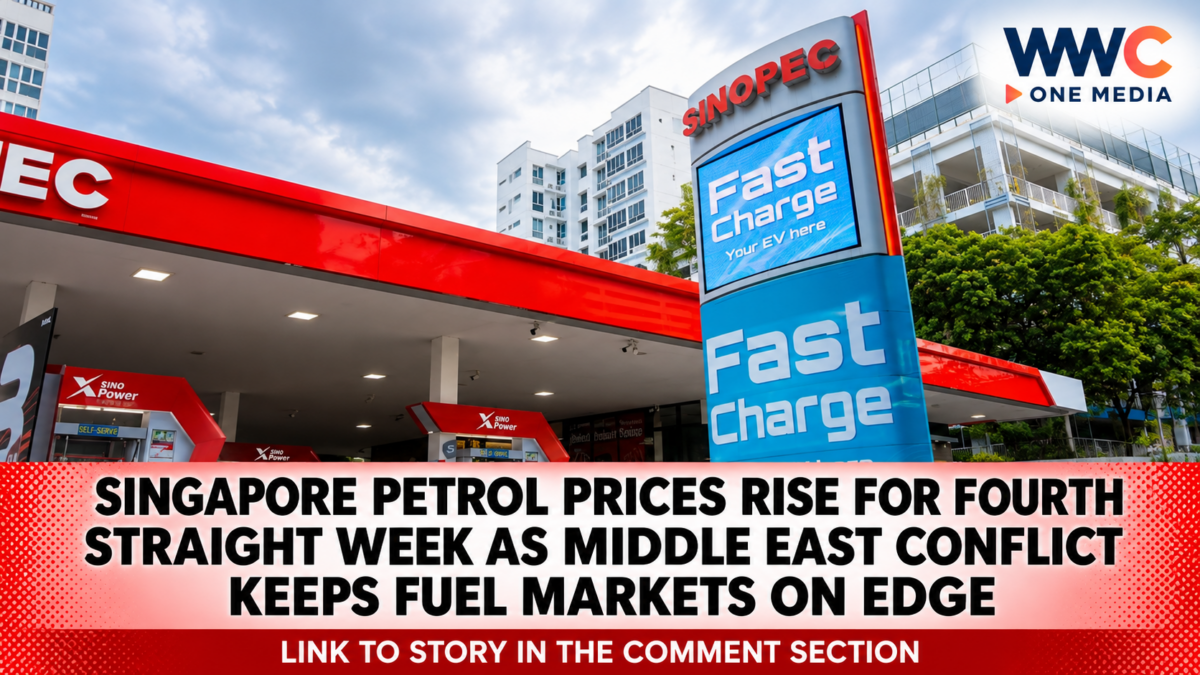
Sinopec has raised petrol prices again, matching recent increases by Caltex, Esso and Shell — but a sharp drop in crude prices on Nov. 2 offers a possible sign of relief for motorists.
SINGAPORE — Singapore motorists are facing another round of higher petrol prices after Sinopec increased its posted petrol rates by 3 cents per litre on Nov. 2, marking the fourth consecutive week of petrol-price increases among major fuel retailers.
The latest move follows matching 3-cent increases by Caltex, Esso and Shell last week.
Sinopec raised its posted prices for 95-octane, 98-octane and premium petrol, while leaving diesel unchanged. Its 95-octane petrol now stands at $3.63 per litre, before discounts.
The latest increase comes after Singapore’s fuel market began moving sharply higher in September as the Middle East conflict disrupted global energy markets.
But there is a twist.
While Singapore’s pump prices continue to rise, global oil prices fell more than 3 per cent on Nov. 2, as diplomatic talks involving Iran and Qatar raised hopes that the conflict could eventually ease.
How much are petrol and diesel prices now?
As of 9pm on Nov. 2, AsiaOne’s price comparison showed the following posted prices before discounts:
| Fuel retailer | 92 | 95 | 98 | Premium | Diesel |
|---|---|---|---|---|---|
| Caltex | $3.60 | $3.63 | — | $4.33 | $4.07 |
| Esso | $3.60 | $3.63 | $4.15 | — | $4.07 |
| Shell | — | $3.63 | $4.15 | $4.37 | $4.07 |
| Sinopec | — | $3.63 | $4.14 | $4.27 | $4.01 |
| SPC | $3.54 | $3.56 | $4.08 | — | $4.00 |
| Cnergy | — | $2.74 | $3.00 | — | $3.00 |
| Smart Energy | — | $2.62 | $2.99 | — | $2.69 |
All prices are listed before discounts, loyalty programmes and payment-card promotions.
That means the most widely used 95-octane petrol ranges from $2.62 at Smart Energy to $3.63 at several of the major brands.
For diesel, the posted prices range from $2.69 at Smart Energy to $4.07 at Caltex, Esso and Shell.
Sinopec’s latest increase
Sinopec’s latest adjustment adds another 3 cents to its petrol prices.
The company last raised petrol prices by 3 cents on Oct. 23, meaning its 95-octane petrol has increased by a total of 26 cents per litre since Sept. 14, when Singapore’s latest period of fuel-price increases began.
The increase also puts Sinopec’s 95-octane petrol at the same $3.63 per litre posted price as Caltex, Esso and Shell.
SPC remains lower among the major traditional retailers at $3.56.
Why have prices been rising?
The latest increases are linked to continued volatility in global oil markets following the US-Israeli war with Iran and disruptions to energy supplies.
Singapore’s pump prices first jumped sharply on Sept. 14 after roughly two months of relative stability.
The Straits Times reported at the time that major retailers increased prices by between 8 and 12 cents per litre, with diesel prices at major brands moving above $4 per litre.
Since then, fuel companies have continued adjusting their prices as international crude and refined-product markets respond to developments in the conflict.
The impact has been particularly significant because Asia relies heavily on Middle Eastern energy supplies.
But crude oil prices suddenly fell
The latest development is potentially good news for consumers.
On Nov. 2, Brent crude fell by about 3 per cent to around US$110 a barrel, while US West Texas Intermediate crude fell about 3.4 per cent to approximately US$100.62 a barrel.
The declines came as Iranian and Qatari officials held another round of talks aimed at reaching a deal to end the conflict.
KCM Trade chief market analyst Tim Waterer described the move as a technical pullback following strong gains the previous week, while pointing to hopes of diplomatic progress and the absence of significant military escalation over the weekend.
That does not necessarily mean Singapore pump prices will immediately fall.
Fuel retailers generally adjust prices based on movements in the broader oil and refined-fuel markets, and there can be a delay between changes in international prices and what motorists see at petrol stations.
Asia’s fuel market is still under pressure
Reuters reported on Nov. 2 that Asia’s crude-oil imports had recovered substantially in October, approaching pre-war levels.
However, refined fuel supplies remain much tighter.
Asian imports of light and middle distillates — including petrol and diesel — remained about 10 per cent below their pre-conflict average, according to Reuters analysis.
The distinction matters.
Even if crude oil flows recover, petrol and diesel prices can remain elevated if refineries and refined-product supply chains continue to face disruptions.
Reuters said Singapore gasoil and gasoline prices remained substantially above pre-conflict levels, with gasoil about 84 per cent higher and gasoline about 61 per cent higher than before the conflict.
Sinopec is also navigating a changing global oil market
Sinopec’s position is particularly interesting because the Chinese state-owned refiner has been adjusting its crude sourcing strategy during the Middle East supply disruptions.
Reuters reported in September that Sinopec had extended substantial purchases of Russian crude, with traders saying the company was taking advantage of improved refining margins and changing supply conditions.
In August, Reuters also reported that Sinopec had stepped up Russian oil imports to compensate for reduced Middle Eastern supplies.
Meanwhile, Chinese refiners suspended some October fuel exports to build domestic stocks amid the volatile global market.
Those developments show how the conflict has changed not just Singapore’s petrol prices, but the wider structure of Asia’s energy market.
What does this mean for Singapore drivers?
For motorists, the immediate reality is simple: posted prices at major petrol stations remain significantly higher than they were before the latest Middle East-driven surge.
However, motorists should distinguish between posted pump prices and the actual amount they pay.
Loyalty programmes, credit-card promotions and station discounts can substantially reduce the effective price.
Current price trackers also show that some smaller operators are advertising considerably lower rates than the major brands.
That is why comparing the final discounted price — rather than simply looking at the headline pump price — can give a more accurate picture of what drivers are actually paying.
Could petrol prices fall again?
Possibly, but it is too early to call a sustained reversal.
The fall in crude prices on Nov. 2 is encouraging, but the underlying market remains highly sensitive to developments in the Middle East.
Any renewed escalation could push oil prices higher again.
Conversely, a durable diplomatic agreement, restoration of energy flows and improving refined-fuel availability could eventually put downward pressure on petrol and diesel prices.
For Singapore motorists, the key number to watch is therefore not just the daily crude-oil price.
It is whether the global supply situation remains stable enough for Singapore’s fuel retailers to begin reversing the increases that have accumulated since September.
For now, the trend at the pumps remains unmistakable:
Up for four straight weeks — even as oil prices suddenly move in the opposite direction.