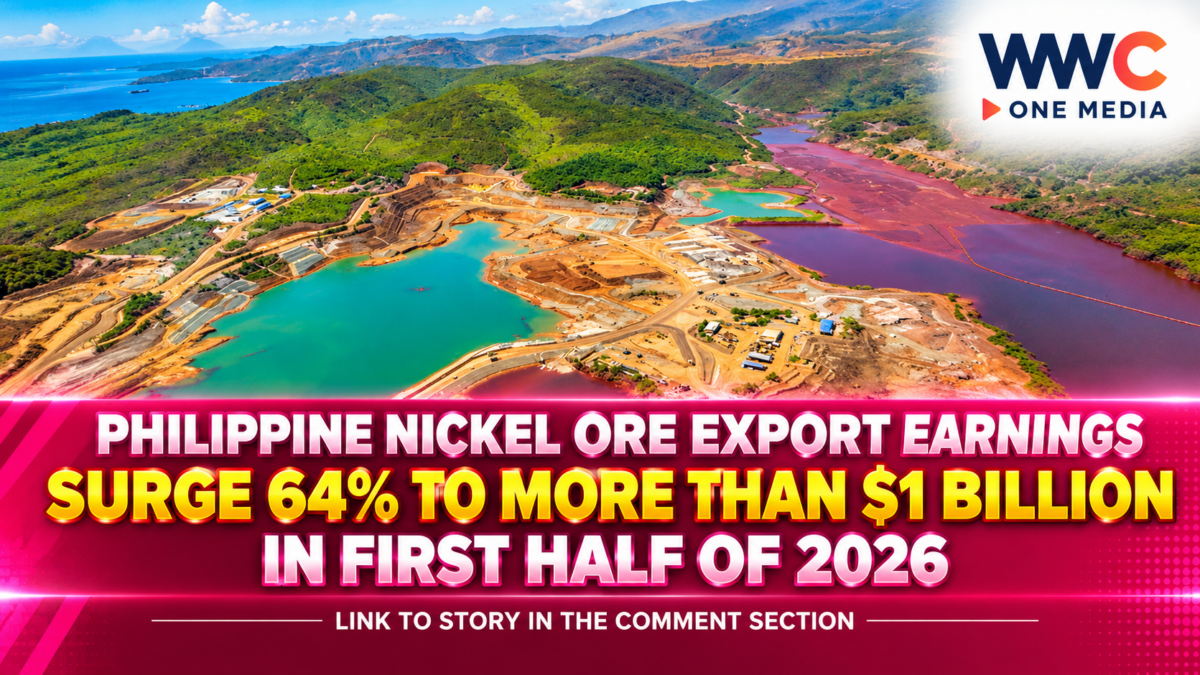
The Philippines recorded a sharp increase in nickel ore export earnings during the first half of 2026, with shipment values climbing by 64.2 percent year-on-year to more than US$1 billion as stronger international prices and higher export volumes boosted the country’s mining sector.
Data from the Philippine Statistics Authority showed that exports of nickel ores and concentrates reached US$1.006 billion from January to June, up from US$612.74 million during the same period in 2025.
The increase highlights the continued importance of nickel mining to Philippine exports, particularly as global industries require the metal for stainless steel production, electric vehicles and other industrial applications.
Export Volumes Also Increase Significantly
The rise in export earnings was accompanied by a substantial increase in the volume of nickel ores and concentrates shipped overseas.
Philippine exports reached 35.66 million metric tons in the first six months of 2026, compared with 20.93 million metric tons in the same period last year.
China remained the country’s largest buyer, accounting for US$601.48 million worth of Philippine nickel ore shipments.
Indonesia ranked second with US$367.19 million, while Japan purchased approximately US$4.32 million during the period.
The figures underscore the importance of Asian markets to the Philippine nickel industry, particularly China, which has a large processing and manufacturing sector that uses nickel as a key industrial material.
Nickel Prices Recover After Previous Market Slump
The stronger export performance came as international nickel prices recovered from the downturn experienced in 2025.
Nickel prices had fallen to around US$15,000 per metric ton last year amid an oversupply of the metal, largely associated with Indonesia’s rapidly expanding production.
Indonesia accounts for approximately 60 percent of global nickel output, giving its mining and processing policies significant influence over international supply and prices.
However, prices improved during the first half of 2026. World Bank figures showed that nickel averaged US$18,119 per metric ton from April to June, before declining to US$16,575 in the following quarter.
The World Bank expects nickel prices to average US$17,000 per metric ton in 2026, representing a 12-percent increase from the 2025 average of US$15,162.
It also projects a further 3-percent increase in 2027 as global consumption growth is expected to exceed the expansion of supply.
Demand from stainless steel manufacturers and the electric vehicle industry is expected to remain an important factor supporting the market.
Indonesia’s Production Policies Could Influence Global Supply
Developments in Indonesia remain particularly important to Philippine nickel exporters.
The country has been adjusting its nickel production quota system as authorities seek stronger oversight of mining output and greater control over supply.
A reduction in available supply could help support international prices, although the impact will depend on how quickly producers respond and whether other suppliers increase production.
In September, reports also emerged that nickel-processing companies operating at Indonesia Morowali Industrial Park were instructed to reduce nickel pig iron production because of water shortages linked to El Niño-related drought conditions.
Such disruptions could further affect global supply and influence prices, although their long-term impact remains uncertain.
Electric Vehicles and Stainless Steel Support Long-Term Demand
Nickel remains an important industrial metal because of its use in stainless steel, batteries and other manufacturing applications.
In the electric vehicle sector, nickel is used in certain lithium-ion battery chemistries, particularly nickel-rich batteries designed to provide higher energy density.
However, the expansion of electric vehicles does not automatically translate into equal growth in nickel demand, as some manufacturers increasingly use lithium iron phosphate batteries, which do not contain nickel.
Stainless steel production is also expected to remain a major source of global nickel consumption.
The combination of these industries is expected to influence the metal’s price outlook as manufacturers balance demand, production costs and the availability of raw materials.
Philippines’ Mining Sector Faces Opportunities and Challenges
The latest export figures provide a positive signal for the Philippine mining industry, but higher earnings also come with operational challenges.
Mining companies remain exposed to fuel prices, shipping costs, weather disruptions and changes in international demand. Rising fuel expenses can affect extraction, transportation and the movement of nickel ore from mining sites to overseas buyers.
Industry representatives have previously warned that fuel supply disruptions and higher operating costs could affect production and export schedules.
The Philippines nevertheless remains an important supplier in the global nickel market, with opportunities to benefit from demand for critical minerals.
The challenge will be ensuring that stronger export earnings translate into sustainable growth for the domestic mining industry, while improving local processing capabilities and maintaining responsible environmental practices.
With export earnings already exceeding US$1 billion in the first half of 2026, the performance of nickel prices, Indonesian supply policies and demand from major Asian buyers will remain crucial to the industry’s outlook for the rest of the year.