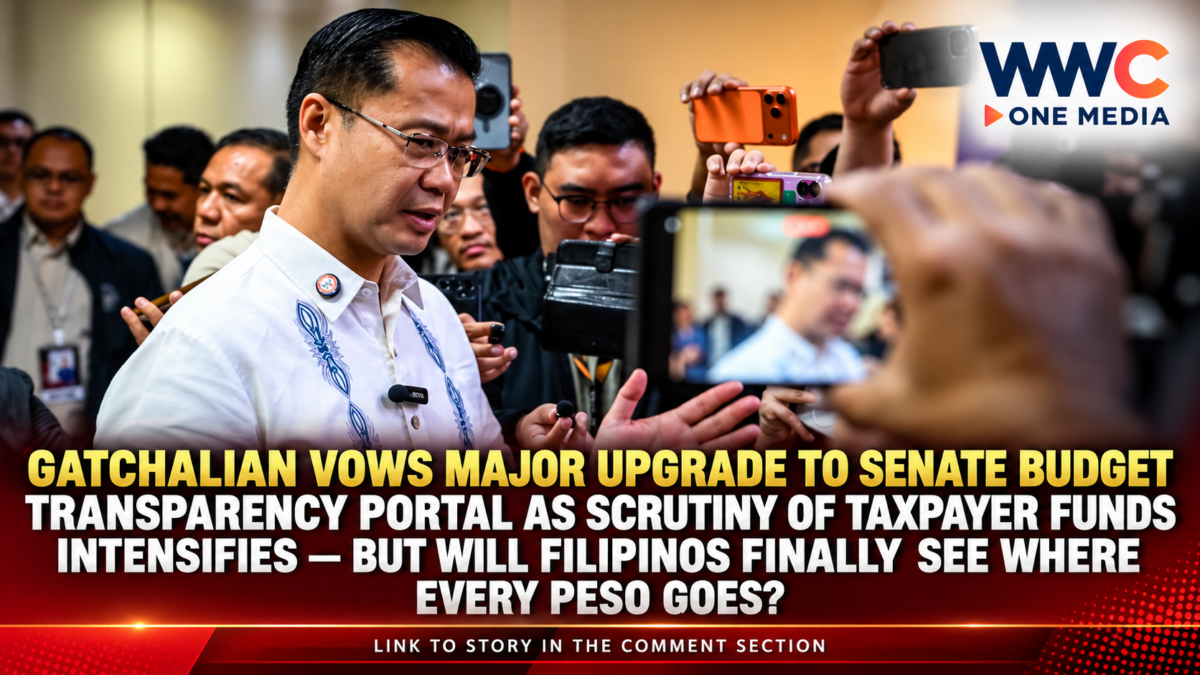
MANILA, Philippines — October 25, 2026. As public scrutiny of government spending intensifies, Senator Sherwin “Win” Gatchalian has pledged to improve the Senate’s Budget Transparency Portal, renewing attention on whether ordinary Filipinos can effectively monitor how billions of pesos in public funds are proposed, debated and allocated.
The commitment, reported by ABS-CBN News on Sunday, October 25, places the spotlight on a critical issue in Philippine governance: making budget information publicly available is one thing, but ensuring that citizens can understand, examine and challenge questionable expenditures is another.
For taxpayers, the stakes extend far beyond an online website. They involve the billions of pesos allocated to roads, classrooms, hospitals, infrastructure and essential government services.
Senate Transparency Portal: What Can Filipinos Actually See?
The Senate Budget Transparency Portal was launched in September 2025 as part of a broader initiative to make the national budget process more accessible.
Rather than relying exclusively on government announcements, the platform is designed to allow citizens, journalists, researchers and civil society organizations to examine documents and monitor legislative discussions.
Its features include budget hearing schedules, livestreams and recordings, access to key budget documents, hearing transcripts and opportunities for public feedback.
Documents covered by the initiative include the National Expenditure Program (NEP), General Appropriations Bill (GAB), Senate amendments and other records associated with budget deliberations.
These records matter because government spending proposals can change significantly as they pass through Congress.
A publicly accessible record of those changes could help observers identify which appropriations were modified, when amendments occurred and whether lawmakers adequately explained them.
A Transparency Campaign That Began in 2025
Gatchalian’s latest pledge builds on reforms introduced during the previous national budget cycle.
On September 1, 2025, the Philippine Daily Inquirer reported that the Senate had activated its online budget transparency portal to give the public greater access to documents throughout the legislative process.
The senator also encouraged citizens to submit questions, comments and analyses that could contribute to Senate budget discussions.
In November 2025, the Philippine News Agency reported that Gatchalian was advocating what he described as a “golden age of transparency” amid concerns about questionable infrastructure spending and the need to restore confidence in public institutions.
The initiative was intended to make it harder for changes in government appropriations to escape public scrutiny.
Why the 2027 National Budget Raises the Stakes
The transparency debate now comes as legislators examine the proposed 2027 national budget.
Budget deliberations determine how public resources will be distributed across government departments, agencies and programs.
For ordinary Filipinos, decisions made during these discussions can affect the construction of schools, improvement of public hospitals, expansion of social services and implementation of infrastructure projects.
The Department of Budget and Management has also emphasized the need for stronger safeguards surrounding unprogrammed appropriations in the proposed 2027 budget.
In an October 22 statement, the department said it was working with Senate leadership to improve transparency and ensure that budget provisions comply with constitutional requirements following a Supreme Court ruling concerning earlier appropriations laws.
The development reinforces the importance of public access to information about how government funds are authorized and released.
Government Launches Another Budget Monitoring Initiative
The Senate’s transparency initiative is also part of a wider movement toward digital financial accountability.
On September 28, 2026, President Ferdinand Marcos Jr. signed Executive Order No. 126, institutionalizing the Centralized Open Monitoring Platform for Appropriations and Spending Statistics, known as the COMPASS Portal.
According to the Philippine Information Agency, the platform is intended to consolidate public information about budget appropriations, fund releases, procurement and program implementation.
Unlike the Senate portal, which focuses on legislative budget proceedings, COMPASS is designed to provide information about government spending across the implementation process.
Together, the initiatives could help citizens trace public money from legislative approval toward actual expenditure, although their effectiveness will depend on the completeness, accuracy and accessibility of the published information.
Will Greater Transparency Help Prevent Corruption?
A transparency portal can make government transactions easier to inspect, but publishing documents does not automatically prevent corruption.
Meaningful accountability also requires timely disclosures, understandable financial records, consistent updates and effective investigation when irregularities are identified.
For example, citizens examining infrastructure allocations need more than a project’s proposed budget.
Information about project locations, implementing agencies, procurement, contractors, construction progress and actual disbursements can help establish whether public money is being spent as intended.
The ability to compare these records could prove especially valuable to investigative journalists, budget watchdogs and community organizations.
However, a disclosure system cannot independently determine whether a project is fraudulent or whether a public official has committed wrongdoing.
Such conclusions require supporting evidence, proper investigation and due process.
The Bigger Question: Can Citizens Hold Government Accountable?
Gatchalian’s pledge to improve the portal represents another opportunity to strengthen public oversight of the Philippine national budget.
The Senate’s existing platform already offers access to schedules, recordings and budget-related documents. The challenge is ensuring that information remains comprehensive, up to date and genuinely useful to the public.
As lawmakers continue examining the 2027 spending plan, the effectiveness of transparency reforms will be judged not simply by how much information is uploaded, but by whether Filipinos can follow important budget decisions and demand explanations when necessary.
The central question remains: Will the promised improvements make government spending meaningfully more transparent — or will taxpayers still struggle to discover where their money ultimately goes?