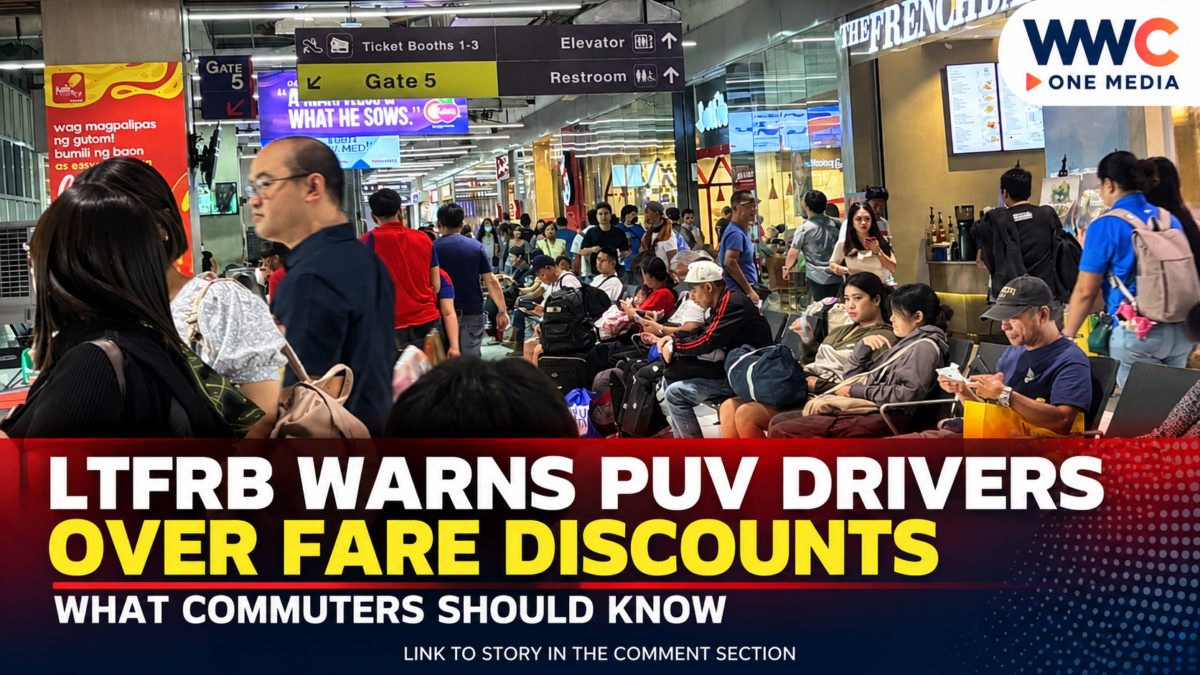
MANILA, Philippines — Public utility vehicle (PUV) operators, drivers, and conductors are being reminded to honor legally mandated fare discounts, as the Land Transportation Franchising and Regulatory Board (LTFRB) steps up enforcement of rules designed to protect Filipino commuters.
The reminder is particularly important for senior citizens, persons with disabilities (PWDs), and students, who are entitled to fare discounts under Philippine law and applicable transport regulations.
The LTFRB has repeatedly warned transport operators against refusing valid discount privileges. In a September 2026 report, the Philippine Information Agency (PIA) said the agency issued a warning following a complaint from a PWD passenger who allegedly was denied a discount by a bus conductor on a route connecting Central and North Luzon with Manila.
According to the PIA report, the passenger presented a PWD identification card issued by a local government unit, but the conductor allegedly refused to recognize it. The complaint also alleged that the conductor was reprimanded by the bus company for granting a discount.
Acting LTFRB Chairperson Atty. Greg G. Pua Jr. stressed that refusing a legally required fare discount could violate both existing laws and the conditions governing a public utility vehicle’s authority to operate.
Who is entitled to fare discounts?
Under existing Philippine laws and transport regulations, eligible passengers are entitled to a 20-percent discount on covered public transportation fares.
These include:
- Senior citizens: Protected under Republic Act No. 9994, or the Expanded Senior Citizens Act of 2010.
- Persons with disabilities: Covered by Republic Act No. 7277, as amended by Republic Act No. 10754.
- Students: Covered by Republic Act No. 11314, or the Student Fare Discount Act, and applicable implementing rules.
The student fare discount generally applies throughout the year, including weekends, holidays, and school vacations, subject to the applicable rules.
The discount is intended to help reduce transportation expenses for groups that may be especially affected by the rising cost of daily commuting.
Passengers should present the appropriate valid identification or documentation and follow the requirements applicable to their type of transportation service.
LTFRB warns operators against refusing discounts
The agency’s warning comes amid recurring concerns about the implementation of fare discounts across public transportation services.
In a separate December 2024 report, the Philippine Daily Inquirer reported that the LTFRB reminded operators of taxis, buses, jeepneys, and transport network vehicle services (TNVS) to provide the mandatory discounts to eligible passengers.
The report also highlighted complaints involving drivers who allegedly charged full fares despite passengers presenting valid identification, as well as difficulties applying discounts through ride-hailing platforms.
More recently, the PIA reported that the LTFRB encouraged passengers to report similar incidents through the agency’s hotline, 1342, or its official communication channels.
The agency has emphasized that fare discounts are not optional benefits that drivers may grant or deny at their discretion. They are statutory privileges governed by existing laws and regulations.
What penalties could violators face?
The LTFRB has warned that violations may result in administrative sanctions, depending on the applicable rules and the circumstances of the case.
These may include fines, suspension of a vehicle operator’s Certificate of Public Convenience (CPC), or cancellation of the authority to operate in cases covered by the relevant penalty provisions.
The exact sanction depends on the type of violation, the applicable regulation, and whether it is a first or subsequent offense. A complaint or allegation alone does not establish that a driver or operator is guilty; the agency must assess the circumstances and follow the appropriate process.
What should commuters do if a discount is refused?
Passengers who believe they have been wrongly denied a discount can take practical steps to document and report the incident.
- Record the vehicle’s plate number, route, date, and approximate time.
- Keep the ticket or receipt, if one was issued.
- Note the relevant details of the incident and, where appropriate, preserve screenshots or other supporting evidence.
- Contact the LTFRB through its hotline, 1342, or its official communication channels to ask how to file a complaint.
Passengers should avoid posting unverified accusations as established facts. Providing clear documentation can help authorities evaluate a complaint fairly.
Why the reminder matters
For many Filipinos, transportation is a recurring household expense. A legally required fare discount can make a meaningful difference to students traveling to school, senior citizens attending appointments, and PWDs who rely on public transportation.
The LTFRB’s repeated reminders underscore the importance of enforcing passenger rights while ensuring that transport operators comply with the rules attached to their operating authority.
For commuters, the message is straightforward: eligible passengers should receive the discounts provided by law, and alleged violations can be reported to the proper authorities.