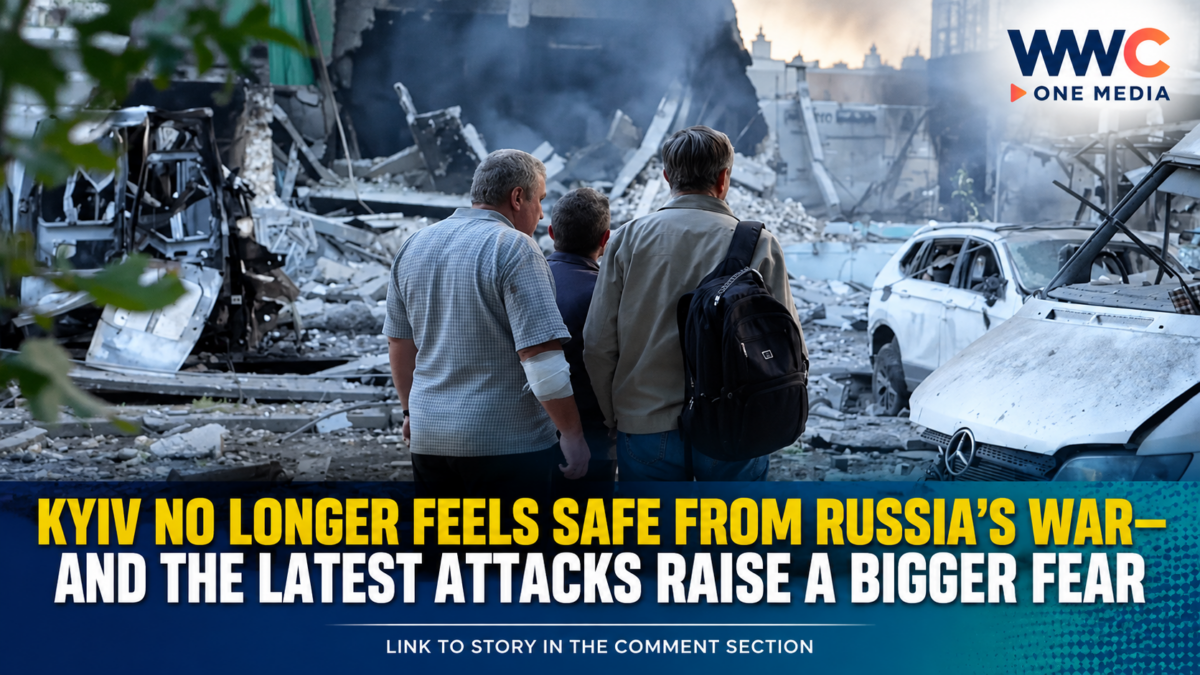
KYIV, Ukraine — Russia’s intensifying missile and drone attacks are transforming Ukraine’s capital into an increasingly dangerous place to live, forcing residents to seek refuge underground as damage to critical infrastructure raises fresh concerns about the coming winter.
Once relatively insulated from the sustained devastation experienced in Ukraine’s eastern and southern battle zones, Kyiv is now facing more frequent aerial attacks, damaged transport links and growing uncertainty over electricity, heating and water supplies.
A report published by Deutsche Welle (DW) on October 23, 2026, describes how the capital’s worsening security situation has disrupted everyday life, with residents using subway stations as makeshift sleeping areas when the threat of further strikes becomes too great.
The city is home to approximately four million residents, making the shortage of adequate shelters a significant challenge as Russian attacks continue.
Residents forced to adapt to a new wartime reality
For people living in Kyiv, the threat of an airstrike increasingly shapes daily routines. Families seek shelter underground, while schools, businesses and transportation services face interruptions whenever air-raid alerts are issued.
According to DW’s reporting, some residents are taking their children to subway stations even on nights when sirens have not sounded, reflecting the level of anxiety created by repeated attacks.
The situation marks a stark change from the earlier phases of the war, when Kyiv, although still vulnerable to Russian missiles and drones, was generally less exposed to the sustained destruction experienced in frontline regions.
The shift has made the distinction between the battlefield and civilian life increasingly difficult to maintain.
Missile attacks damage critical infrastructure
The danger intensified in October, when Russian forces launched major aerial attacks against Kyiv and other parts of Ukraine.
Reuters reported that on October 22, Ukrainian officials said Russia had fired at least 21 ballistic missiles at Kyiv in three waves. The attacks damaged buildings and infrastructure, including parts of the city’s transport network. Ukrainian President Volodymyr Zelenskyy said three of the missiles carried cluster munitions.
The strikes occurred despite renewed diplomatic efforts to revive negotiations aimed at ending the war.
The Associated Press also reported that the October 21–22 attacks killed people in Ukraine and wounded dozens, while damaging residential buildings, energy facilities and transportation infrastructure. The precise toll varied by location and reporting time as authorities continued assessing the damage.
These attacks illustrate the continuing vulnerability of major urban centres even as diplomatic discussions periodically raise hopes for a breakthrough.
Bridges and transport networks under pressure
Kyiv’s bridges have also become a source of concern.
In an earlier report published on October 3, the BBC described Russian strikes damaging the capital’s Northern Bridge after attacks on the Southern Bridge. The incidents disrupted traffic and affected connections across the Dnipro River, which divides the city into eastern and western sections.
Repeated attacks on important crossings can create significant logistical problems, even when they do not destroy the structures outright. Repairs, safety inspections and temporary closures can disrupt commuting and the movement of essential supplies.
The wider threat to transport infrastructure adds another layer of difficulty for a city already coping with air-raid warnings and damage to residential and commercial areas.
Winter raises fears over heating and electricity
As temperatures fall, the protection of energy infrastructure has become an urgent concern.
The Associated Press reported on October 22 that Zelenskyy said Russia had carried out 170 strikes against Ukraine’s critical energy facilities since October 11. Ukrainian officials warned that attacks on the power grid could leave civilians struggling to maintain heating, electricity and running water during the colder months.
Such damage could have consequences beyond temporary blackouts. Prolonged interruptions to power and heating can affect hospitals, public transportation, water systems, businesses and households, particularly when temperatures drop sharply.
For Kyiv’s residents, the prospect of another difficult winter comes as the city continues to absorb the effects of repeated aerial bombardments.
Peace talks face a major test
The renewed attacks have also cast doubt on the prospects for diplomatic progress.
Reuters and the Associated Press reported that Russian President Vladimir Putin had indicated a willingness to resume US-mediated negotiations involving Russia, Ukraine and the United States. However, the latest bombardment underscored the distance between diplomatic statements and conditions on the ground.
Ukraine continues to seek stronger air defences and additional support from its international partners, while the conflict’s central disagreements remain unresolved.
Whether negotiations can produce meaningful results will depend on more than announcements of renewed talks. The parties must still overcome substantial differences over security, territory and the terms of any settlement.
Kyiv’s resilience faces another test
Despite the growing dangers, Kyiv continues to function as a major population centre and the political heart of Ukraine. Residents, emergency workers and local authorities are adapting to a threat that increasingly reaches into ordinary daily life.
But resilience has limits. Repeated attacks, damaged infrastructure and the possibility of prolonged winter outages place additional pressure on families already living with years of war.
The central question is no longer simply whether Kyiv can withstand another attack. It is how long the city can maintain essential services and protect its residents if the bombardment continues and winter conditions worsen.
For millions of Ukrainians, the coming months could become another decisive test of their ability to endure a war that has repeatedly reshaped life far beyond the front lines.