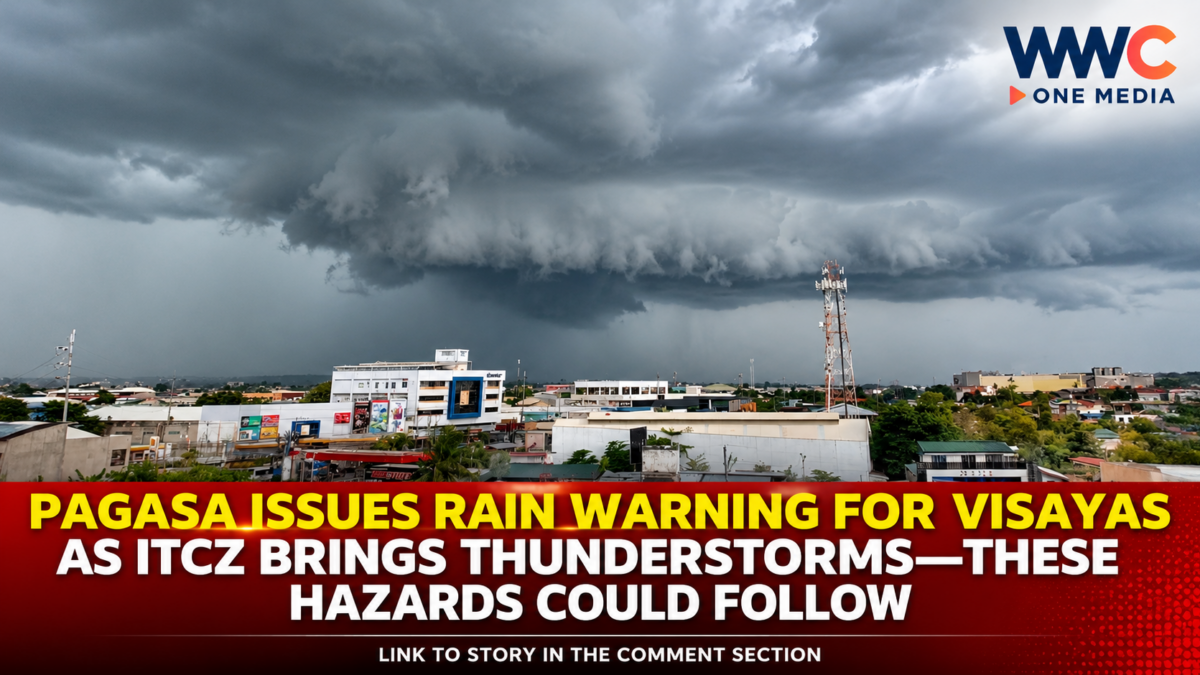
CEBU, Philippines — Residents across the Visayas are being urged to prepare for unsettled weather as the Intertropical Convergence Zone (ITCZ) brings cloudy skies, scattered rain showers and thunderstorms to much of the region on Sunday, October 25, 2026.
The Philippine Atmospheric, Geophysical and Astronomical Services Administration (PAGASA) said in its 4 a.m. weather forecast that the ITCZ is affecting Palawan, the Visayas and Mindanao. The weather system is also expected to bring rain and thunderstorms to the Bicol Region and Romblon.
PAGASA warned that moderate to occasionally heavy rainfall could trigger flash floods and landslides, particularly in vulnerable areas. Residents in low-lying communities and locations near slopes are advised to remain alert and follow updates from local disaster risk reduction offices.
Which areas may experience rain?
According to PAGASA’s latest national forecast, the following areas are expected to experience cloudy skies with scattered rains and thunderstorms due to the ITCZ:
- Visayas — including Western, Central and Eastern Visayas
- Mindanao
- Bicol Region
- Romblon
- Palawan
Metro Manila and other parts of the country are forecast to have partly cloudy to cloudy skies, with isolated rain showers or thunderstorms caused by localized weather conditions.
Although rainfall may not be continuous throughout the day, thunderstorms can develop quickly and bring sudden downpours, lightning and strong winds.
Flooding and landslides remain key concerns
The main concern is the potential for heavy rainfall to cause dangerous conditions in flood-prone communities and areas susceptible to landslides.
Residents are encouraged to avoid crossing flooded roads and swollen rivers, particularly when water levels are rising. Those living near steep slopes should watch for warning signs such as ground cracks, unusual soil movement and sudden changes in water flow.
Motorists should also exercise caution during heavy rain because reduced visibility and water-covered roads can increase travel risks.
PAGASA’s warning highlights possible hazards; it does not mean that flooding or landslides have already occurred across the affected regions.
What other news outlets are reporting
GMA News Online independently reported on October 25 that the ITCZ would bring scattered rains and thunderstorms to the Visayas, Mindanao, Bicol, Romblon and Palawan, with possible flash floods and landslides during periods of moderate to heavy rain.
SunStar Cebu, in its October 24 report, also cited PAGASA’s forecast for rainy conditions across most of the Visayas on Sunday. The report noted that easterlies were expected to become the prevailing weather system from October 26 to 27, generally bringing fairer conditions, although localized afternoon or evening thunderstorms could still develop.
These reports reinforce the importance of monitoring updated forecasts rather than assuming that improving weather conditions will eliminate all risks.
Will the weather improve next week?
PAGASA’s weekly weather outlook issued on October 23 indicated that easterlies were expected to become the prevailing weather system on October 26 and 27, bringing generally fair weather across the country.
However, isolated rain showers or thunderstorms may still occur, especially during the afternoon and evening. Forecasts can change, so residents should check the latest bulletins before making travel plans or organizing outdoor activities.
What residents should do
As the rainy conditions continue, residents are advised to:
- Monitor official PAGASA forecasts and local government advisories.
- Prepare umbrellas, raincoats and emergency supplies.
- Avoid crossing flooded roads and rivers.
- Stay away from landslide-prone slopes during prolonged or heavy rainfall.
- Follow evacuation instructions from local authorities when necessary.
The bottom line: The ITCZ is bringing another round of unsettled weather to the Visayas and several other parts of the Philippines. While the forecast does not mean that every locality will experience heavy rain, sudden thunderstorms can create hazardous conditions. Staying informed and taking precautions can help reduce the risks.