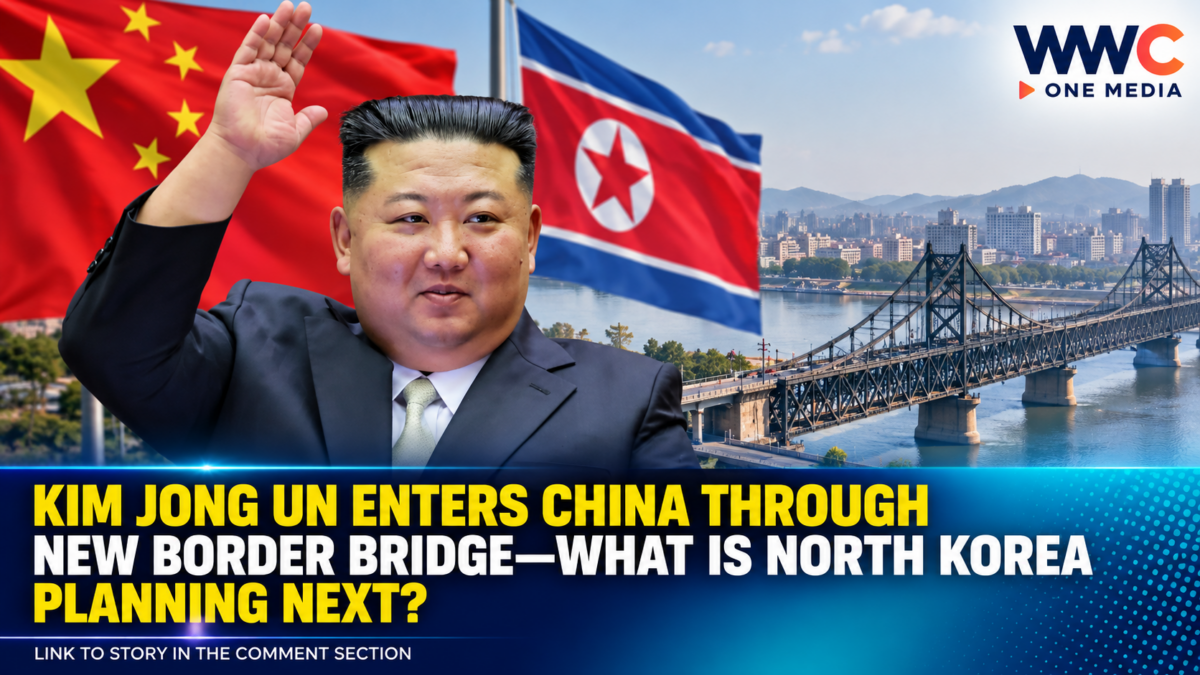
North Korean leader Kim Jong Un has reportedly entered China through a newly opened border bridge, placing renewed attention on the relationship between two of East Asia’s most strategically important neighbors.
According to South Korea’s Yonhap News Agency, Kim arrived in Dandong, a city in China’s northeastern Liaoning province, on October 24. Yonhap cited an unidentified government source who said the North Korean leader crossed the New Yalu River Bridge, which connects Dandong with Sinuiju in North Korea.
Reuters and The Associated Press also reported the development, citing Yonhap’s account. At the time of their initial reports, the precise purpose of Kim’s trip and the details of any meetings had not been publicly established.
The reported arrival comes as Beijing and Pyongyang move to strengthen economic and diplomatic connections following years of disruptions and delays along their shared border.
A Newly Opened Bridge With Strategic Significance
The crossing used in Kim’s reported arrival is more than an ordinary transportation link.
The New Yalu River Bridge stretches approximately three kilometers across the Yalu River, known as the Amnok River in Korea. The four-lane structure was completed in 2014 with a reported Chinese investment of about US$310 million, but it remained unused for years because connecting roads and customs facilities on the North Korean side were unfinished.
China and North Korea officially opened the bridge on October 15, 2026, according to Reuters.
The new crossing is expected to improve transportation between the two countries, ease congestion at older border facilities and support the movement of goods, including raw materials, energy products and heavy equipment.
Its opening also provides a visible sign of renewed efforts to deepen bilateral cooperation.
However, the bridge alone does not guarantee a rapid return to pre-sanctions trade levels. International sanctions, infrastructure limitations and North Korea’s economic restrictions continue to shape what cross-border commerce can achieve.
China Remains North Korea’s Most Important Economic Partner
China has long served as North Korea’s principal trading partner and a major source of economic support. Maintaining access to Chinese markets and supplies is therefore important to Pyongyang, which remains heavily restricted by international sanctions related to its nuclear weapons and missile programs.
Reuters reported that Chinese exports to North Korea reached approximately US$2.3 billion in 2025, up 25% from the previous year. Despite the increase, the figure remained below levels recorded before tighter sanctions were imposed in 2017.
The reopening of the bridge could help expand trade and improve connectivity, although the scale and speed of any recovery remain uncertain.
For Beijing, stronger economic links could reinforce its influence over a neighboring country whose security policies have significant implications for the Korean Peninsula and the wider region.
For Pyongyang, improved access to trade and supplies could support economic priorities while preserving its political independence.
Kim’s Balancing Act Between China and Russia
The reported visit also comes amid North Korea’s expanding relationship with Russia.
In recent years, Pyongyang and Moscow have strengthened military and political cooperation. North Korea has provided troops and conventional weapons in support of Russia’s war against Ukraine, according to international reporting, while Russia has been accused by the United States and South Korea of providing assistance to North Korea in return.
This growing partnership has added another dimension to regional diplomacy.
A report published by The Guardian on October 24 highlighted how new road connections with both China and Russia have raised questions about the competing influence of the two powers over North Korea.
Although China remains North Korea’s principal economic partner, Kim has incentives to cultivate relations with both neighbors rather than rely exclusively on one.
The reported arrival in Dandong could therefore attract attention from regional observers, but it would be premature to conclude that the trip signals a major policy shift or a specific agreement with Beijing.
A History of High-Level Contacts
Kim’s reported arrival follows a series of high-level exchanges between the two countries.
Chinese President Xi Jinping visited Pyongyang in June 2026 and met Kim, with discussions emphasizing cooperation in areas including trade, agriculture, construction and technology, according to The Associated Press.
Kim’s previous known visit to China was in September 2025, when he met Xi in Beijing and attended a military parade alongside other foreign leaders, including Russian President Vladimir Putin.
These encounters underline the continuing importance of China-North Korea relations even as Pyongyang expands its ties with Moscow.
Whether the latest reported trip will lead to another high-level meeting, new economic commitments or further diplomatic coordination remains unclear.
What Happens Next?
The key questions are whether Kim will meet senior Chinese officials, whether the visit will produce new agreements and whether the newly opened bridge will lead to a measurable increase in trade.
Further confirmation from North Korean or Chinese official media, along with additional statements from South Korean authorities, would help clarify the circumstances surrounding the reported arrival.
For now, the development brings together three important regional issues: North Korea’s need for economic access, China’s interest in maintaining influence over its neighbor and Pyongyang’s growing strategic relationship with Russia.
The bigger question is whether this reported visit marks a routine diplomatic journey—or the beginning of a more consequential phase in North Korea’s regional strategy. The answer will depend on what emerges from the visit in the days ahead.