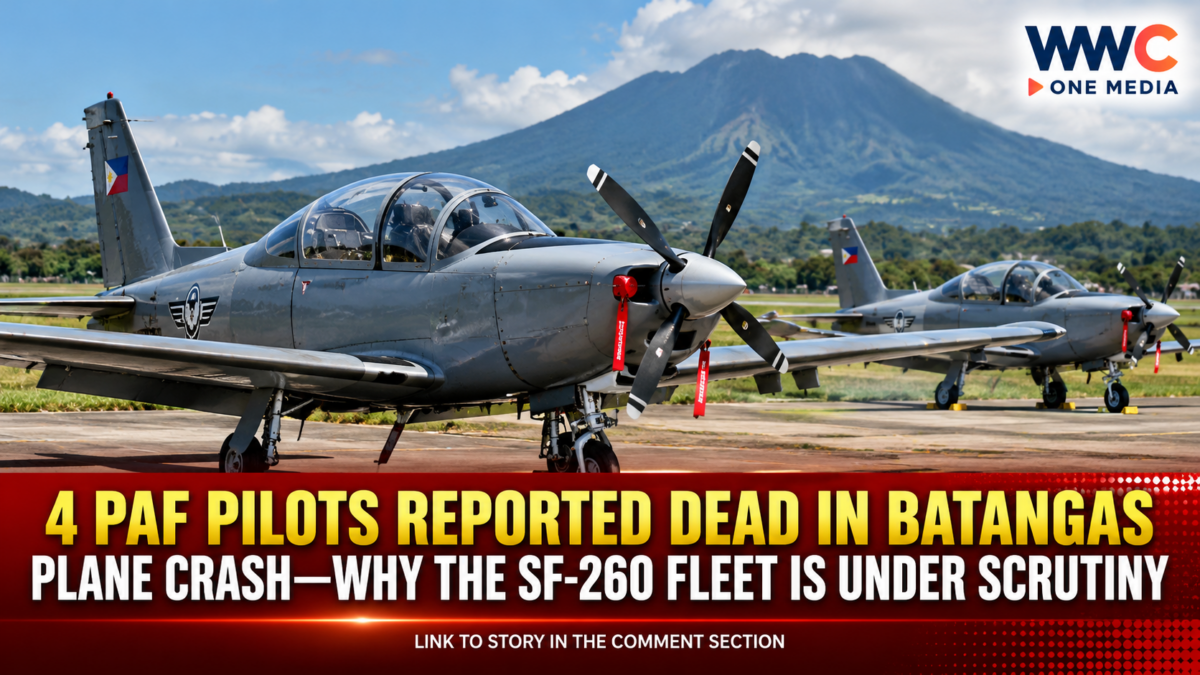
Four Philippine Air Force (PAF) pilots were reported killed after two SF-260 trainer aircraft were involved in a serious incident during a training flight in Lipa City, Batangas, prompting renewed scrutiny of military flight safety and the status of the aircraft fleet.
The incident occurred at approximately 3:51 p.m. on Friday, October 23, near Fernando Air Base, according to reports from the Philippine Air Force and local media. The Air Force confirmed that two SF-260 aircraft were involved and said emergency response measures were immediately activated.
However, the PAF had not publicly confirmed the reported fatalities in the initial statements reviewed for this report. Bombo Radyo News reported that four pilots were believed to have died, citing preliminary information from local authorities, while other reports said verification was ongoing.
The distinction is important as authorities work to establish the circumstances of the crash and confirm the condition of everyone involved.
What happened near Fernando Air Base?
The two aircraft were participating in a training flight when the incident occurred. Initial reports from local media described a possible midair collision, but the exact sequence of events and the cause had not been definitively established in the official statements reviewed.
PAF spokesperson Col. Alvin Jay Capinguian said emergency measures were activated and response teams were sent to secure the area and conduct initial assessments.
The Air Force also emphasized the safety and welfare of personnel involved and people living near the incident site.
Investigators will need to establish whether the aircraft collided in flight, what conditions prevailed during the training exercise, and whether mechanical, operational, environmental, or other factors contributed to the accident.
Until investigators release their findings, any explanation of the cause remains preliminary.
Why the SF-260 aircraft matter


The SF-260 is a light aircraft used by the Philippine Air Force for flight training. The type has been associated with the service’s pilot-training activities at Fernando Air Base in Lipa City.
These aircraft help develop the fundamental flying skills required of military pilots before they progress to more advanced training platforms.
Because training flights are central to preparing future combat and support aviators, an accident involving training aircraft can have implications beyond the immediate loss. It can trigger reviews of flight procedures, aircraft maintenance, pilot coordination, and the risks associated with training operations.
The aircraft involved in the Batangas incident were identified in reports as SF-260 trainers. Further technical details about their condition and the precise circumstances of the accident will need to come from official findings.
Fleet grounding and the bigger safety question
The Inquirer report linked to this article states that the SF-260 fleet was grounded following the incident. That development would be significant because grounding an aircraft type can prevent further flights while authorities assess safety concerns.
However, the additional reports reviewed here did not independently establish the scope, duration, or formal conditions of the grounding. Those details should be confirmed through an updated PAF announcement before publication as a definitive statement.
If the grounding is confirmed, important questions will include whether it applies to every SF-260 aircraft in the inventory, what inspections are required, and what criteria must be met before flight operations can resume.
The review may also examine whether the incident points to a problem specific to the aircraft involved or to a broader operational concern. No such conclusion should be drawn before the investigation is complete.
What investigators need to establish
Several issues are likely to be central to the investigation:
- Cause of the incident: Whether the aircraft collided in midair and what led to the reported crash.
- Aircraft condition: The maintenance history, technical condition, and any recorded mechanical problems.
- Flight operations: The training plan, flight paths, communications, and coordination between the aircraft.
- Pilot safety: The circumstances surrounding the reported deaths and the official identification and confirmation of casualties.
- Fleet status: Whether all SF-260 aircraft have been grounded and what inspections or corrective measures are required before they can fly again.
These are investigative questions, not established findings. The results will depend on the evidence recovered and the conclusions of the responsible authorities.
What happens next?
The immediate priorities are to secure the crash site, establish the condition of the personnel involved, determine the cause, and assess any risks to other aircraft of the same type.
Further official information from the Philippine Air Force and relevant investigating authorities will be crucial in clarifying the reported fatalities, the circumstances of the crash, and the status of the SF-260 fleet.
For the families of the pilots, the Air Force community, and the public, accurate information matters as much as speed. The final investigation should help establish what happened and whether changes to training procedures, maintenance practices, or operational safeguards are necessary.
The central question now is not only what caused the Batangas crash, but what the findings will mean for the safety of future PAF training flights.