SINGAPORE — October 23, 2026
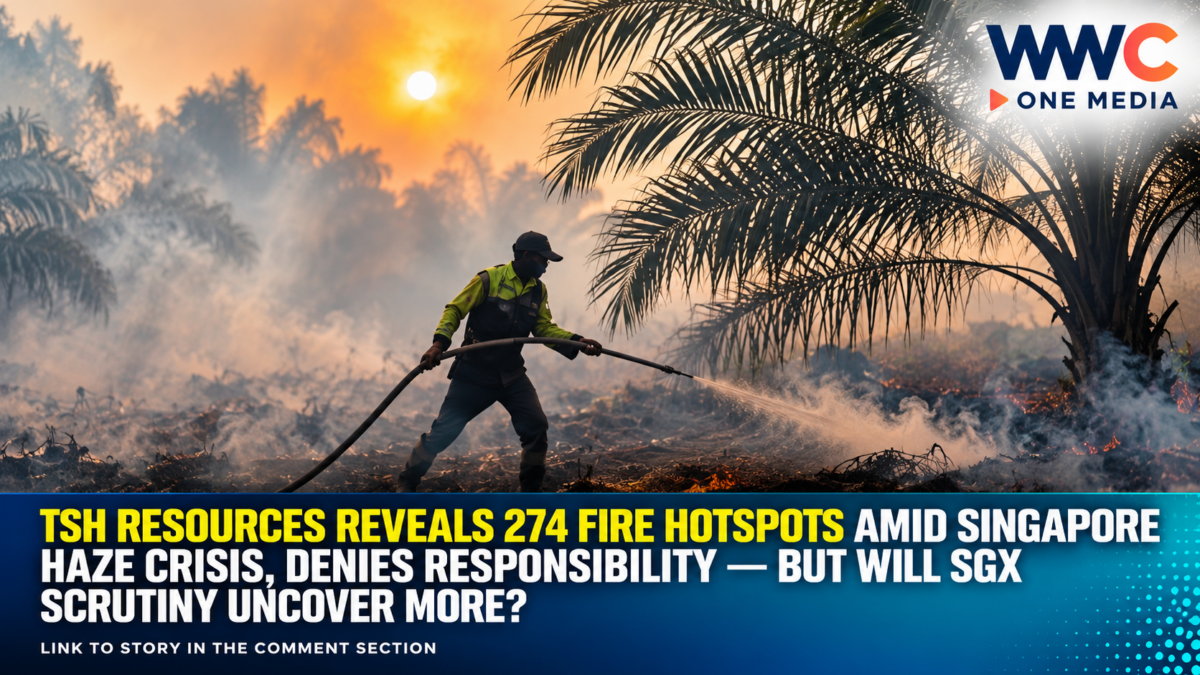
As Singapore grapples with unhealthy air quality linked to Indonesian forest and land fires, Malaysian palm oil company TSH Resources has disclosed that 274 fire hotspots were detected within its Indonesian estate boundaries this year, raising fresh questions about corporate accountability in Southeast Asia’s worsening transboundary haze crisis.
However, the company firmly denies that its plantation operations were responsible for the fires or contributed to the haze affecting Singapore.
The disclosure, made on October 22 in response to questions from the Singapore Exchange (SGX), covers hotspots detected between January 1 and October 21, 2026.
According to TSH Resources, all 274 hotspots were situated in community enclave areas within its wider estate boundaries but outside the planted and operational areas under its direct management.
The company said its firefighting personnel extinguished the fires and lodged police reports concerning the incidents.
The central question now is whether the company’s explanation will satisfy regulatory scrutiny as Singapore intensifies its response to the regional haze emergency.
274 Hotspots, but Company Denies Any Operational Link
TSH Resources, which is primarily listed on Bursa Malaysia and secondarily listed on the Singapore Exchange, operates palm oil plantations and processing facilities in Malaysia and Indonesia.
Its Indonesian operations include estates in Kalimantan and Sumatra, where forest and peatland fires have been a major regional environmental concern.
The company maintains that no fires were recorded within its directly managed planted or operational areas during the reporting period.
It also stated that there had been no allegations or reports of fires started by its employees.
According to its regulatory filing, the hotspots were detected in community enclaves — areas within broader estate boundaries that the company says are outside its operational control.
This distinction is critical. The presence of fire hotspots within an estate boundary does not automatically establish that a plantation operator started the fires or is legally responsible for them.
Nevertheless, the disclosure has drawn attention because it comes during heightened scrutiny of agribusiness companies over possible connections to Indonesia’s fires.
August Fire Incident Raises Further Questions
TSH Resources separately disclosed a fire on August 17 within an area covered by the land-use rights of its Indonesian subsidiary, PT Bulungan Citra Agro Persada (BCAP).
The company explained that the fire originated in a community enclave outside BCAP’s operating area.
It said the subsidiary extinguished the fire on the same day, filed a police report and continued cooperating with relevant authorities.
Another incident attracted attention from a commercial customer.
On September 1, palm oil processor Apical Group contacted TSH Resources about hotspots involving another subsidiary, PT Farinda Bersaudara.
TSH said it explained that the hotspots were located in community enclaves outside its operational area and that Apical accepted the clarification.
These exchanges illustrate how the haze crisis is extending beyond environmental regulators to customers and commercial relationships within the palm oil supply chain.
Singapore Escalates Pressure on Agribusiness Companies
Singapore authorities are intensifying investigations into companies potentially linked to forest and peatland fires in Indonesia.
SGX has sought information from several listed agribusiness groups about fire incidents, preventive measures and possible effects on their operations.
Other companies questioned include Golden Agri-Resources, Bumitama Agri, First Resources, Wilmar International, Kencana Agri and Indofood Agri Resources.
First Resources has expressed support for evidence-based investigations, including on-site inspections and technical reviews.
Meanwhile, Kencana Agri previously disclosed that Indonesian authorities had begun a preliminary inquiry into a fire incident involving one of its subsidiaries.
Singapore’s Senior Minister K Shanmugam has warned that authorities are prepared to use legal, regulatory and economic measures against companies found responsible for the haze.
The tougher approach follows weeks of smoke pollution affecting Singapore and neighboring parts of Southeast Asia.
Singapore Issues Haze Prevention Notices to 10 Indonesian Companies
The National Environment Agency (NEA) issued preventive measure notices to seven Indonesian companies on October 16, followed by notices targeting three additional companies on October 19.
These actions fall under Singapore’s Transboundary Haze Pollution Act.
The affected companies have been directed to take measures including deploying firefighting personnel, stopping burning activities and submitting plans to prevent further fires.
The notices are preventive enforcement measures and do not, by themselves, establish that the recipients have committed an offence.
Importantly, TSH Resources was not among the 10 companies named in these two NEA announcements.
The company also said it had not received a notice from environmental authorities connecting its operations to the recent haze.
TSH Highlights Firefighting Resources and Zero-Burning Policy
Facing questions about its environmental safeguards, TSH Resources outlined several measures intended to prevent and control plantation fires.
The company says it has enforced a zero-burning policy since May 2009, prohibiting the use of fire for land preparation, planting and replanting. The policy extends to contractors and suppliers.
It also says it stopped new planting on peatland after 2015.
Its fire-management system includes:
- 123 fire observation towers;
- 11 drones used for surveillance;
- 28 firefighting squads with 425 firefighters;
- Satellite-based hotspot monitoring and ground patrols;
- Approximately RM2 million in annual fire prevention, monitoring and response expenditure.
The company also uses an internal satellite monitoring system called LiTUP, designed to detect hotspots within concession boundaries and a surrounding two-kilometer buffer zone, with updates approximately every three hours.
TSH says these measures allow personnel to identify potential fires and respond quickly.
Its Indonesian estates are certified under the Indonesian Sustainable Palm Oil scheme, which involves third-party audits.
However, certification and corporate fire-prevention policies should not be treated as definitive proof that no environmental violations have occurred.
Haze Crisis Threatens Public Health Across Southeast Asia
The controversy comes as Singapore experiences unhealthy air quality associated with smoke from forest and land fires in Indonesia.
On October 21, the NEA recorded 24-hour Pollutant Standards Index readings ranging from 80 to 123, spanning the moderate and unhealthy categories.
For October 22, authorities forecast PSI levels of 101 to 160, within the unhealthy range.
Smoke from Kalimantan and Sumatra remains a concern, particularly when changing wind directions carry pollution toward Singapore.
Authorities have advised residents to adjust prolonged or strenuous outdoor activities according to pollution levels, with stronger precautions for children, older adults, pregnant women and people with chronic heart or lung conditions.
The crisis highlights how land fires in one country can create health, economic and environmental consequences across national borders.
Another Regulatory Concern for TSH Resources
Beyond the haze-related scrutiny, TSH Resources disclosed in September that a 90%-owned indirect Indonesian subsidiary had been fined approximately RM42 million over cultivation outside a legally approved plantation area.
That separate land-use matter should not be confused with proof of involvement in the current haze.
The company has also continued repurchasing shares, disclosing another 250,000 shares bought on October 22.
These developments place its environmental disclosures, governance and investor communications under additional public attention.
The Bigger Question: Who Is Accountable for the Fires?
The controversy surrounding TSH Resources illustrates a difficult challenge facing Southeast Asian environmental regulators.
Satellite data can help identify potential fires, but determining how a fire started, who controlled the land and whether a company breached its obligations requires further evidence.
TSH Resources insists that the 274 hotspots occurred outside its operational areas and that its employees were not implicated.
Regulators, meanwhile, are seeking greater transparency from companies operating in fire-prone landscapes.
For Singapore residents dealing with persistent haze, the wider issue goes beyond any single plantation operator.
Can governments establish accountability for cross-border pollution, prevent future fires and ensure that companies operating in vulnerable areas meet their environmental responsibilities?
As scrutiny of Indonesia’s fires continues, the answer may depend on what further evidence emerges from regulators, field investigations and corporate disclosures.