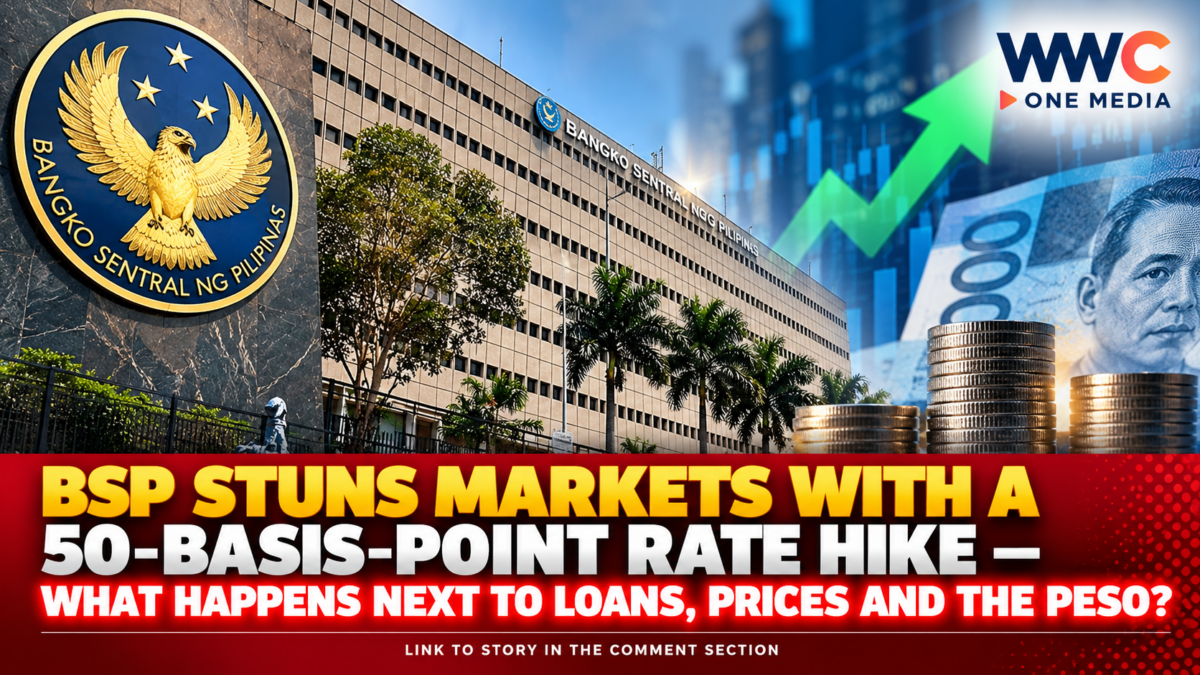
MANILA, Philippines — The Bangko Sentral ng Pilipinas (BSP) has surprised financial markets with a jumbo 50-basis-point interest rate hike, lifting its benchmark policy rate to 5.50% on October 22, 2026, as rising inflation, a weakening peso and volatile global oil prices intensify pressure on the Philippine economy.
The decision exceeded market expectations. According to Reuters, all 27 economists surveyed ahead of the Monetary Board’s meeting had anticipated a smaller, 25-basis-point increase.
The move signals a more aggressive response to mounting price pressures and raises fresh questions about how far the central bank is prepared to go to keep inflation from becoming entrenched.
But the impact will extend beyond financial markets. Higher interest rates can influence borrowing costs, business investment, consumer spending and the pace of economic growth.
Why Did the BSP Deliver a Jumbo Rate Hike?
Inflation has become a growing concern for policymakers.
The Philippine Statistics Authority reported that annual headline inflation accelerated to 7.2% in September 2026, up from 6.1% in August. The latest reading is well above the BSP’s target range of 2% to 4%.
Core inflation, which excludes selected volatile food and energy prices, also climbed to 4.7%, indicating that price pressures are extending beyond the most volatile components of the consumer basket.
The weakening peso and elevated international oil prices have added to the risks. Because the Philippines relies heavily on imported fuel and other commodities, a weaker currency can make imports more expensive when priced in pesos.
Economists had warned before the October meeting that a larger increase could become necessary if inflation expectations deteriorated or the peso weakened further.
BusinessMirror reported that former BSP deputy governor Diwa Guinigundo supported a 50-basis-point increase, arguing that a stronger response could help prevent inflation from spreading through the economy.
The Monetary Board’s latest decision delivered the larger increase that some economists had anticipated, but that most market participants had not expected.
Four Consecutive Rate Hikes: How Much Has the BSP Tightened?
The latest decision extends the BSP’s tightening cycle, which began in April as inflation risks intensified.
The central bank had previously raised its benchmark rate by 25 basis points at each of its April, June and August meetings, bringing the rate to 5.00%.
The additional 50-basis-point increase in October lifts the benchmark to 5.50% and brings the cumulative increase since April to 125 basis points.
The policy shift reflects a difficult balancing act: controlling inflation without imposing excessive pressure on households, businesses and an economy already facing uncertainty.
Higher policy rates make financial conditions tighter, helping restrain demand and limit the risk that temporary price shocks turn into persistent inflation. However, monetary policy generally works with a lag and cannot immediately resolve supply shortages or lower global oil prices.
Will Loan Payments and Credit Card Costs Increase?
One of the biggest questions for Filipino households is whether the rate hike will make borrowing more expensive.
The BSP’s benchmark rate influences the wider financial system, but the effect on individual borrowers depends on their lenders, loan agreements and repricing schedules.
Here is what consumers should understand:
Home loans: Borrowers with floating or repricing interest rates could face higher monthly payments if their lenders adjust rates upward. Fixed-rate borrowers generally remain protected during the agreed fixed-rate period.
Personal loans and business financing: New borrowers may encounter higher borrowing costs if banks pass on tighter funding conditions. Existing borrowers will be affected according to their contract terms.
Credit cards: Credit card interest rates do not automatically rise by the same 50 basis points. Any changes depend on the issuer’s pricing policies and applicable rules.
Savings accounts and time deposits: Some banks may offer better deposit rates as market conditions change, although the timing and size of any adjustment will vary.
For households planning major purchases, the decision reinforces the importance of comparing loan offers, checking repricing clauses and allowing room in monthly budgets for possible changes in borrowing costs.
Why the Weak Peso Matters to Everyday Filipinos
The peso’s depreciation has added another layer of concern for policymakers.
Bank analysts warned before the October meeting that further currency weakness could increase imported inflation and strengthen the case for a larger rate hike.
When the peso loses value against the US dollar, Philippine importers generally need more pesos to purchase the same dollar-priced goods. Depending on global prices, contracts and market conditions, the additional costs can eventually affect fuel, transport, food production and other consumer expenses.
A higher BSP policy rate may support the peso by making peso-denominated assets relatively more attractive under certain conditions. However, interest rate increases cannot guarantee currency appreciation, especially when global oil prices, geopolitical tensions and movements in the US dollar are major influences.
The central bank must therefore weigh the potential benefits of tighter monetary policy against the risks of weakening domestic demand.
Could the Rate Hike Slow Economic Growth?
The decision also highlights the tension between controlling inflation and supporting economic activity.
Higher borrowing costs can discourage some households from taking out loans and prompt businesses to delay investments. Those effects can moderate demand, helping reduce inflationary pressure over time.
However, if rates remain elevated for an extended period, credit-dependent businesses and consumers may face greater financial strain.
The challenge is particularly complicated when inflation is being driven partly by supply-side pressures, such as expensive imported energy or weather-related disruptions to agricultural production.
Interest rate increases can help limit the spread of inflation into wages, services and expectations, but they cannot directly produce more rice, improve harvests or restore disrupted oil supplies.
The BSP must therefore consider both the persistence of inflation and the economy’s ability to withstand tighter financial conditions.
What Happens Next?
The next phase will depend on incoming inflation figures, movements in the peso, global energy prices and the extent to which price increases spread across the economy.
The BSP’s next scheduled Monetary Board policy meeting is December 17, 2026. The October decision raises the stakes for that meeting, although the size and direction of any further adjustment will depend on the information available at the time.
For households, the practical priority is to monitor loan repricing notices, review monthly expenses and avoid assuming that every borrowing or savings rate will change immediately.
For investors and businesses, the focus will be on whether the larger increase helps stabilize inflation expectations and the peso without causing a sharper-than-expected slowdown in domestic activity.
The BSP has made its latest move against inflation. The bigger question now is whether the jumbo hike will help bring prices under control—or whether households and businesses will face a longer period of expensive borrowing before inflation finally eases.