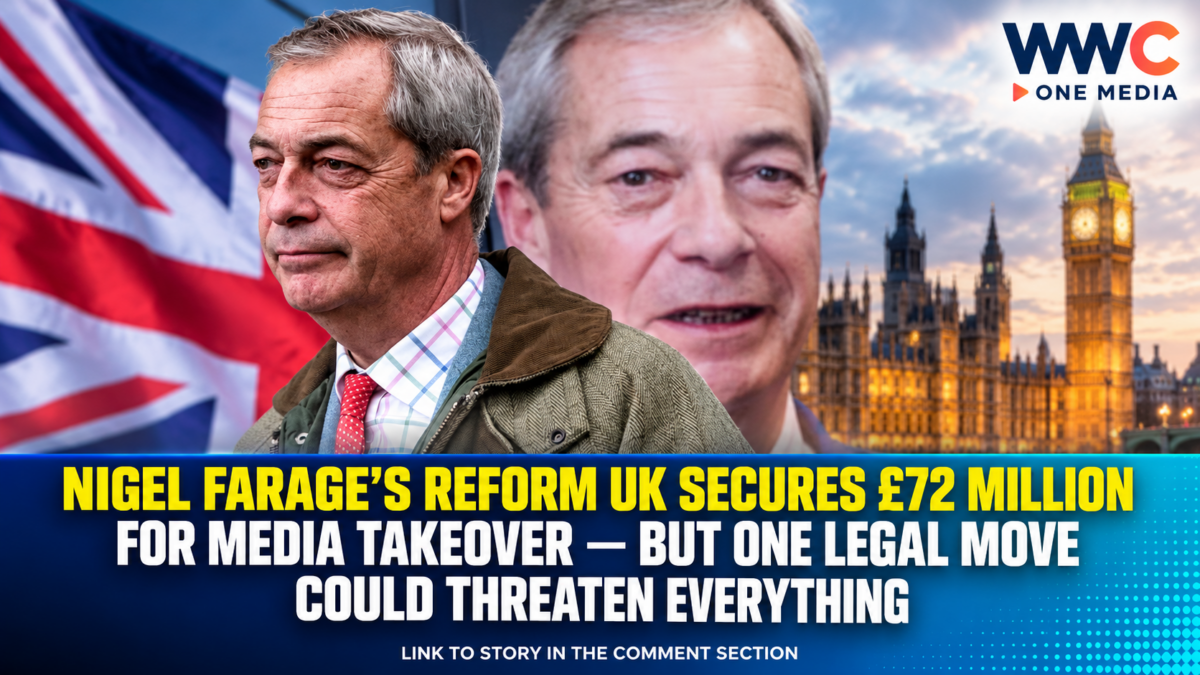
LONDON, October 22, 2026 — Nigel Farage’s Reform UK is preparing an aggressive expansion into digital television, online journalism, and mass-circulation newspapers, using a massive £72 million ($96 million) donation windfall to challenge Britain’s established political parties and regain momentum ahead of the next general election.
The populist, anti-immigration party is investing in a YouTube-based television operation designed to deliver its message directly to voters, reducing its dependence on traditional broadcasters at a time when damaging headlines about political donations and alleged racist remarks have undermined its standing in opinion polls.
But behind Reform UK’s ambitious media offensive lies an increasingly contentious question: Could proposed changes to Britain’s political donation laws put its enormous financial advantage at risk?
Reform UK Plans a Major Digital Media Expansion
According to Reuters, Reform UK has advertised 12 media positions as part of plans to turn its existing YouTube presence into a more substantial daily programming operation.
The party is reportedly considering an initial budget exceeding £10 million for the expanded platform, with plans to employ approximately 25 journalists and editors.
Programming could include political interviews, documentaries, policy discussions, and other video content intended to reach voters without relying on conventional news organizations.
The operation would build on Reform UK’s existing YouTube output, which already publishes approximately eight videos a week.
Gawain Towler, a member of Reform UK’s governing board and a longtime Farage associate, told Reuters that the expanded media operation would also allow the party to develop more effective communicators and reduce pressure on its eight lawmakers, who frequently appear in mainstream news interviews.
For Reform UK, the strategy represents more than an investment in publicity. It is an attempt to establish a direct communications network capable of influencing political debate and shaping its public image.
Two Cryptocurrency Entrepreneurs Provide £72 Million
The media offensive follows extraordinary financial support from two businessmen associated with the cryptocurrency industry: Christopher Harborne and Ben Delo.
Both contributed £36 million, bringing their combined donations to £72 million.
Reform UK officials say the money will support the party’s preparations for the next general election, expected by mid-2029.
Approximately half of the donations is earmarked for headquarters and operational expenses through the election period, while the remainder will help strengthen campaigning, policy development, recruitment, and media operations.
Reuters reports that Reform UK has raised approximately £87 million in private donations during 2026, surpassing fundraising totals recorded by other major European political parties in its comparison.
The scale of the funding could allow Reform to build a professional political infrastructure more rapidly than smaller parties have traditionally been able to achieve.
Both major donors have publicly indicated that they do not expect personal favors in return for their contributions. However, political financing experts have raised concerns about the influence extremely wealthy donors can potentially exert over democratic institutions.
A Newspaper Campaign Targeting 15 Million Homes
Reform UK’s media strategy is not limited to television and online content.
The party is preparing a printed newspaper, called The Reformer, with plans for an initial distribution reaching approximately 15 million British households.
The Spectator reported on October 9 that the proposed eight-page newspaper would feature party policies, political commentary, and contributions associated with Farage.
Former Times columnist and Spiked editor Mick Hume is expected to play an important role in the publication.
The newspaper initiative reflects Reform’s determination to reach voters through several platforms simultaneously, combining traditional household distribution with YouTube videos, websites, podcasts, and social media.
Rather than relying entirely on media coverage selected and edited by independent broadcasters, the party wants to control the timing, presentation, and distribution of its own political messages.
Reform UK Draws Inspiration From Trump’s Media Strategy
The expansion shares characteristics with the direct-to-audience political communications strategy employed by US President Donald Trump.
Reuters reported parallels between Reform’s planned video operation and the White House’s Trump TV streaming channel.
However, The Spectator reported that Reform insiders do not expect their new platform to operate like a conventional 24-hour news broadcaster. Instead, long-form interviews and digital-first political programming are expected to feature prominently.
The distinction matters because Reform’s proposed service would be party-produced political content rather than an independent television newsroom.
Its success would depend not only on audience numbers but also on whether viewers regard its information as credible.
The shift reflects wider changes in how audiences consume news. Research from the Reuters Institute’s 2026 Digital News Report indicates that social media and video platforms have become increasingly important sources of news, while concerns about trust and misinformation remain significant.
Political Scandals Complicate Farage’s Comeback Strategy
Despite its financial advantage, Reform UK is facing scrutiny over its fundraising and the conduct of some party members.
Investigations by Channel 4 and ITV have raised questions involving alleged attempts to obtain donations from foreign-linked sources and racist, sexist, and violent comments reportedly made by Reform figures.
Reform UK has disputed allegations of wrongdoing involving its funding. The party says an internal review found no electoral-law breach by two officials identified in the Channel 4 investigation.
In a separate development, Reform UK reported ITV journalists to the police and announced plans for legal action following an undercover documentary.
ITV has defended its reporting, maintaining that its journalists operated within applicable laws and broadcasting standards.
The controversies have coincided with declining polling momentum for Reform, creating an additional challenge for Farage as he competes against the governing Labour Party and opposition Conservatives.
Electoral Commission Fine Adds to Scrutiny
The Guardian reported on October 21 that Reform UK had been fined £2,187 after campaign materials failed to include legally required information identifying their publisher.
The original penalty of £1,750 was increased after the party missed a payment deadline.
The breaches involved social media communications and a newspaper advertisement. The Electoral Commission emphasized that such disclosures are important for transparency in political campaigning.
Although the fine is relatively small compared with Reform UK’s donations, the enforcement action highlights the regulatory responsibilities facing political parties as they expand their communications operations.
Labour’s Proposed Donation Rules Could Become a Bigger Threat
A potentially more serious challenge concerns political finance regulation.
The Labour government has proposed restrictions on certain donations from British citizens living overseas, including a £100,000 cap under specified circumstances.
Reuters reports that additional retrospective legislation could affect the eligibility of Reform UK’s recent donations.
Harborne has lived in Thailand for many years, while corporate records cited by Reuters indicate that Delo’s declared place of residence changed from Hong Kong to Britain earlier in 2026.
If future legislation makes some of the donations ineligible, Reform could potentially be required to return substantial sums.
However, that outcome is not established. It would depend on the final wording, approval, and application of any legislation, including potential legal challenges.
Reform officials have indicated that they would contest measures they consider unfair or retrospective.
The dispute places political fundraising rules at the center of an increasingly high-stakes battle over the future of British elections.
Can Money and Media Power Translate Into Election Victory?
The stakes extend beyond Reform UK’s immediate political fortunes.
Its expansion illustrates how increasingly well-funded political movements can develop communication ecosystems that combine journalism-style presentation, direct campaigning, social media distribution, and donor-backed infrastructure.
Supporters argue that these platforms enable political parties to communicate directly with voters and challenge established media organizations.
Critics warn that party-controlled content can blur the distinction between independent reporting and political messaging, potentially reinforcing partisan divisions and weakening scrutiny.
For Nigel Farage, the immediate challenge is whether massive fundraising and an expanded media presence can repair political damage and restore voter confidence.
The party has the money to build a formidable communications operation. Whether that operation can deliver electoral support remains uncertain.
And with legal questions surrounding political donations still unresolved, Reform UK’s biggest obstacle may not be getting its message heard — but preserving the financial resources behind its ambitious comeback.