MANILA, PHILIPPINES — Coca-Cola Philippines is accelerating its artificial intelligence-powered marketing strategy, combining consumer data, personalized digital experiences and online shopping partnerships to strengthen its position in the country’s highly competitive beverage industry.
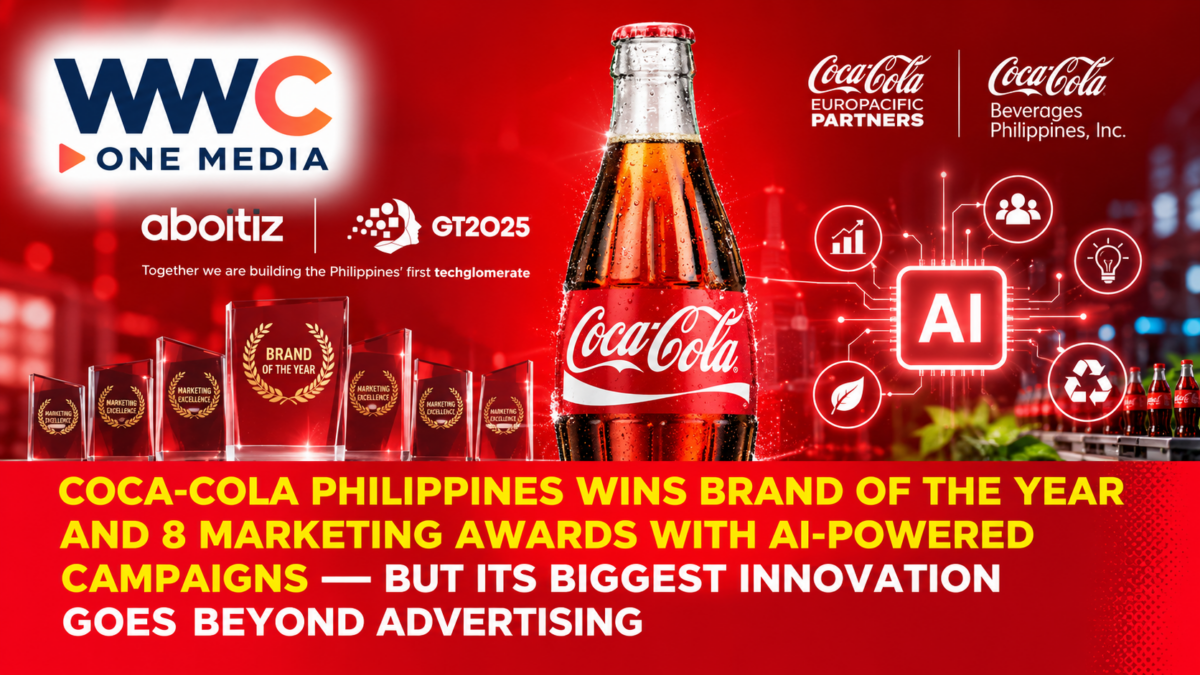
The global beverage giant’s Philippine operations earned Brand of the Year recognition and eight campaign awards at the SMARTIES Philippines 2026 Awards, highlighting how technology is changing the way major brands communicate with Filipino consumers.
Held on October 6 at Shangri-La The Fort in Manila, the awards ceremony recognized companies demonstrating innovation, creativity and measurable business impact.
But behind Coca-Cola’s latest victories is a bigger transformation.
Instead of relying solely on traditional advertising, the company is increasingly using data-driven marketing and artificial intelligence to deliver relevant messages, recommend products and connect digital engagement with purchasing opportunities.
The strategy could offer a glimpse into the future of Philippine advertising, where brands compete not simply for consumer attention but for the ability to deliver personalized experiences that influence buying decisions.
COCA-COLA PHILIPPINES NAMED BRAND OF THE YEAR
Coca-Cola emerged as Brand of the Year at the SMARTIES Philippines 2026 Awards, organized by the Marketing + Media Alliance, or MMA.
According to InsiderPH, the company also received eight awards across its marketing initiatives, particularly its Coca-Cola Festive 2025 and Grab-powered Year in Cravings campaigns.
The recognition underscored Coca-Cola’s efforts to blend emotional storytelling with data analytics and digital commerce.
Rather than depending on a single advertising platform, the company has expanded its use of television, outdoor advertising, social media, digital video and connected television.
These channels allow Coca-Cola to communicate with consumers across different stages of their daily lives, from watching entertainment to ordering meals through mobile applications.
The approach reflects a wider advertising industry shift toward integrated campaigns that connect brand awareness, customer engagement and actual purchasing behavior.
AI BRINGS COCA-COLA’S CHRISTMAS CAMPAIGN TO LIFE
One of Coca-Cola’s standout initiatives was its Festive 2025 campaign, which earned Gold for Omnichannel Marketing and Silver for Innovative Use of AI in Advertising.
The campaign combined traditional holiday storytelling with advanced audience targeting and regional consumer insights.
It reached audiences through television, outdoor placements, Meta platforms, YouTube, TikTok and connected television.
Artificial intelligence helped the brand deliver more relevant advertising messages by using audience information and regional insights.
The creative campaign also featured initiatives such as Emoji Cup and Sound of Home.
These activities were designed to strengthen emotional connections among Filipino families, including those separated by overseas employment.
The emphasis on family relationships was particularly relevant in the Philippines, where Christmas celebrations and the experiences of overseas Filipino workers remain powerful cultural themes.
For Coca-Cola, the objective went beyond promoting beverages.
It sought to associate the brand with shared experiences, family reunions and familiar holiday traditions.
The combination of emotional storytelling and technology helped Coca-Cola earn recognition for marketing execution across multiple media platforms.
COCA-COLA AND GRAB TURN FOOD ORDERS INTO PERSONALIZED EXPERIENCES
Another major success came from Coca-Cola’s partnership with Grab, one of Southeast Asia’s leading digital platforms.
The collaboration developed the Year in Cravings campaign, which converted consumers’ food-ordering histories into personalized digital experiences.
Instead of showing customers generic beverage promotions, the campaign used information from their food preferences to create individualized recaps.
These included personalized food personas, favorite meals and suggested Coca-Cola beverage pairings.
Consumers could explore their ordering habits and discover combinations aligned with their preferences.
More importantly, the experience incorporated purchasing opportunities.
Users could move from viewing their personalized recommendations toward ordering meals and beverages.
The approach connected consumer entertainment, product discovery and digital commerce within one campaign.
According to InsiderPH, the collaboration received six awards at the SMARTIES Philippines 2026 ceremony.
The official SMARTIES winners gallery also confirms awards for Coca-Cola and GrabAds in categories including Customer Growth and Conversion Strategy, Personalization, Brand Experience and Instant Impact/Promotion.
These recognitions demonstrate how digital commerce platforms are increasingly becoming important advertising channels.
For beverage companies, partnerships with food-delivery applications offer the opportunity to reach consumers at the moment they are considering what to eat or drink.
THE BIGGER INNOVATION: TURNING PERSONALIZATION INTO PURCHASES
Coca-Cola’s latest strategy illustrates an important change in modern marketing.
Traditional advertisements are largely designed to build awareness, strengthen brand recognition and influence purchasing decisions over time.
Personalized digital commerce campaigns can shorten that journey.
A consumer may encounter a customized recommendation, explore a product combination and proceed to purchase without leaving the digital platform.
This creates opportunities for advertisers to measure consumer engagement more closely and connect marketing activity with commercial outcomes.
For brands, the attraction is clear.
Instead of delivering the same message to every consumer, marketing teams can develop more relevant experiences based on available audience insights.
However, personalization also introduces responsibilities involving consumer privacy, appropriate data usage and transparency.
Companies must ensure that data-driven advertising practices comply with applicable privacy requirements and platform policies.
Strong consumer trust remains essential, particularly when campaigns rely on purchasing histories or other behavioral information.
MARKETING HEAD EXPLAINS THE COMPANY’S STRATEGY
Frenissa Lagman, Marketing Head of Coca-Cola Philippines, credited the company’s recognition to its focus on understanding consumers and maintaining meaningful connections with them.
According to InsiderPH, Lagman said the awards reinforced the importance of staying close to consumers and recognizing what matters to them.
The statement reflects Coca-Cola’s broader strategy of combining creativity with consumer intelligence.
Technology may help brands identify preferences, but campaigns must still connect with cultural experiences and everyday consumer behavior.
In the Philippines, where digital platforms are deeply integrated into shopping, entertainment and communication, that combination could become increasingly important.
Coca-Cola’s recognition suggests that data-driven technology can complement traditional brand storytelling rather than replace it.
MICROSOFT: COCA-COLA’S AI MARKETING EXPANSION IS ALREADY GLOBAL
Coca-Cola’s Philippine marketing strategy is part of a broader company-wide effort to use artificial intelligence in consumer engagement.
In an April 2025 customer case study, Microsoft detailed how Coca-Cola used Azure AI technology to create an interactive holiday campaign featuring a virtual Santa experience.
The technology allowed consumers to interact with an AI-powered character across 26 languages.
Microsoft reported that the campaign reached users across 43 markets and four global regions.
The initiative was developed and launched within approximately 60 days.
The project demonstrated how large consumer brands can use cloud infrastructure and artificial intelligence to deliver interactive campaigns across multiple countries.
However, the global Microsoft-supported initiative was separate from the award-winning Philippine campaigns.
Together, the projects illustrate Coca-Cola’s expanding use of digital technology for consumer experiences.
COCA-COLA’S PHILIPPINE BUSINESS SHOWS POSITIVE MOMENTUM
Beyond marketing awards, Coca-Cola’s bottling operations have also reported encouraging business developments in the Philippines.
Coca-Cola Europacific Partners, a major Coca-Cola bottling partner, reported solid performance in the Philippine market during the first half of 2026.
The company said demand for Coca-Cola Original Taste remained strong, while Coca-Cola Zero Sugar recorded double-digit volume growth.
Other products, including Sprite Zero and Royal, also contributed to business performance.
Wilkins Pure benefited from additional quick-service restaurant listings.
Coca-Cola Europacific Partners also reported that its Philippine operating margin was approaching its 10% target.
The bottler’s planned new production facility remained on track to begin operating in 2027.
These developments highlight the broader commercial environment surrounding Coca-Cola’s marketing initiatives.
However, publicly available results do not establish how much of the company’s sales or profit growth was caused specifically by the award-winning AI campaigns.
Marketing recognition and financial performance should therefore be evaluated as related but separate indicators.
REUTERS: GLOBAL COCA-COLA SALES REMAIN STRONG
The Coca-Cola Company’s broader international business also experienced positive momentum during 2026.
Reuters reported in July that the beverage giant raised its annual financial outlook following stronger-than-expected quarterly results.
The company benefited from beverage demand and promotional opportunities associated with the FIFA World Cup.
Reuters reported comparable quarterly revenue growth of approximately 6%, with revenue reaching $13.37 billion.
The company also projected around 5% organic revenue growth for the year.
However, Coca-Cola faced challenges involving higher packaging costs and supply-chain pressures in certain markets.
The global performance demonstrates the opportunities and challenges facing beverage companies as they balance brand investment, product innovation, consumer demand and operating expenses.
WHAT THIS MEANS FOR PHILIPPINE BRANDS AND ADVERTISERS
Coca-Cola’s recognition at the SMARTIES Awards highlights the growing importance of technology-enabled marketing in the Philippines.
For local businesses, the campaigns provide an example of how digital platforms can connect brand engagement with commercial activity.
The underlying principles are relevant beyond multinational companies.
Restaurants can use customer preferences to recommend menu combinations.
Retailers can develop targeted promotions based on buying patterns.
Service businesses can improve the relevance of their communications through responsible customer segmentation.
However, Coca-Cola’s scale, budget and platform partnerships are significantly larger than those available to many small businesses.
Successful adoption of similar strategies would require appropriate technology, reliable data, consumer consent where required and a clear understanding of marketing costs.
The broader lesson is not that every business must immediately invest heavily in artificial intelligence.
It is that companies should find practical ways to make their marketing more relevant, measurable and convenient for customers.
THE FUTURE OF ADVERTISING MAY BE MORE PERSONAL
Coca-Cola Philippines’ latest awards point toward a future in which artificial intelligence becomes increasingly integrated into advertising, customer engagement and online commerce.
Digital platforms can help brands understand consumer preferences and create more personalized interactions.
But the effectiveness of these technologies still depends on creative execution, commercial relevance and consumer trust.
For Coca-Cola, the combination of Filipino cultural insights, AI-supported advertising and digital ordering experiences has already earned substantial industry recognition.
The next challenge will be sustaining these innovations and demonstrating their long-term commercial value.
Coca-Cola Philippines has shown that the next stage of marketing competition may not be about producing more advertisements, but about making every brand interaction more relevant to the consumer.
And as businesses across the country explore artificial intelligence, a bigger question is emerging:
If personalized campaigns can already transform food-ordering data into product recommendations and purchasing opportunities, how much further could AI reshape the way Filipinos discover, choose and buy their favorite brands?