JAKARTA, Indonesia — October 21, 2026. Public anger is boiling over across Indonesia as devastating forest fires and toxic haze trigger nationwide demonstrations, disrupt businesses, threaten public health and spread dangerous air pollution across Southeast Asia.
Thousands of Indonesians have fallen ill after weeks of breathing smoke from widespread forest and peatland fires, intensifying criticism of President Prabowo Subianto’s government as it marks two years in power.
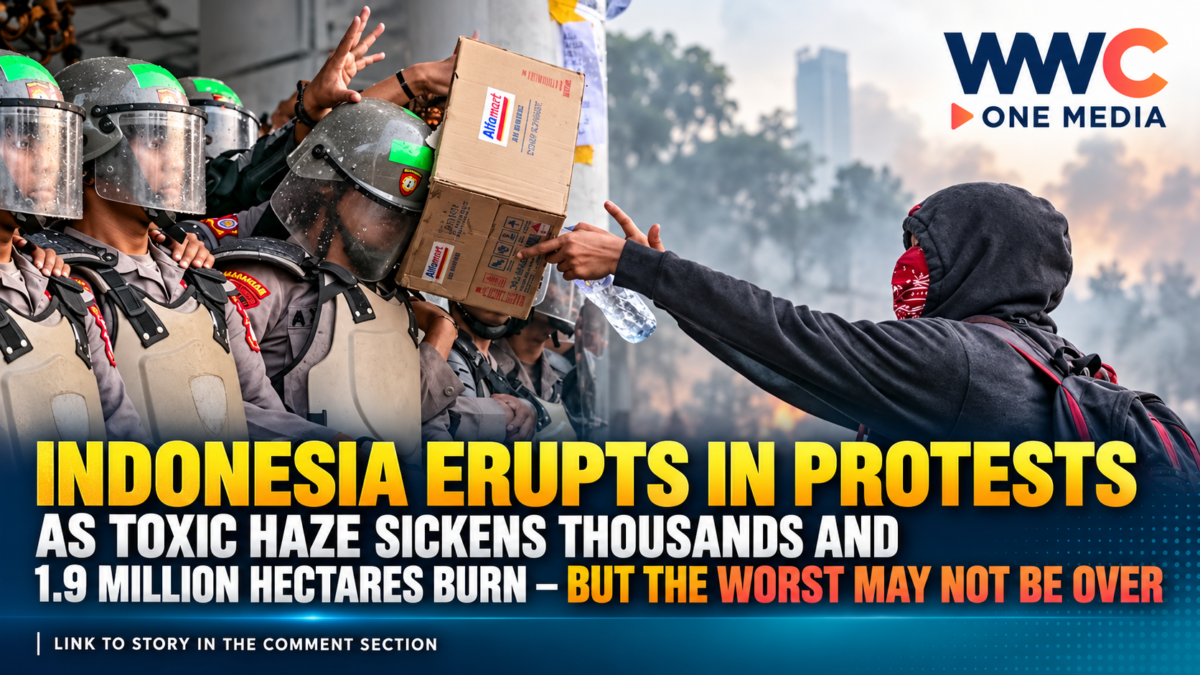
On October 20, student-led demonstrations took place in Jakarta, Bandung, Yogyakarta, Pekanbaru and Makassar, combining broader frustrations over governance and alleged corruption with demands for decisive action against the environmental catastrophe.
The unrest has turned Indonesia’s worsening wildfire emergency into a major political test for Prabowo, whose administration faces mounting pressure to extinguish the fires, protect affected communities and hold those responsible for illegal burning accountable.
More Than 1.9 Million Hectares Burned as Indonesia Faces a Worsening Disaster
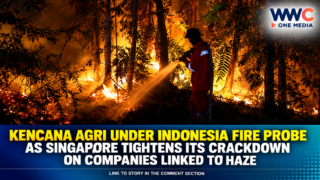
According to wildfire monitoring platform Nusantara Atlas, fires burned more than 1.9 million hectares of land across Indonesia during the first nine months of 2026.
That is an area larger than many major metropolitan regions combined, underscoring the enormous scale of the destruction.
The worst-affected areas include parts of Kalimantan on Borneo and Sumatra, where prolonged dry conditions, highly combustible peatlands and land-clearing practices have contributed to the crisis.
The fires intensified during an unusually severe El Niño episode, which has reduced rainfall and left forests and peatlands increasingly vulnerable to ignition.
Unlike ordinary surface fires, peatland fires can spread underground and continue smouldering for extended periods, producing thick smoke even after visible flames have been suppressed.
This makes them exceptionally difficult to extinguish and increases the threat of prolonged exposure to harmful air pollution.
Protesters Demand Action as Families Struggle to Breathe
Demonstrators have accused authorities of failing to respond adequately to the catastrophe.
During protests in Jakarta, banners demanded immediate action, reflecting growing frustration among communities forced to live with hazardous smoke.
In Palangka Raya, Central Kalimantan, residents described a daily struggle involving respiratory problems, weakened livelihoods and rising household expenses.
A local street vendor told AFP that poor air quality had driven away customers at a time when living costs were already increasing.
Another resident reported that her husband and children had been coughing for weeks, with smoke entering their home despite attempts to remain indoors.
The frustration has also triggered calls for authorities to declare a national disaster, a move that could increase pressure for a stronger emergency response.
On October 20, police detained six Greenpeace activists after they displayed protest banners at Jakarta’s Bundaran HI roundabout, highlighting the increasingly tense political environment surrounding the haze emergency.
Government Deploys More Than 60,000 Firefighters and 49 Aircraft
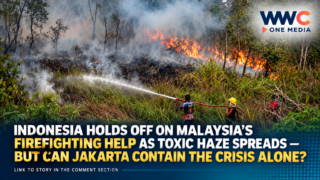
Indonesia’s National Disaster Mitigation Agency has mobilized more than 60,000 firefighters and volunteers nationwide.
Authorities have also made 49 aircraft available for aerial water bombing and cloud-seeding operations intended to produce rainfall over affected areas.
However, dangerously thick haze has periodically grounded aircraft, complicating efforts to contain the fires.
The government has pledged tougher action against illegal burning and has moved to strengthen disaster-response and peatland-restoration efforts.
But protesters and environmental campaigners argue that firefighting alone cannot resolve the underlying problem.
They are calling for stronger enforcement against destructive land-clearing practices, better peatland protection, corporate accountability and more effective emergency assistance for vulnerable communities.
Singapore and Malaysia Face Growing Threat From Cross-Border Haze
Indonesia’s wildfire emergency is no longer just a domestic environmental problem.
Smoke from burning forests and peatlands has spread into neighboring countries, including Singapore and Malaysia, raising concerns about respiratory health, transportation disruptions and economic losses.
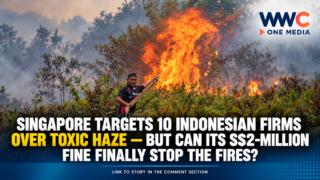
Singapore has stepped up enforcement under its Transboundary Haze Pollution Act, targeting companies suspected of links to fires contributing to cross-border pollution.
By October 20, authorities had issued preventive notices to a total of 10 Indonesian companies, requiring action to prevent or control fires and provide relevant mitigation plans.
These notices do not automatically establish legal guilt, but they demonstrate the increasing regulatory pressure surrounding the disaster.
The widening haze crisis has also disrupted aviation, closed schools in affected areas and forced residents across Southeast Asia to take additional precautions against unhealthy air.
Hundreds of Thousands Report Respiratory Illnesses
The human cost of the disaster is becoming increasingly serious.
Reuters reported on October 15 that more than 283,000 respiratory illness cases had been recorded across seven Indonesian provinces during the haze emergency.
Health concerns extend beyond coughing and throat irritation. Fine particulate matter from wildfire smoke can penetrate deep into the lungs, aggravating asthma and increasing risks for people with existing heart or respiratory conditions.
Children, older adults, pregnant women and outdoor workers are among those requiring particular protection during severe pollution episodes.
At the same time, disrupted transportation, declining outdoor commercial activity and school closures are creating additional economic and social pressures.
For smaller businesses dependent on daily foot traffic, the consequences can be particularly severe.
Could Corporate Accountability Become the Next Major Flashpoint?
The fires have renewed scrutiny of agricultural and plantation operations, particularly in areas associated with palm oil production and peatland conversion.
Environmental advocates argue that preventing recurring disasters will require more than seasonal firefighting operations.
Stronger monitoring of agricultural concessions, investigation of suspected illegal burning, meaningful penalties and long-term restoration of damaged ecosystems could become central to preventing future crises.
Singapore’s increased regulatory action also raises a broader question: Can regional authorities effectively hold companies accountable when environmental damage crosses national borders?
That challenge could shape environmental policy and corporate responsibility across Southeast Asia long after the smoke clears.
A Political and Environmental Test for Prabowo
The timing of the demonstrations is particularly significant.
They erupted on October 20, the second anniversary of Prabowo Subianto’s presidency, transforming public frustration over wildfires into a wider debate about government performance.
His administration must now confront several problems simultaneously: protecting millions of residents from unhealthy air, preventing further environmental destruction, restoring damaged peatlands and responding to pressure from neighboring countries.
The immediate priority remains bringing the fires under control.
But the longer-term challenge may prove even more difficult: ensuring that the same environmental catastrophe does not return during the next severe dry season.
For Indonesia, the question is no longer simply when the smoke will disappear. It is whether the government can prevent another disaster before public anger, economic disruption and regional pressure reach a breaking point.