SAO PAULO, Brazil — October 20, 2026
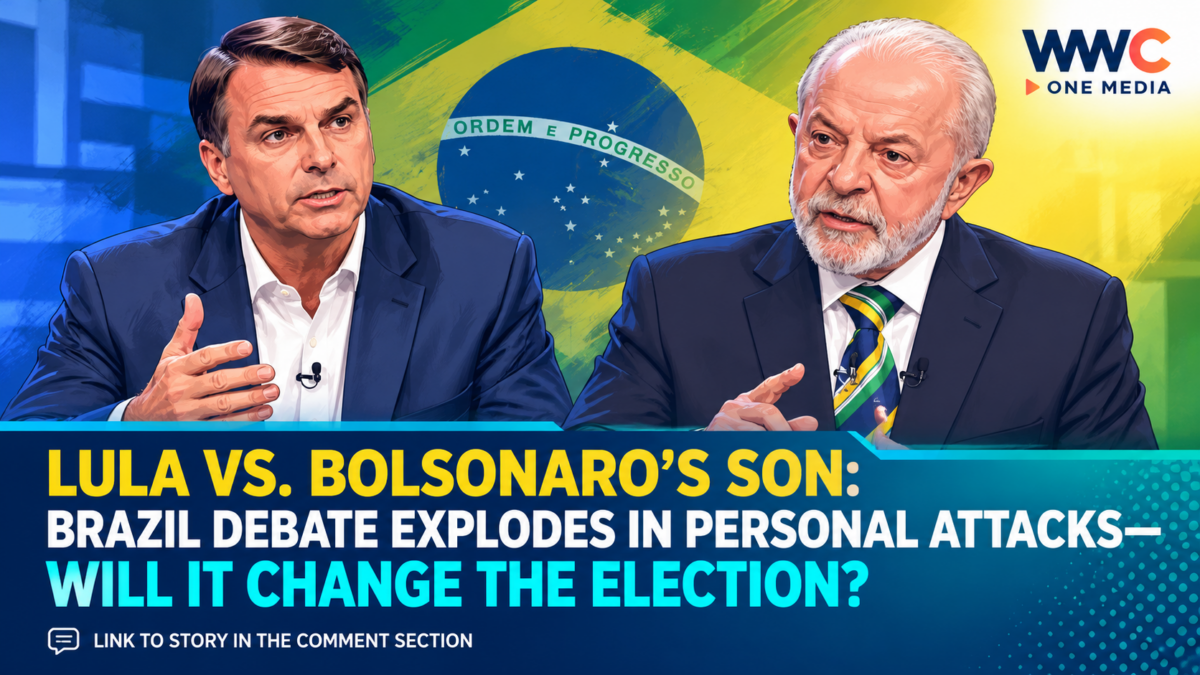
Brazil’s presidential race has intensified after President Luiz Inácio Lula da Silva and Senator Flávio Bolsonaro traded sharp insults, corruption allegations and political attacks during their first televised debate ahead of the October 25 runoff election.
The Sunday, October 18, confrontation on Band TV brought the two leading candidates face-to-face in a tense exchange that focused heavily on personal disputes and past controversies, leaving limited time for a detailed discussion of their plans for Brazil’s future.
According to Channel NewsAsia and The Associated Press, the debate exposed the deep political divisions surrounding the election, with both candidates attempting to undermine the credibility of their opponent just days before voters return to the polls.
Flávio Bolsonaro, the son of former president Jair Bolsonaro, won the first round with approximately 47% of the vote, compared with Lula’s 45%. The narrow margin has set up a closely contested runoff for control of Latin America’s largest economy.
Lula, Flávio Bolsonaro Exchange Sharp Personal Attacks
The debate quickly turned confrontational as both candidates accused each other of dishonesty and corruption.
Lula, who is seeking a fourth, nonconsecutive presidential term, criticized Flávio Bolsonaro’s political record and questioned allegations surrounding his opponent. Flávio responded with attacks on Lula’s past corruption cases and his administration’s spending policies.
The exchange included pointed remarks about their families and political associations, reflecting the bitter rivalry between the left-wing president and the right-wing opposition.
At several points, Flávio paced behind Lula while the president was speaking, drawing attention to the tense atmosphere inside the studio.
Rather than delivering a sustained discussion of competing policy proposals, the candidates repeatedly returned to accusations and personal attacks.
Corruption Allegations Become a Major Flashpoint
Corruption emerged as one of the debate’s central issues.
Lula challenged Flávio over scrutiny involving his financial dealings and his reported links to former banker Daniel Vorcaro, who was associated with financing a film about Jair Bolsonaro’s life.
Flávio has denied wrongdoing. Allegations and investigations involving a political figure should not be treated as proof of guilt.
The Associated Press also reported that Brazil’s federal police had asked the Supreme Court to open an investigation into Flávio over a money-laundering allegation involving a lawyer close to him.
Flávio, in turn, raised a potential corruption case involving one of Lula’s sons. Lula responded that his son would cooperate with authorities.
These exchanges underscored how corruption allegations have become a major battleground in a campaign shaped by public distrust of political institutions.
Economy, Cost of Living and Public Security Take Center Stage
Beyond the personal attacks, both candidates sought to appeal to voters worried about everyday problems.
Flávio criticized government spending and argued that removing Lula from office and fighting corruption would help improve Brazil’s economy. He also emphasized public security and the cost of living.
Lula defended his administration’s social programs and challenged Flávio over how he would approach public spending, including whether he would pursue austerity measures similar to those implemented by Argentine President Javier Milei.
The president also portrayed his opponent as disconnected from the experiences of ordinary Brazilians, pointing to public transportation and access to public healthcare as examples.
These issues matter because the next president will lead a country of approximately 214 million people, with economic policy, social welfare and security likely to remain important concerns for voters.
Flávio Acknowledges Shortcomings in His Father’s COVID-19 Response
The legacy of former president Jair Bolsonaro also featured prominently in the debate.
When questioned about his father’s administration and its handling of the COVID-19 pandemic, Flávio acknowledged that the results had not been the best and offered what he described as a “mea culpa.”
The remark placed his father’s controversial pandemic response back into the campaign spotlight.
Jair Bolsonaro remains a major influence on Brazil’s right-wing movement, even as his legal troubles and political legacy continue to shape the debate surrounding his son’s candidacy.
A Close Election With Major Consequences
The stakes extend beyond the candidates themselves.
A Flávio Bolsonaro victory would mark a major political shift toward the right and could bring changes to Brazil’s economic priorities and relationship with the United States. A Lula victory would allow the incumbent to continue his current policy direction, including efforts to strengthen ties with China.
The Associated Press reported that analysts hoping the first debate would persuade undecided voters were disappointed by the emphasis on insults and accusations rather than detailed policy proposals.
Another debate was scheduled for Friday on TV Globo, giving both candidates another opportunity to make their case before election day.
Will the Debate Change Brazil’s Presidential Race?
With the runoff approaching, the central question is whether the heated exchange will change voters’ perceptions or reinforce the loyalties they already hold.
The first-round results show that the contest remains competitive. However, debate performances alone cannot determine the outcome: voter turnout, undecided voters, campaign developments and the credibility of each candidate’s promises may all influence the final result.
For Brazil, the October 25 election will decide more than who occupies the presidential palace. It will help determine the country’s economic direction, social priorities and international relationships for the years ahead.