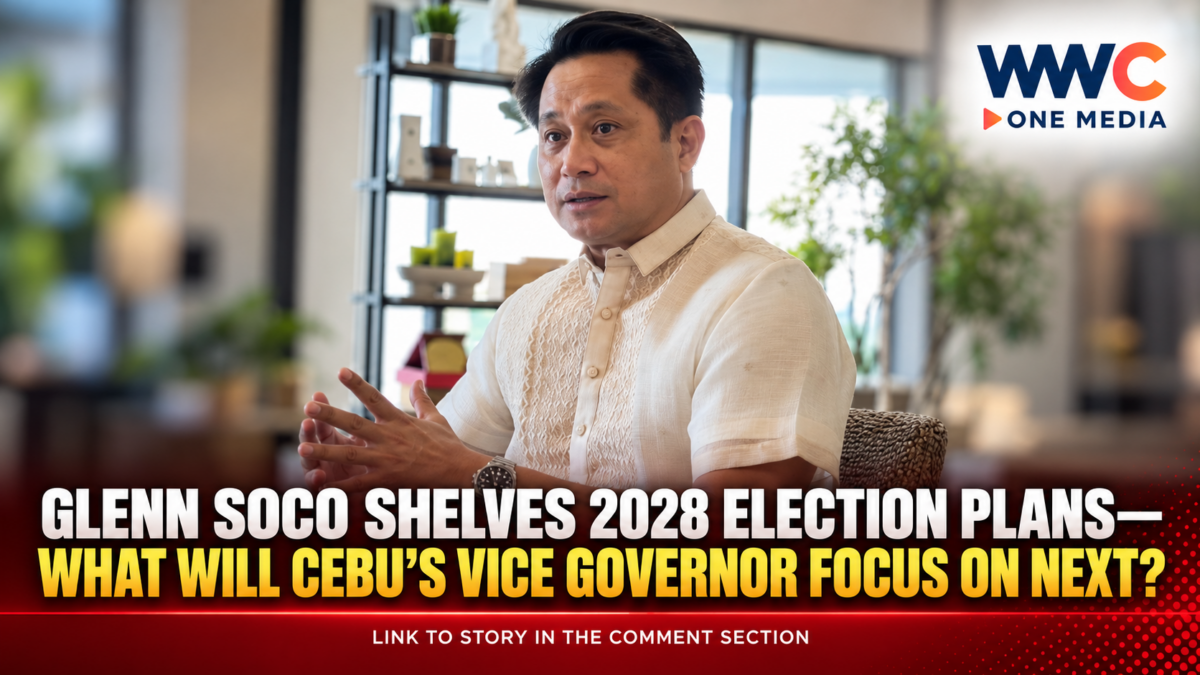
CEBU, Philippines — Cebu Vice Governor Glenn Anthony Soco is reportedly setting aside his plans for the 2028 elections to concentrate on his current responsibilities in government, putting public service at the center of his immediate priorities.
The development comes as Cebu’s provincial leadership faces pressing concerns involving healthcare, infrastructure, economic growth, public spending and the delivery of essential services to communities across the province.
Rather than allowing early election considerations to dominate the conversation, Soco’s reported decision signals a focus on the work expected of him as vice governor and presiding officer of the Sangguniang Panlalawigan, or Cebu Provincial Board.
Public service takes center stage
Soco’s current role places him at the heart of provincial legislative work, including the review of proposed government spending and the consideration of policies that affect Cebuano communities.
Recent reports from The Freeman and SunStar Cebu show that the Provincial Board is preparing to scrutinize Cebu’s proposed 2027 budget, which is expected to reach ₱14.6 billion.
The proposed spending plan is significantly higher than the province’s ₱11.9-billion budget for 2026. Soco has emphasized the importance of carefully reviewing the allocations and determining whether the proposed spending addresses the actual needs of the public.
Healthcare, infrastructure, agriculture, water supply and disaster preparedness are among the areas requiring close attention as provincial officials assess the proposed budget.
These issues carry practical consequences for residents, from access to medical services and reliable water supplies to improved roads, livelihood opportunities and stronger disaster response.
Cebu’s challenges go beyond election season
The discussion surrounding Soco’s reported 2028 plans comes at a time when provincial officials are expected to demonstrate tangible results in governance.
In a January 2026 report, The Freeman highlighted Soco’s stated priorities, including stronger support for micro, small and medium enterprises, improved healthcare investment, infrastructure development, better transportation and renewable energy initiatives.
These priorities reflect the broader challenges facing Cebu as it seeks to sustain economic growth while improving public services across its communities.
The provincial government must also balance development ambitions with responsible spending, transparency and the needs of residents outside major urban centers.
What does this mean for the 2028 elections?
Soco’s reported decision to shelve his election plans does not, by itself, establish whether he will run for another position in the future. It indicates that his immediate focus is on his present public responsibilities, according to the report’s headline.
Any future candidacy, change of plans or formal political announcement would need to be confirmed through an attributable statement from Soco or an official announcement.
For now, the more immediate question for Cebuanos is how provincial officials will translate their priorities into programs, policies and services that improve everyday life.
As the province prepares to examine its next budget and address pressing development needs, Soco’s performance in his current position will remain an important part of the public conversation.
The bottom line: Election plans may change, but the demand for effective public service continues. For Cebu residents, the real measure of leadership will be whether government decisions produce meaningful results for their communities.