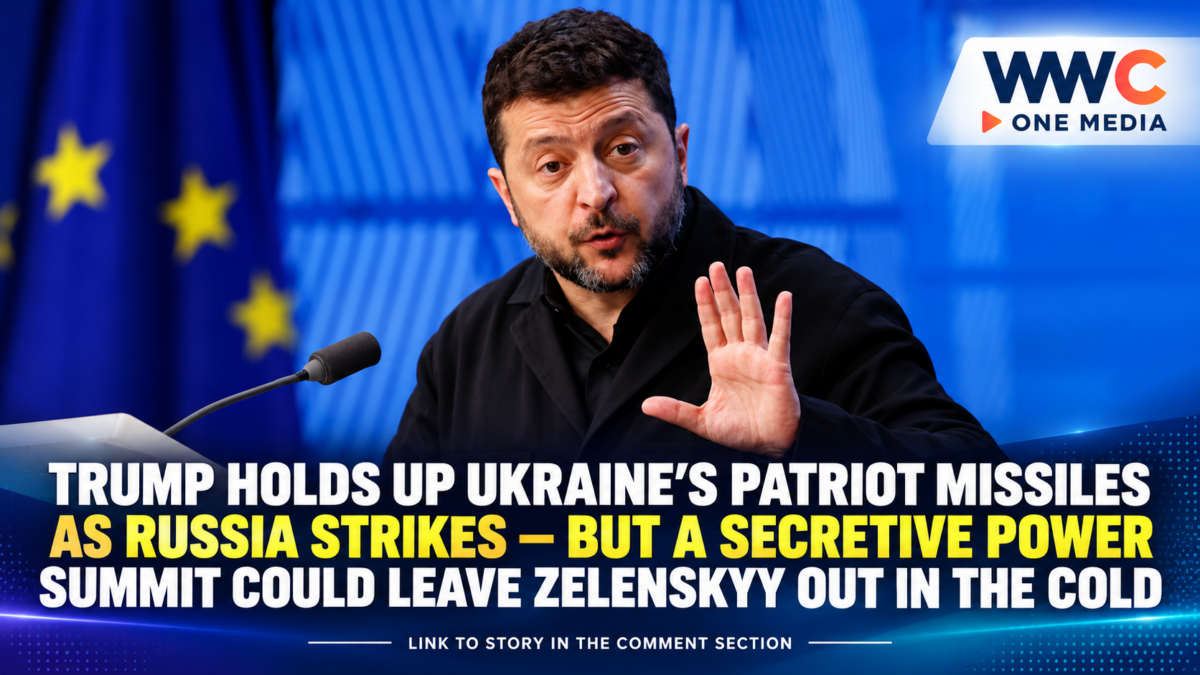
KYIV, Ukraine — October 20, 2026 — A deepening diplomatic confrontation between Ukraine and the United States is raising fresh concerns about Kyiv’s ability to defend itself against Russian missile attacks, after President Volodymyr Zelenskyy accused Washington of holding up crucial air-defense missiles already financed by European allies.
The accusations come as US President Donald Trump signals his willingness to meet Russian President Vladimir Putin and Chinese President Xi Jinping in a potential high-level summit next month — a diplomatic initiative that has alarmed Ukrainian officials over the possibility of negotiations about their country’s future without Ukraine at the table.
What began as a dispute over military assistance has now developed into a wider confrontation over battlefield survival, intelligence-sharing, energy policy and who gets to decide how Europe’s deadliest conflict in decades will end.
Zelenskyy Says Europe Has Paid for Missiles — But US Approval Is Still Missing
Speaking to American senators on Monday, October 19, Zelenskyy alleged that the Pentagon was delaying deliveries of interceptor missiles purchased with European funding.
According to the Ukrainian president, the shipments were awaiting authorization from US Defense Secretary Pete Hegseth.
He also claimed that several European governments were prepared to transfer Patriot air-defense interceptors from their existing inventories but had not received the necessary American approval.
The allegations underscore Ukraine’s continuing dependence on US-controlled defense technology, even as European governments increase their financial and military contributions.
Patriot systems are especially important because they can intercept certain ballistic and cruise missiles, providing a critical layer of protection for Ukrainian cities, power stations and essential infrastructure.
A prolonged shortage of interceptors could reduce Ukraine’s ability to defend against repeated Russian attacks, particularly when multiple missiles are launched simultaneously.
However, the reported delays remain allegations from Kyiv. Washington has not publicly confirmed that it is deliberately blocking the shipments.
Russian Attacks Leave More Than 500,000 Without Power
The diplomatic tensions are unfolding amid another wave of Russian attacks on Ukraine’s electricity infrastructure.
Russian missile and drone strikes damaged energy facilities across the country, disrupting electricity supplies to more than 500,000 people and forcing emergency repairs to an already weakened power grid.
Ukrainian authorities also reported that six people, including three children, were killed in an attack near Kharkiv.
Zelenskyy criticized what he described as another failure by international partners to provide advance intelligence warnings before Russian missile strikes.
Early-warning intelligence can provide valuable time for defensive preparations, potentially improving interception opportunities and helping protect civilians.
American officials, however, have denied any formal change to intelligence-sharing arrangements.
US Secretary of State Marco Rubio maintained that intelligence cooperation had not been withdrawn, leaving a significant disagreement between Washington and Kyiv over what assistance was being provided and whether it was arriving in time.
Trump Opens Door to Putin-Xi Summit — Raising Fears Ukraine Could Be Sidelined
Another source of concern for Kyiv is Trump’s willingness to discuss a potential meeting with Putin and Xi in China in November.
Trump said discussions could focus on nuclear weapons reductions and might also address the war in Ukraine.
The Kremlin acknowledged that the possibility of such a meeting had been raised, but no finalized summit agreement was announced.
For Ukrainian officials, the prospect of the three leaders discussing the conflict without direct Ukrainian participation creates another diplomatic challenge.
Ukraine’s Foreign Minister Andriy Sybiga warned that such talks could embolden Putin rather than produce a sustainable peace.
A meeting between Washington, Moscow and Beijing would also carry implications beyond the Ukrainian battlefield, potentially affecting European security, Russian sanctions and the broader international balance of power.
But a summit remains a possibility, not a confirmed event, and there is no verified agreement to exclude Zelenskyy from any eventual peace negotiations.
Trump-Zelenskyy Tensions Worsen Over Russian Oil
The latest confrontation follows Trump’s decision to ease certain restrictions affecting Russian diesel supplies, a move intended to address energy-market pressures.
The decision has angered Kyiv, which argues that Russian energy revenues help sustain Moscow’s military operations.
Trump has also criticized Ukraine’s attacks on Russian oil refineries, which Kyiv considers legitimate military-economic targets because fuel production and export revenues support Russia’s war effort.
On October 19, Trump again questioned Zelenskyy’s approach to negotiations and suggested that Ukraine should consider another representative in future peace discussions.
The remarks further exposed the deteriorating relationship between the two presidents.
For Ukraine, the central concern is that American efforts to secure a diplomatic breakthrough or stabilize global energy markets could weaken pressure on Russia before Moscow agrees to meaningful concessions.
US Military Assistance Faces Growing Scrutiny
The dispute is not limited to Patriot missiles.
Separate reports have raised questions about operational restrictions affecting Starshield, the secure satellite communications network developed by SpaceX for government use.
Ukrainian officials have expressed concerns that disruptions or limitations could affect military communications and drone operations.
SpaceX founder Elon Musk has said responsibility for the US government-controlled Starshield system rests with Washington.
American officials have rejected claims that established intelligence-sharing policies have been suspended, while questions about the scope and causes of reported service limitations remain unresolved.
The controversy highlights a broader challenge for Ukraine: financial backing from European allies does not automatically eliminate its dependence on American equipment, software, authorization and military intelligence.
Could Europe Defend Ukraine Without Washington?
European governments have significantly expanded their support for Ukraine, but replacing certain American defense capabilities remains difficult.
The Patriot system is one of the most important examples.
Even when European countries finance interceptor purchases or offer missiles from their own stockpiles, American export controls and transfer authorizations can still affect delivery.
Building additional European air-defense capacity would require sustained production, procurement, training and integration with Ukraine’s existing systems.
For Kyiv, the immediate challenge is securing enough weapons to withstand Russian attacks while longer-term European defense initiatives develop.
What Happens Next?
Diplomatic attention is turning toward proposed new talks involving American, Ukrainian and European representatives.
Reuters reported that Trump’s special envoy Steve Witkoff was expected to travel to Norway for consultations on the war, with plans also being discussed for further engagement with Moscow.
Whether these contacts can narrow the differences between the parties remains uncertain.
Russia continues to insist on territorial claims that Ukraine rejects, while Kyiv argues that any settlement must protect its sovereignty and provide credible security guarantees.
The coming negotiations will therefore test whether Washington can simultaneously pursue an end to the fighting, maintain sufficient military support for Ukraine and prevent Moscow from using diplomacy to secure advantages without making concessions.
The bigger question is no longer simply whether Trump can bring Putin to the negotiating table. It is whether Ukraine will have the defenses — and the diplomatic influence — needed to shape the terms of its own future.