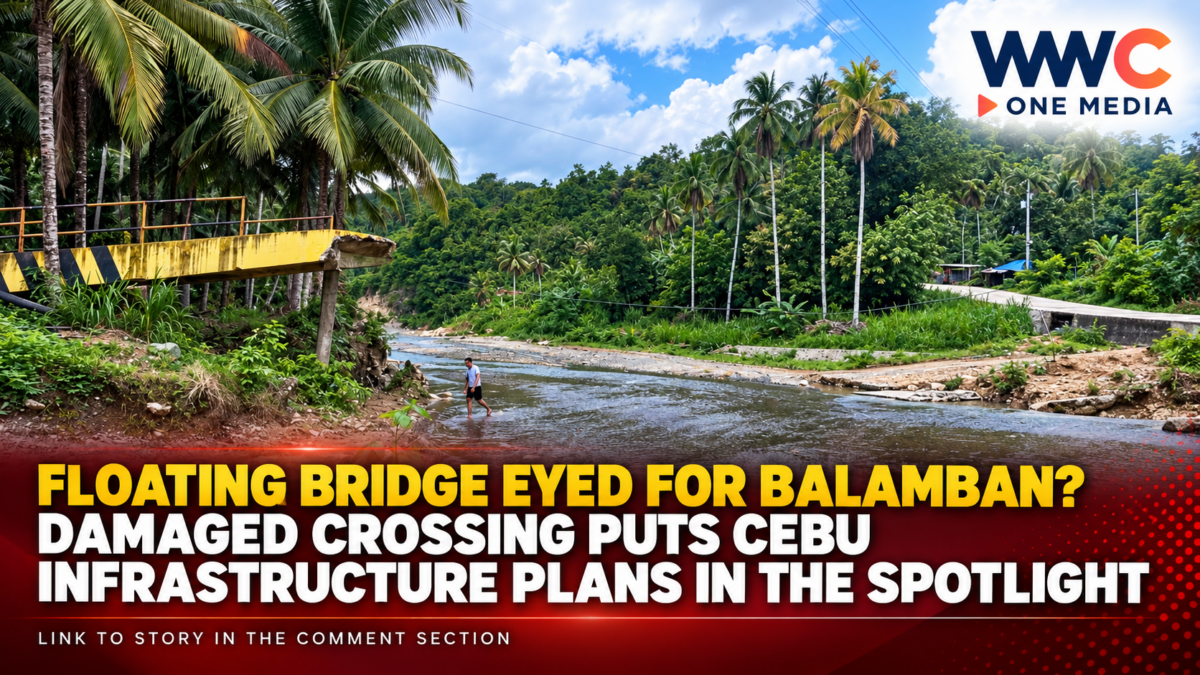
BALAMBAN, CEBU — Plans to address damaged infrastructure in Balamban are drawing renewed attention as residents continue to face challenges accessing safe and reliable routes in parts of the municipality.
The prospect of a floating bridge has raised questions about how authorities could restore connectivity and improve transportation for affected communities. However, the specific floating-bridge proposal referenced in the original report requires further confirmation before its technical details, funding, and implementation schedule can be reported as established facts.
Damaged infrastructure highlights the need for safer crossings
The issue comes amid continuing efforts to address bridge and road damage in Cebu following severe weather events.
In a related development, the Cebu Provincial Government has prioritized a permanent bridge and road repair project in Sitio Bonbon, Barangay Luca, Balamban, after videos circulated showing students and residents crossing the swollen Bonbon River to reach school and work.
According to reports by SunStar Cebu and The Freeman, the proposed project was expanded beyond a simple footbridge to include a permanent bridge and road repairs. The provincial government scheduled a new bidding process for November 19, 2026, after an earlier procurement attempt failed because the winning contractor was disqualified over issues involving previous projects.
The situation underscores the importance of providing dependable access routes, particularly for students, workers, and residents in communities vulnerable to flooding.
Why a floating bridge could attract attention
Floating bridges use buoyant structures to support a crossing over water. Depending on the location and engineering design, they may offer an alternative to conventional bridges where certain site conditions make construction challenging.
However, their suitability depends on several factors, including river currents, flood levels, debris, anchoring requirements, structural stability, maintenance, and the types of vehicles or pedestrians expected to use the crossing.
For a project in Balamban, engineers would need to assess local conditions before determining whether a floating bridge, a permanent conventional bridge, or another design would provide the safest and most practical long-term solution.
A proposed floating bridge should therefore not be treated as an approved or funded project unless the responsible authorities confirm its status.
Budget and procurement remain important questions
Infrastructure projects require more than a proposed design. They also need engineering assessments, funding, procurement procedures, and the necessary approvals before construction can proceed.
In the separate Bonbon River project, SunStar Cebu reported that the proposed bridge was estimated at ₱90 million and was not included in the approved 2027 national budget, according to Third District Representative Karen Garcia.
That figure relates to the Bonbon bridge proposal and should not be interpreted as the budget for the floating bridge mentioned in the original report.
The distinction matters because residents need clear information about which projects have funding, which remain under procurement, and when construction can realistically begin.
Residents await safer and more reliable access
For communities affected by damaged crossings, restoring access is about more than improving roads. It can affect students traveling to school, workers commuting daily, emergency response, and the movement of essential goods.
Until the relevant project is completed, residents should follow local advisories and avoid crossing swollen rivers or damaged structures whenever possible.
Authorities will need to provide clear updates on the proposed bridge’s design, funding, approval status, and expected construction schedule to help residents understand what improvements they can realistically expect.
What happens next?
The key questions are whether the floating-bridge proposal has received formal approval, what agency is responsible for implementing it, how much it will cost, and when construction could begin.
Those details are essential to determining whether the proposal can deliver a practical solution to Balamban’s infrastructure challenges.
For now, the broader priority remains clear: communities need safe, dependable crossings that can withstand local conditions and maintain access during periods of heavy rain.