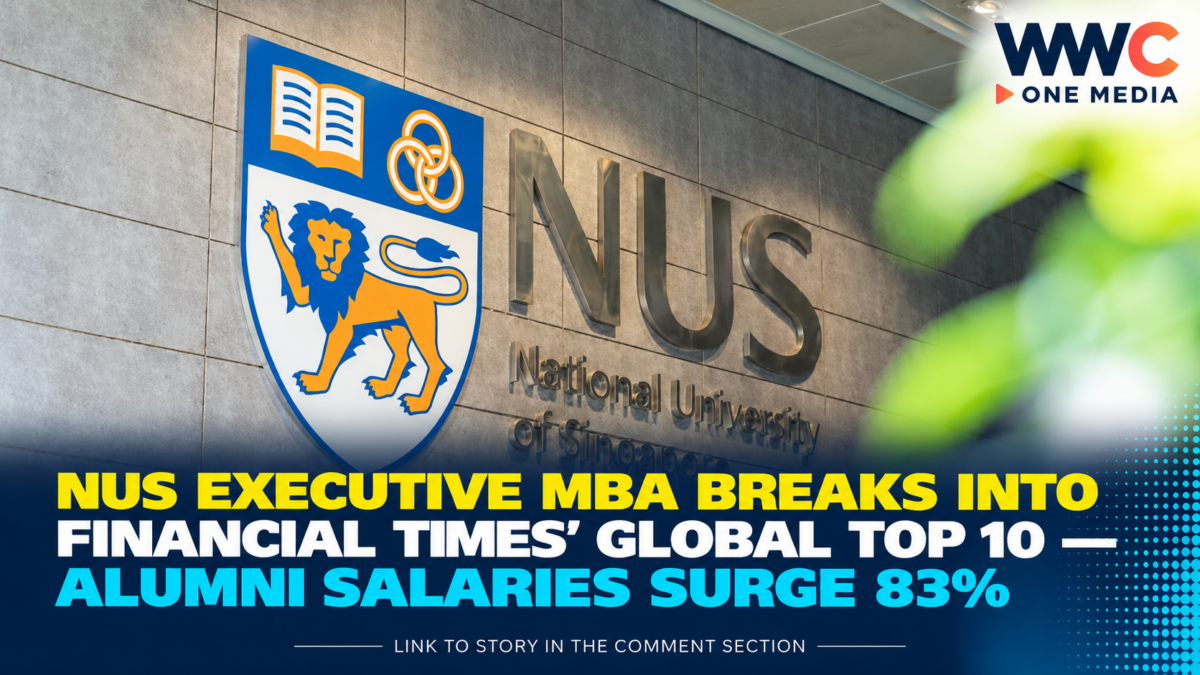
The National University of Singapore (NUS) Business School has achieved a major milestone after its Executive Master of Business Administration (EMBA) programme climbed to ninth place globally in the 2026 Financial Times Executive MBA Ranking.
Published on Oct 12, the latest ranking marks a dramatic rise of 14 places from the programme’s 23rd position in 2025. It is also the first time NUS has entered the global top 10 since it began participating in the annual ranking in 2008.
The result puts Singapore’s only autonomous university with an EMBA programme in the global top 10, strengthening the city-state’s standing as a regional hub for executive education and business leadership.
Alumni Salaries Rise to More Than US$542,000
One of the standout figures behind the programme’s improved ranking is the reported average salary of its alumni.
NUS said graduates earned an average of US$542,224 (about S$693,700), up from US$372,278 in the previous year. The figure was the third-highest average salary among the programmes in the global top 10.
The university also reported that alumni salaries were 83 per cent higher than before they completed the EMBA.
These outcomes reflect several factors considered by the Financial Times, including salary levels, salary growth, career progression, work experience, achievement of career goals and the strength of alumni networks.
The ranking draws on information from business schools and surveys of their graduates, although participation is voluntary and conducted at the schools’ request.
NUS Business School Also Climbs in Research Ranking
The progress extends beyond the EMBA programme. NUS Business School also rose 22 places to sixth globally for research, according to the university.
Dean Professor Teo Chung Piaw said the programme aims to prepare senior leaders to navigate complex challenges, lead across markets and make sound decisions in a rapidly changing business environment.
He described the ranking as welcome recognition of the school’s progress, highlighting its focus on developing the judgement, perspective and adaptability leaders need to make an impact across Asia and beyond.
How NUS Is Bringing AI Into Executive Education
NUS is also exploring how technology can strengthen business education without replacing the human judgement and critical thinking required of senior executives.
Since January 2026, the school has been piloting an AI-enabled business simulation for MBA and EMBA students. Participants interview AI-simulated executives, evaluate competing perspectives and make decisions in uncertain situations.
The initiative reflects the growing role of artificial intelligence in management and decision-making, where executives must learn not only to use new tools but also to assess information critically and make responsible strategic choices.
What the Ranking Means for Singapore
NUS’ entry into the top 10 is a notable achievement for Singapore’s higher-education sector, particularly as business schools compete internationally to attract experienced professionals and senior executives.
For prospective students, however, a high ranking is only one consideration. Programme structure, tuition fees, career goals, professional networks and the opportunity to apply classroom learning at work remain important factors when deciding whether an Executive MBA is the right investment.
For NUS, the latest result signals a substantial improvement in its international standing — and places greater attention on whether the programme can maintain its momentum in the years ahead.