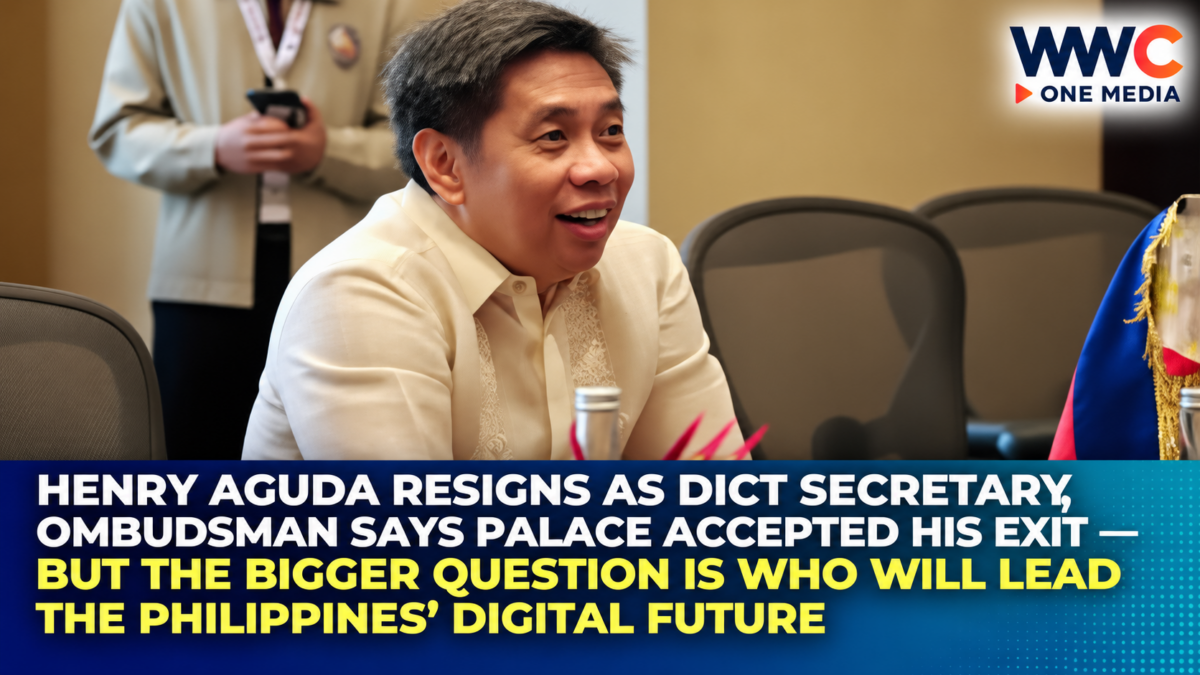
MANILA, Philippines — A major Cabinet shake-up is unfolding under President Ferdinand Marcos Jr. after Ombudsman Jesus Crispin “Boying” Remulla revealed that Malacañang had accepted the resignation of Department of Information and Communications Technology (DICT) Secretary Henry Aguda, following weeks of controversy surrounding the government’s handling of digital platforms and allegations involving public connectivity projects.
The announcement on Saturday, October 10, 2026, came just three days after the Palace publicly maintained that Aguda remained in office, creating fresh uncertainty over the leadership of the government agency responsible for the Philippines’ digital transformation, cybersecurity policies and internet connectivity initiatives.
Speaking during an interview on DZRH’s Executive Session program, Remulla said Aguda had resigned and that his resignation was accepted.
“Nag-resign. Tinanggap na ‘yung resignation,” Remulla declared.
But despite the Ombudsman’s announcement, Malacañang had not independently confirmed the development in the latest news reports reviewed.
Neither the effective date of Aguda’s reported departure nor the identity of his possible replacement had been publicly established.
The development raises a bigger question: Was Aguda’s departure simply another Cabinet leadership change, or will it trigger a broader reckoning over the DICT’s handling of digital regulation, government technology projects and public accountability?
Ombudsman Remulla Announces Aguda’s Departure
Remulla’s statement provided the clearest public indication yet that Aguda’s tenure as DICT secretary was ending.
During the October 10 radio interview, the Ombudsman referred to problems within the department, describing it as a relatively young government agency that had encountered difficulties.
His remarks followed days of speculation surrounding Aguda’s position in the Marcos Cabinet.
Major Philippine news organizations, including GMA News, ABS-CBN News and the Philippine Daily Inquirer, reported Remulla’s announcement.
However, the Ombudsman did not publicly provide a resignation letter, the precise effective date or an official explanation from President Marcos.
GMA News said it had sought comments from Aguda, Malacañang and the DICT, but had not received responses at the time of publication.
This leaves an important distinction: the reported acceptance of the resignation is based on Remulla’s statement, rather than a separate public confirmation from the Office of the President.
Palace Denied Resignation Reports Just Three Days Earlier
The reported resignation represents a significant reversal from the government’s public position earlier in the week.
On October 7, Palace Press Officer Claire Castro told reporters that Malacañang had no information confirming Aguda’s resignation.
Castro was speaking during President Marcos’ visit to Singapore.
She also read a statement from Aguda emphasizing that he remained focused on his responsibilities and ensuring continuity within the department.
Aguda acknowledged that his position depended on the President’s confidence and said he respected the administration’s authority over Cabinet appointments.
At the time, his statement did not explicitly confirm that he had submitted a resignation letter.
The Palace’s October 7 announcement appeared to dismiss circulating reports that he was leaving the department.
Remulla’s October 10 statement has now revived those questions.
The sequence creates uncertainty over when Aguda may have submitted his resignation, when it was accepted and whether the Palace’s position changed during the intervening days.
Until the administration provides an official account, those circumstances remain unconfirmed.
Discord Blocking Controversy Sparks Public Backlash
Aguda’s reported exit comes after the DICT faced widespread criticism over the temporary blocking of Discord in the Philippines.
Discord is a digital communication platform widely used by gamers, students, online communities, professionals and businesses.
The government’s move to restrict access to the service generated concern among technology groups and internet users who questioned the legal justification and broader implications of blocking online platforms.
The restriction was later lifted following consultations with the service.
However, the episode triggered public criticism and legal challenges involving the government’s authority to restrict access to digital platforms.
The controversy also intensified debate over how Philippine regulators should balance online safety, law enforcement, cybersecurity and freedom of expression.
For businesses and digital communities, the incident demonstrated how regulatory decisions can disrupt widely used online services.
While the controversy provides important context for Aguda’s reported departure, no official statement has established that the Discord blocking decision directly caused his resignation.
That distinction is essential: political pressure and public controversy do not, by themselves, prove the reason an official stepped down.
Ombudsman’s Free Wi-Fi Investigation Raises More Questions
The reported resignation also comes as the Office of the Ombudsman investigates alleged irregularities involving the government’s Free Wi-Fi program.
The initiative is intended to expand access to internet connectivity in public locations, particularly communities where commercial broadband services remain limited or expensive.
The program forms part of the Philippine government’s broader efforts to reduce the digital divide and improve access to online services.
Concerns involving public technology projects have raised questions about project implementation, procurement oversight and the verification of government-funded services.
The investigation adds another layer of scrutiny to the DICT at a time when the department is facing criticism over its handling of digital regulation.
However, the existence of an investigation does not establish that Aguda personally committed wrongdoing.
No final finding of liability against him has been established in the reporting reviewed.
Likewise, there is no verified official statement linking his reported resignation directly to the investigation.
The outcome of any Ombudsman inquiry will depend on the evidence gathered and the applicable legal processes.
Henry Aguda’s Cabinet Tenure Lasted Around 19 Months
Aguda was appointed DICT secretary in March 2025, succeeding Ivan John Uy.
Before entering the Cabinet, he held senior positions in technology, digital banking and corporate management.
His appointment reflected the administration’s interest in bringing private-sector technology and financial-services experience into government digital transformation.
As DICT chief, Aguda oversaw an agency responsible for coordinating important aspects of the Philippines’ information and communications technology agenda.
The department’s work includes expanding internet connectivity, developing digital government systems, promoting cybersecurity preparedness and supporting the country’s growing digital economy.
In October 2025, the Commission on Appointments confirmed Aguda’s appointment.
His reported resignation, approximately 19 months after first assuming office, represents another significant leadership transition in a department central to the government’s modernization agenda.
Why Aguda’s Departure Matters to Filipino Internet Users
The significance of the leadership change extends beyond politics.
The DICT oversees programs and policies that affect millions of Filipinos who depend on digital services for communication, education, employment and business.
Among its major responsibilities are initiatives involving government internet connectivity, digital public services and cybersecurity coordination.
Leadership uncertainty could raise questions about how existing programs will be managed and whether regulatory priorities may change.
For Filipinos in areas with limited connectivity, the continuity of public internet access programs remains especially important.
For businesses and technology companies, clear and predictable digital regulations can influence investment decisions and operational planning.
For ordinary internet users, the Discord controversy has heightened attention on the legal boundaries of government authority over online platforms.
The next DICT leadership team will therefore face pressure to maintain essential programs while addressing concerns over transparency and public accountability.
Who Will Replace Henry Aguda?
As of the latest verified reporting on October 10, the Marcos administration had not announced a replacement for Aguda.
The identity of the next DICT secretary remains an important unresolved question.
Any successor would inherit significant responsibilities involving digital infrastructure, cybersecurity, public internet connectivity and the modernization of government services.
The leadership transition could also create an opportunity to review the department’s approach to digital platform regulation and public technology project oversight.
However, speculation about potential candidates should not be mistaken for an official appointment.
Until Malacañang announces a successor or formal interim leadership arrangement, the public should treat circulating names as unconfirmed.
Can the DICT Rebuild Public Trust?
Beyond the immediate resignation controversy, the more important issue is whether the DICT can strengthen public confidence in its decisions and programs.
The Discord incident raised concerns about regulatory transparency and the procedures used when restricting digital services.
The Free Wi-Fi investigation has added questions about oversight and accountability in public connectivity projects.
These controversies involve different issues and should not be treated as proof of wrongdoing by any particular individual.
Nevertheless, they highlight the importance of credible leadership, sound project management and transparent decision-making.
For the next department chief, the challenge will be to ensure that public connectivity initiatives deliver measurable benefits while maintaining clear standards for technology regulation and cybersecurity.
The department must also continue serving Filipinos who increasingly depend on reliable internet access for education, work, healthcare, financial transactions and government services.
The Bigger Picture: A Leadership Crisis at a Critical Time for Digital Transformation
The Philippines is seeking to expand digital government services, attract technology investment and strengthen its digital economy.
These goals require effective coordination among government agencies, telecommunications providers, technology companies and local communities.
A prolonged leadership transition could create uncertainty over policy implementation, although existing government programs do not automatically stop when a Cabinet official leaves.
The more lasting issue will be whether the administration can establish a clear direction for the DICT after the reported departure.
The next secretary will need to address immediate concerns while maintaining progress on longer-term infrastructure and modernization initiatives.
Public confidence will depend not simply on a change of leadership, but on visible improvements in transparency, program delivery and government responsiveness.
THE BOTTOM LINE
Ombudsman Jesus Crispin Remulla says Malacañang has accepted the resignation of DICT Secretary Henry Aguda, marking a potentially significant Cabinet shake-up following controversies surrounding the department.
The announcement comes just three days after the Palace publicly maintained that Aguda was still serving as secretary.
The temporary Discord blocking controversy and ongoing investigation into alleged Free Wi-Fi irregularities form part of the broader background, although neither has been officially established as the reason for his reported resignation.
An independent Palace confirmation, the effective resignation date and details of Aguda’s successor remained outstanding in the latest reporting reviewed.
For the Marcos administration, the bigger challenge is no longer simply whether Henry Aguda is leaving the Cabinet — but whether his departure will lead to stronger accountability, more transparent digital regulation and better delivery of government technology programs.
As Filipinos wait for clarification from Malacañang, one question will remain at the center of the controversy:
Who will take control of the DICT, and can the next leader restore public confidence in the agency responsible for shaping the Philippines’ digital future?