
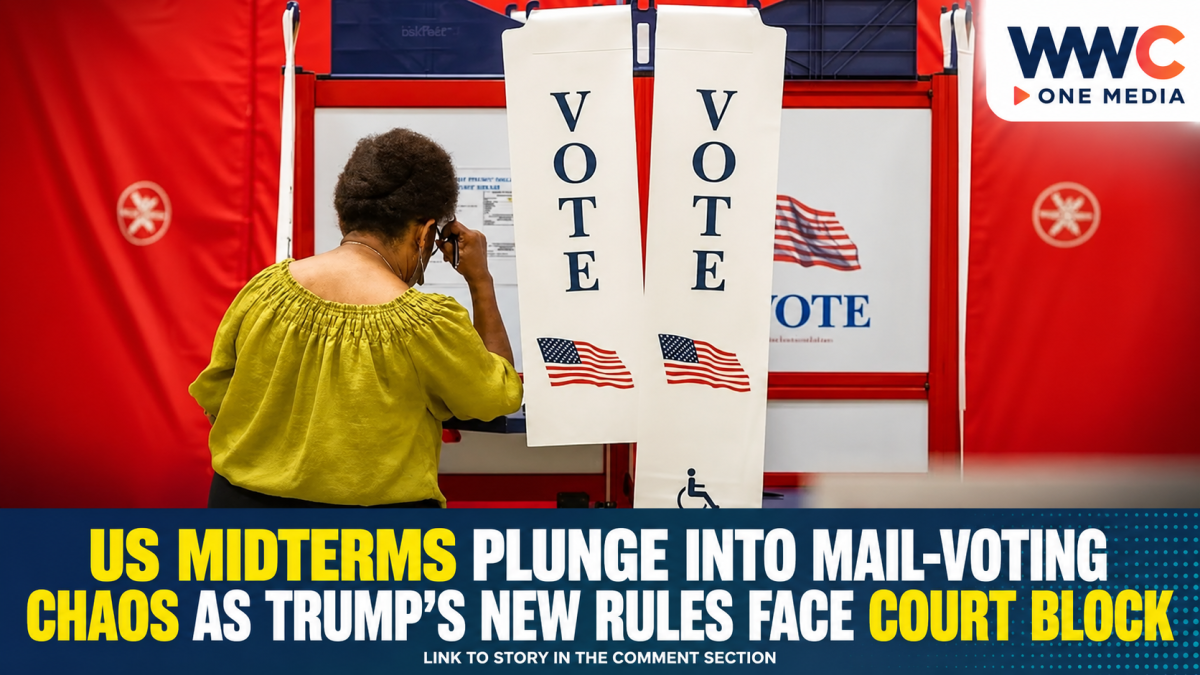
The 2026 U.S. midterm elections are entering a potentially disruptive new phase as the first mail-in ballots reach voters while President Donald Trump’s administration battles in court over sweeping new restrictions on how those ballots would be processed.
The clash is unfolding just weeks before Election Day, raising concerns among election officials and voting-rights groups that last-minute changes could create confusion for voters and election administrators.
According to Channel NewsAsia, Trump’s administration has been pushing new requirements for mail-in voting, including a system requiring states to provide the U.S. Postal Service (USPS) with lists of voters eligible to receive mail ballots.
The administration argues that the measures are intended to strengthen election integrity and prevent ineligible ballots from entering the mail system.
But the changes have triggered a series of legal challenges from states and voting-rights groups, who argue that the federal government is attempting to interfere with election procedures traditionally administered by the states.
Judge blocks implementation as ballots begin going out
The dispute intensified on September 4, when U.S. District Judge Indira Talwani extended an injunction preventing implementation of the administration’s mail-voting changes.
The ruling came as states were already moving toward the start of the mail-ballot process. North Carolina has begun sending out ballots, while other states are preparing to follow in the coming weeks.
Talwani cited the risk of voter disenfranchisement and the extremely tight election timetable, arguing that implementing major changes this close to the election could make compliance difficult for states and potentially prevent eligible voters from successfully casting ballots.
The Trump administration has appealed the decision and has sought intervention from the U.S. Supreme Court.
That leaves election officials facing an unusual situation: ballots are already entering the election system while the rules governing some aspects of their delivery remain tied up in litigation.
What does Trump’s mail-voting order require?
Trump signed the executive order in March seeking to tighten federal oversight of mail voting.
Under the proposed system, states would provide USPS with information identifying voters eligible to receive mail ballots. The Postal Service would then use that information when processing election mail.
The rules also call for changes involving ballot envelopes and identification technology, including unique barcodes. USPS has been developing a system to compare ballot recipients against state-provided voter information.
The administration says the changes are designed to improve election security.
Critics, however, say the system represents an unprecedented federal role in the administration of mail elections and could create problems if voter information does not match federal records correctly.
Whistleblower raises concerns about new USPS system
The controversy has also been fueled by allegations from a USPS whistleblower, who raised concerns about the rushed development of the new ballot-screening system.
According to reporting by The Guardian and other outlets, the whistleblower warned that technical failures could potentially result in entire batches of ballots being rejected or delayed.
The concerns have added another layer of uncertainty because election officials have limited time to test and implement new procedures before voting accelerates.
USPS has defended its efforts to develop the system, while acknowledging the logistical challenges surrounding election mail.
Why the timing matters
The timing is particularly significant because U.S. election administration is highly decentralized.
States have their own election laws, ballot designs, voter-registration systems and procedures for handling absentee and mail ballots.
A major federal rule introduced shortly before an election therefore requires coordination between federal agencies and state election officials—something critics say could become difficult when ballots are already being printed, distributed and returned.
The Congressional midterms are scheduled for November 3, 2026, with all 435 seats in the House of Representatives and 35 Senate seats up for election.
The results will determine which party controls Congress for the remainder of Trump’s current presidential term.
More than a fight over mail ballots
The dispute is ultimately about more than how Americans receive ballots.
It has become another major battle over who has the authority to set and administer federal election rules.
The Trump administration has argued that stronger federal standards are necessary to protect election integrity. Opponents counter that the Constitution gives states and Congress significant authority over federal election procedures and that the president cannot unilaterally rewrite the country’s election system.
Legal challenges to the administration’s broader election policies have therefore multiplied.
The Supreme Court has already played a role in the dispute, including a recent decision that allowed the administration’s effort to proceed temporarily on procedural grounds without finally deciding whether the underlying policy is lawful.
The latest lower-court injunction means the legal fight is far from over.
Voters are caught in the middle
For ordinary voters, the biggest concern may be uncertainty.
Election officials have urged voters using mail ballots to pay close attention to instructions from their state and to return ballots early, particularly because postal delays and postmark rules can affect whether ballots are counted.
That advice is especially important as the legal battle continues.
For now, the judge’s ruling blocks implementation of the contested federal changes, but the administration’s appeal means the rules could remain a moving target.
And with the first ballots already leaving election offices, the clock is ticking.
The 2026 midterms have not yet reached Election Day—but the battle over how Americans will be allowed to vote is already in court.
WWC ONE MEDIA M.J.E




Leave a Reply