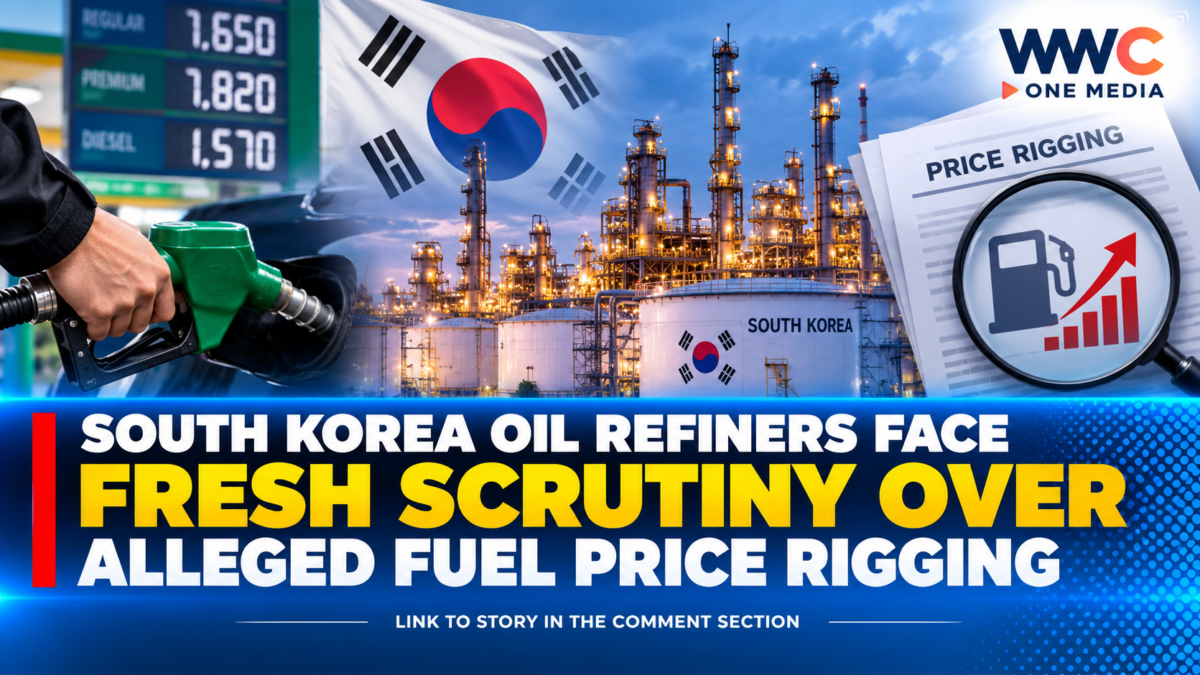
South Korea’s fair-trade watchdog has begun deliberations over allegations that the country’s major oil refiners manipulated fuel prices, adding a new chapter to a widening investigation that could have major consequences for the companies and consumers.
The case centers on allegations involving the country’s four major refiners — SK Energy, GS Caltex, S-Oil and HD Hyundai Oilbank. Prosecutors have previously alleged that pricing officials at the companies coordinated over the timing or scale of fuel-price increases, particularly amid the sharp rise in oil prices linked to the 2026 Middle East conflict.
The allegations have attracted heightened attention because fuel prices directly affect household expenses, transportation costs and inflation. South Korea is heavily dependent on imported crude oil, making domestic fuel prices particularly sensitive to developments in global energy markets.
The latest regulatory proceedings come after prosecutors escalated their own investigation. In June, prosecutors sought arrest warrants for two HD Hyundai Oilbank employees over suspected participation in the alleged pricing coordination. Investigators had also searched the headquarters of the four major refiners and the Korea Petroleum Association earlier in the year.
Prosecutors subsequently charged the four refiners and several employees over alleged price collusion, claiming the practices caused significant economic harm. Reuters reported that prosecutors estimated the alleged anti-competitive conduct resulted in damages of about $17 billion.
The investigation has also raised questions about whether alleged coordination extended beyond a short-term response to soaring crude prices. Prosecutors have said one employee exchanged pricing information with competitors over several years, while investigators have examined whether gas-station operators were pressured to reflect allegedly coordinated prices in the market.
The regulatory scrutiny comes at a particularly sensitive time for South Korea’s fuel market. The government has been using measures to contain domestic petroleum prices as international crude costs remain elevated. The price-control system has helped shield consumers from some global price shocks, but it has also placed financial pressure on refiners and created disputes over compensation.
Separately, the government and ruling party have signaled plans to strengthen penalties for companies found guilty of repeated collusive practices, including possible business-registration or operating restrictions in certain sectors. Energy is among the industries covered by the proposed tougher approach.
The latest deliberations therefore carry stakes far beyond the companies involved. A final finding of wrongdoing could expose the refiners to substantial financial penalties and intensify pressure for tighter oversight of fuel pricing.
For drivers and households, the bigger question is whether the regulatory action will ultimately lead to greater transparency — and whether it will change how fuel prices are determined at the pump.
For now, however, the allegations remain under regulatory review, and any final determination will depend on the outcome of the Fair Trade Commission’s proceedings.
WWC ONE MEDIA G,A