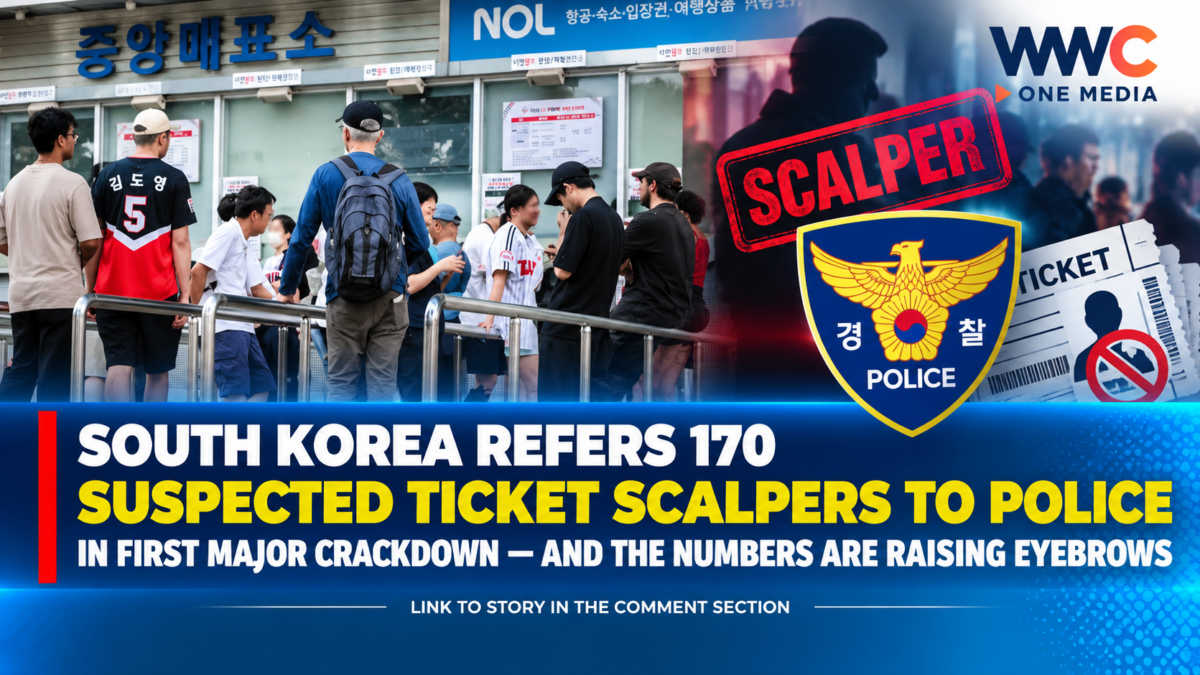
South Korean authorities have launched their first major investigation into suspected ticket scalping since tougher anti-scalping laws took effect, referring 170 suspected resellers to police after uncovering more than 11,000 tickets allegedly offered for resale.
The Ministry of Culture, Sports and Tourism said the cases involved approximately 11,032 tickets with an estimated value of 1.03 billion won ($770,000). The figures represent suspected or attempted sales identified through monitoring and reports, not transactions that were necessarily completed.
The 170 cases include 121 people linked to professional sports tickets and 49 connected to entertainment performances. Authorities said one individual was suspected of offering more than 1,000 tickets, while another case involved tickets whose combined listed value exceeded 100 million won.
Anti-Scalping Reports Surge After Law Change
The crackdown follows amendments to South Korea’s Performance Act and National Sports Promotion Act, which took effect on Aug. 28.
Under the revised rules, reselling performance and sports tickets above their original price can be prohibited regardless of whether automated “macro” software was used. Violators can face administrative penalties of up to 50 times the amount of the sale.
The law change was followed by a dramatic increase in public reports.
Between Aug. 28 and Oct. 1, authorities received more than 68,000 reports of suspected ticket irregularities, averaging about 2,000 reports per day — roughly 17 times the level recorded a year earlier. After removing duplicate reports, about 45,000 were considered valid, and roughly 30,000 suspicious listings were blocked from being displayed through cooperation with online platforms.
Sports Tickets Make Up Most of the Suspected Sales
Professional sports accounted for the overwhelming majority of the suspected ticket value.
Of the estimated 10.3 billion? No — the authorities’ figure is approximately 1.03 billion won, with about 930 million won attributed to professional sports and roughly 100 million won to performances. The suspected sports-ticket volume was around 10,660 tickets, compared with 372 performance tickets.
Authorities also found that 115 of the 170 suspects, or about 68%, were identified through listings posted on Ticketbay, according to the ministry and Korean media reports.
The cases were selected based on indicators such as unusually high prices and large-volume ticket offerings. Because the selection criteria differed between sports and performances, the figures should not be interpreted as representing the entire Korean ticket-resale market.
Authorities Target New “Workaround” Tactics
The investigation also includes four suspected cases in which sellers allegedly attempted to disguise ticket markups through other charges.
Examples included adding so-called service or labor fees or requiring buyers to purchase merchandise alongside tickets.
The Culture Ministry said the legality of such transactions should be assessed according to their substance rather than simply the label attached to the payment, following legal consultations.
That means changing the name of an additional charge does not necessarily place a transaction outside the scope of the amended law.
Baseball Postseason Brings Another Test
The timing of the crackdown is significant as South Korea heads into the professional baseball postseason, when demand for high-profile games can surge.
The ministry said it will work with police on on-site enforcement throughout the postseason, while continuing digital monitoring of suspicious listings.
Authorities are also encouraging the public to report suspected illegal ticket transactions, with reward mechanisms available under the revised system. Reports of illegal purchasing can qualify for rewards of up to 50 million won, while reporting rewards for illegal selling can be tied to the administrative penalty imposed.
The first mass referral sends a clear signal that South Korea’s tougher anti-scalping rules are moving beyond warnings and platform takedowns toward formal investigations.
But with tens of thousands of reports already flooding authorities and sellers developing new ways to disguise markups, the bigger question is whether the crackdown can keep pace with the resale market — especially as demand rises for major sporting events and concerts.
WWC ONE MEDIA G,A