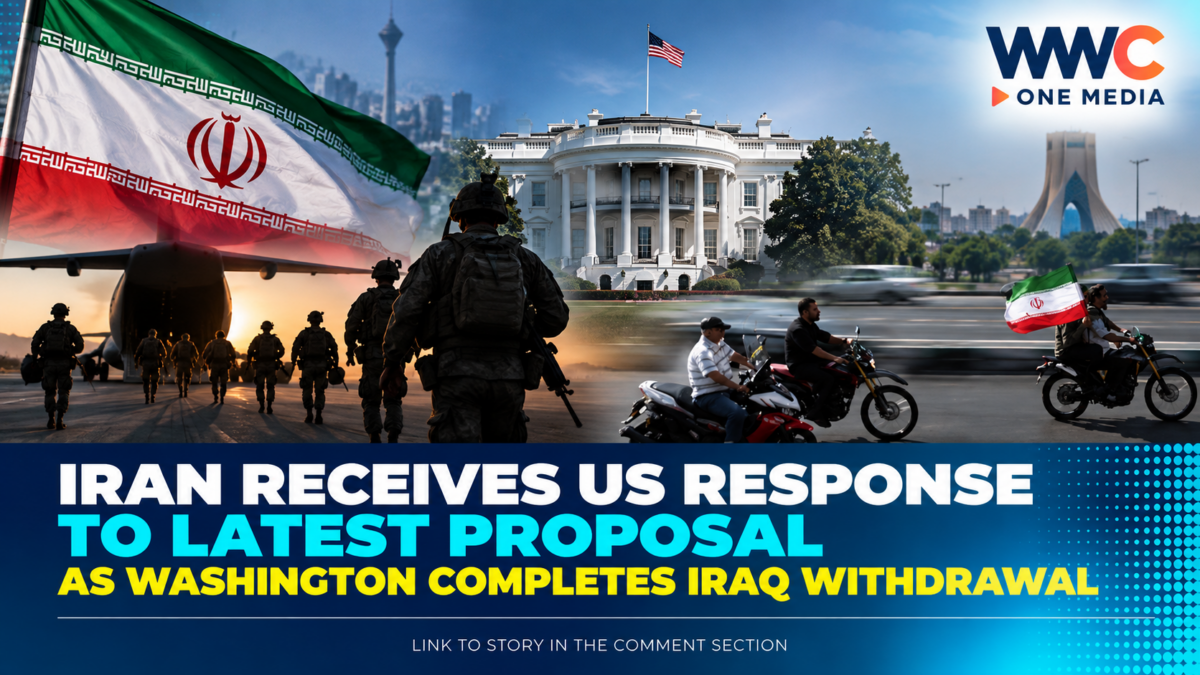
Iran says it has received a formal response from the United States to its latest proposal aimed at reviving a collapsed ceasefire in the Gulf, as Washington simultaneously completes the withdrawal of its remaining troops from Iraq.
Iranian Foreign Ministry officials said US feedback was conveyed through Qatari mediators after President Donald Trump had publicly rejected Tehran’s latest proposal several days earlier. The details of Washington’s response have not been fully disclosed.
Iran’s proposal called for the reopening of the Strait of Hormuz within seven days in exchange for steps including the lifting of the US blockade on Iranian ports. Tehran said the plan was intended to restore an interim agreement that had collapsed weeks after being reached in June.
Trump said on Sept. 26 that he rejected Iran’s proposal. Iranian Foreign Minister Abbas Araghchi, however, said Tehran had not received a formal US rejection at the time, leaving room for further mediation. Qatari officials subsequently relayed Washington’s response to Iranian negotiators.
An official briefed on the discussions said the two sides broadly agree on some of the steps required to move toward an agreement but remain divided over the sequence in which those measures should be implemented. The talks have been facilitated by Qatar, with additional diplomatic involvement from other regional partners.
The diplomatic developments came as the United States formally completed the withdrawal of its remaining military forces from Iraq on Sept. 30. The move ended a 12-year US mission focused on combating Islamic State militants and followed a 2024 agreement between Washington and Baghdad.
The final US troops left a base in northern Iraq, while Washington said its relationship with Baghdad would continue through security cooperation, including training and intelligence support. Iraqi officials described the withdrawal as the start of a new phase in the country’s security responsibilities.
Iran and groups aligned with Tehran have portrayed the US withdrawal as an important development in their longstanding efforts to reduce American military involvement in the region. At the same time, Iraqi and regional analysts have raised concerns about the possible security implications of the US departure, including the ability of Iraqi forces to contain Islamic State remnants and manage powerful armed groups.
The broader conflict has also disrupted shipping through the Strait of Hormuz, a major global energy route. Any agreement that restores normal maritime traffic could have implications beyond the immediate US-Iran confrontation, particularly for energy markets and countries dependent on Gulf exports.
For now, diplomacy remains active despite disagreements over the terms and timing of any potential settlement. The latest exchange between Washington and Tehran provides another channel for negotiations, but neither side has announced a new ceasefire agreement or a final deal.