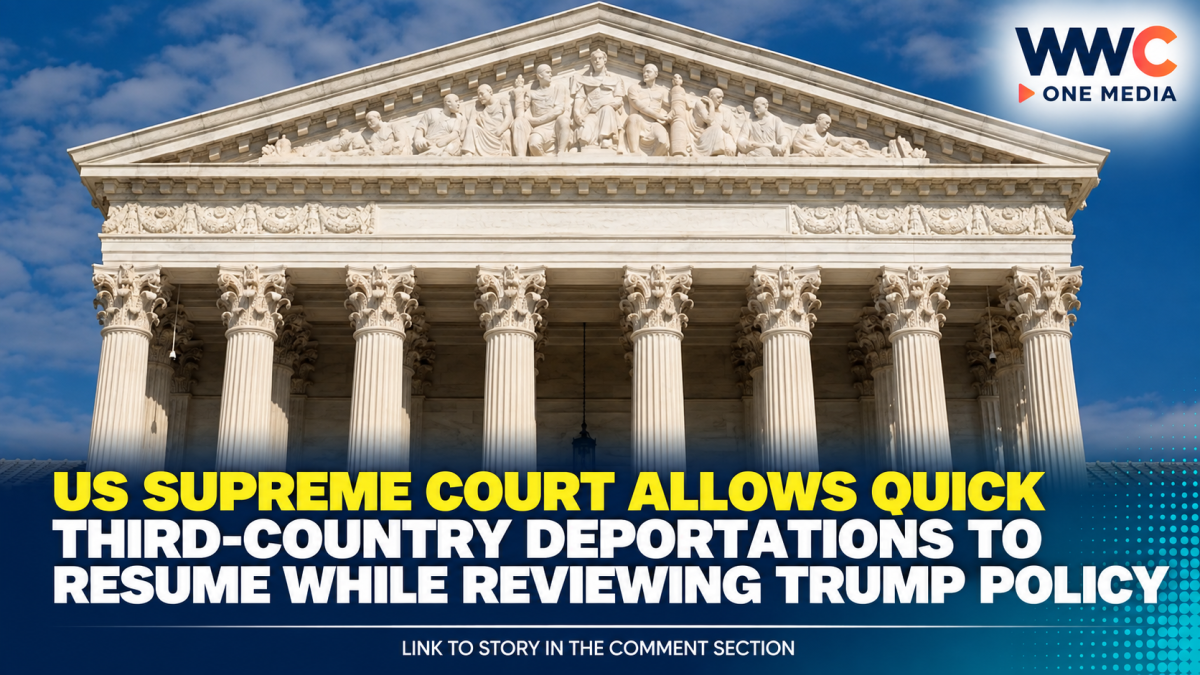
The US Supreme Court has temporarily allowed the Trump administration to resume rapidly deporting some migrants to countries other than their countries of origin while the justices consider whether the policy is lawful.
In an apparent 6-3 order issued on Sept. 29, the court put on hold a lower-court ruling that required immigration authorities to give migrants notice and an opportunity to challenge their removal before sending them to a third country where they have no established ties. The Supreme Court is expected to hear arguments in the case in December.
The case concerns the administration’s use of so-called third-country removals. These involve deporting people to a country other than their homeland, including situations in which the United States cannot return them to their country of nationality or that country refuses to accept them.
The Trump administration has argued that the policy is an important immigration-enforcement tool, particularly for people who have final removal orders but cannot be returned directly to their home countries. Government lawyers have also said receiving countries provide assurances that deportees will not face persecution or torture.
Immigrant advocates and lawyers challenging the policy have argued that people need meaningful notice and an opportunity to raise claims that they could face persecution or torture in the country where they are being sent. A federal appeals court in September found that the administration’s procedures did not provide sufficient protections.
The administration’s third-country programme has resulted in more than 25,000 migrants being sent to more than two dozen countries since February 2025, according to court records and reporting cited in the case. Most have been sent to Mexico, while others have been transferred to countries including Liberia and Guyana.
The dispute has also involved countries such as Burundi, Rwanda and the Central African Republic. Court filings from the migrants challenging the policy say some people have faced detention and other serious risks after being transferred to countries with which they had little or no connection. Those allegations remain part of the ongoing litigation.
The Supreme Court’s latest action does not represent a final ruling on whether the third-country deportation policy complies with US law. Instead, it allows the policy to operate while the justices consider the broader legal questions.
The court will examine the legality of the policy as well as questions concerning the authority of lower courts to impose broad restrictions on the administration’s deportation practices. A final decision is expected after the court considers the case on the merits.
For now, the ruling allows the administration to restart the faster deportations while the Supreme Court weighs the legal challenge, leaving the long-term status of the policy unresolved.