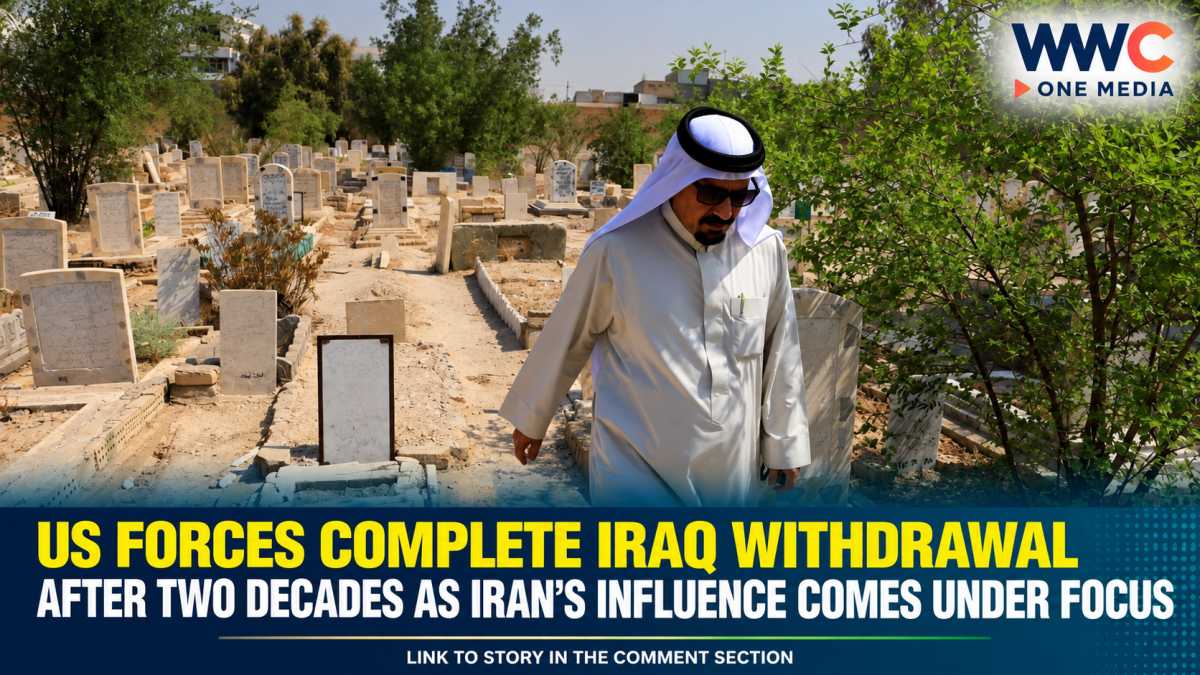
The United States is set to complete the withdrawal of its remaining military forces from Iraq by Sept. 30, ending more than two decades of continuous US military presence in the country and opening a new phase for Iraq’s security and political landscape.
The withdrawal stems from a 2024 agreement between Washington and Baghdad to wind down the US-led coalition mission against Islamic State. Most US troops had already left bases in central and western Iraq, while several hundred remained in the northern Kurdish region. The remaining personnel are being redeployed to Jordan and other locations in the region.
The US first entered Iraq in 2003 in an invasion that toppled Saddam Hussein. American forces later withdrew in 2011 but returned in 2014 as part of the international campaign against Islamic State, which had seized large areas of Iraq and Syria. The campaign helped Iraqi and Kurdish forces defeat the group’s territorial stronghold by 2017.
The departure is being closely watched because Iraq has maintained relationships with both Washington and Tehran. Iranian-backed armed groups have significant political and security influence in Iraq, and analysts cited in recent reporting say the removal of US forces could provide those groups with greater room to influence security and political decision-making.
Iranian officials and allied armed groups have publicly welcomed the US withdrawal, describing the end of the American military presence as an important development. Iraqi officials, however, face the task of maintaining national security while managing competing relationships with Iran, the United States and various armed factions.
Security officials have also raised concerns about Islamic State remnants. Although the group lost its territorial control nearly a decade ago, sleeper cells remain active in parts of Iraq. Some Iraqi and Kurdish officials have warned that losing US intelligence, logistical assistance and drone capabilities could create opportunities for the group to regroup.
The transition is also unfolding alongside a separate dispute over the future of armed groups operating outside direct government control. Most Iran-aligned militias have indicated that they do not intend to surrender their weapons despite pressure from Baghdad, leaving questions over how Iraq will manage its security environment after the US departure.
The end of the US military mission does not necessarily mean an end to US-Iraq relations. Washington and Baghdad could continue security cooperation through a bilateral framework, while Iraq assumes greater responsibility for counterterrorism and national security.
For Iraq, the withdrawal marks another major turning point since the 2003 invasion. The immediate challenge will be maintaining security and political stability while balancing the influence of Iran-aligned groups, the remaining Islamic State threat and Iraq’s broader relationships with regional and international powers.