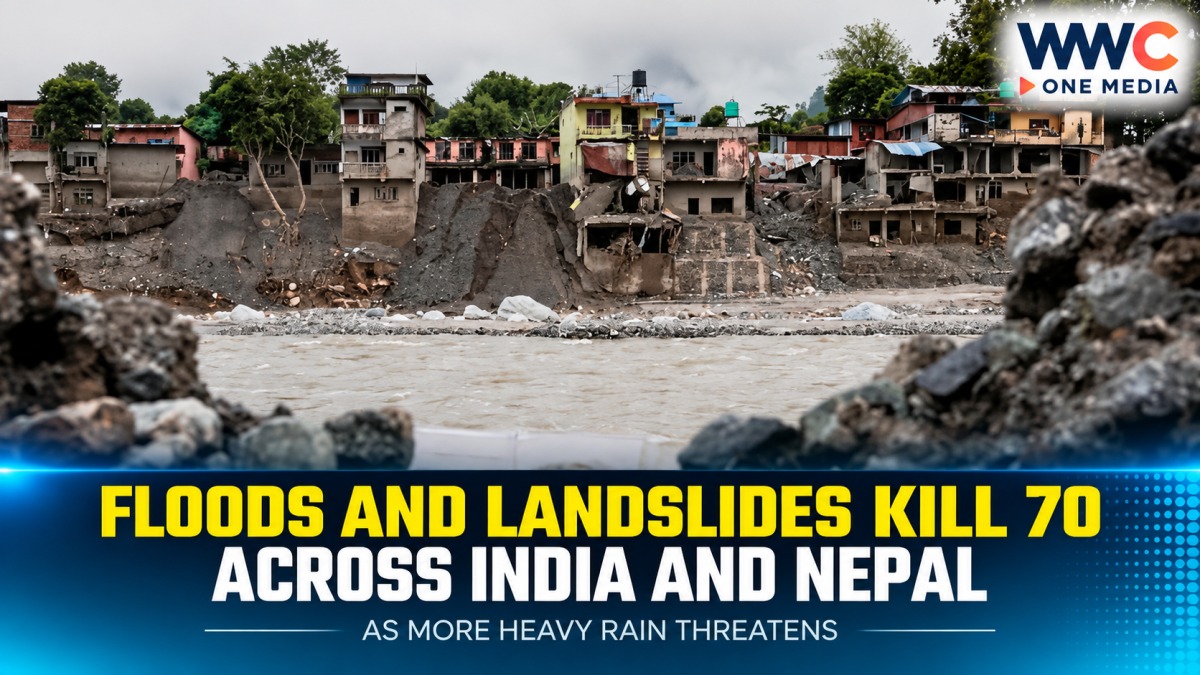
Heavy rain and powerful storms have triggered floods and landslides across parts of India and Nepal, killing at least 70 people and leaving authorities warning that further flooding could occur as rivers continue to rise.
India has recorded 56 deaths, while Nepal has reported 14 deaths and 11 people missing since Thursday. Rescue operations are underway in affected areas, with authorities also assessing damage to homes, crops and infrastructure.
In India’s northern state of Uttar Pradesh, 66.5 millimetres of rain fell between Sept. 25 and the morning of Sept. 27, dramatically exceeding the 7.6mm normally recorded during the same period. The intense rainfall has caused widespread waterlogging, with 46 people injured and more than 1,000 houses damaged.
Authorities have been carrying out rescue and relief operations while officials assess agricultural losses and prepare compensation for affected communities.
The flooding has also raised concerns along major river systems. India’s Central Water Commission said 30 monitoring stations across seven states were showing a “severe situation”, while rivers including the Ganga, Gandak, Kosi, Bagmati and Narmada rose above danger levels.
In eastern Odisha, more than 70,000 people in low-lying areas were evacuated as rivers rose following heavy rainfall. Bridges and culverts were damaged in some areas, while authorities closed the popular Devkund tourist site because of the dangerous conditions.
Nepal is facing another round of severe weather only weeks after suffering one of its most devastating flooding disasters. Authorities warned of possible flash floods in 49 of the country’s 77 districts, with more than half of the country facing elevated flood or flash-flood risks as water levels continued to rise.
Power supplies have been disrupted in Manang, Mustang, Myagdi and Baglung, while flooding along the Rahuganga River damaged infrastructure and transmission-line towers serving a 40-megawatt hydropower project.
Flooding and landslides have also disrupted telecommunications in parts of Nepal after damage to optical-fibre networks and electricity infrastructure.
Authorities are paying particular attention to areas already devastated by last month’s floods. Rasuwa and Nuwakot, which suffered heavy losses during the earlier disaster, have been advised to remain alert even though officials did not classify them as among the highest-risk areas in the latest warning.
A separate incident in northern Nepal has added to the emergency. Ten local workers were reported missing after an avalanche buried the base camp of Himlung Himal, a 7,126-metre mountain in Manang. The workers had been preparing tents for foreign climbers, who were not present when the avalanche struck.
The latest disaster highlights the continuing vulnerability of communities across the Himalayan and South Asian region to intense rainfall, flooding and landslides. In Nepal, the new flooding comes after a catastrophic late-August disaster that killed more than 1,400 people and left thousands missing.
With rivers still above danger levels and additional flash-flood risks in dozens of districts, rescue teams and local authorities remain on alert.
The immediate priority is protecting communities already affected by the latest storms while restoring damaged power, transport and communications infrastructure. But with more rain possible, the scale of the emergency could continue to change in the days ahead.