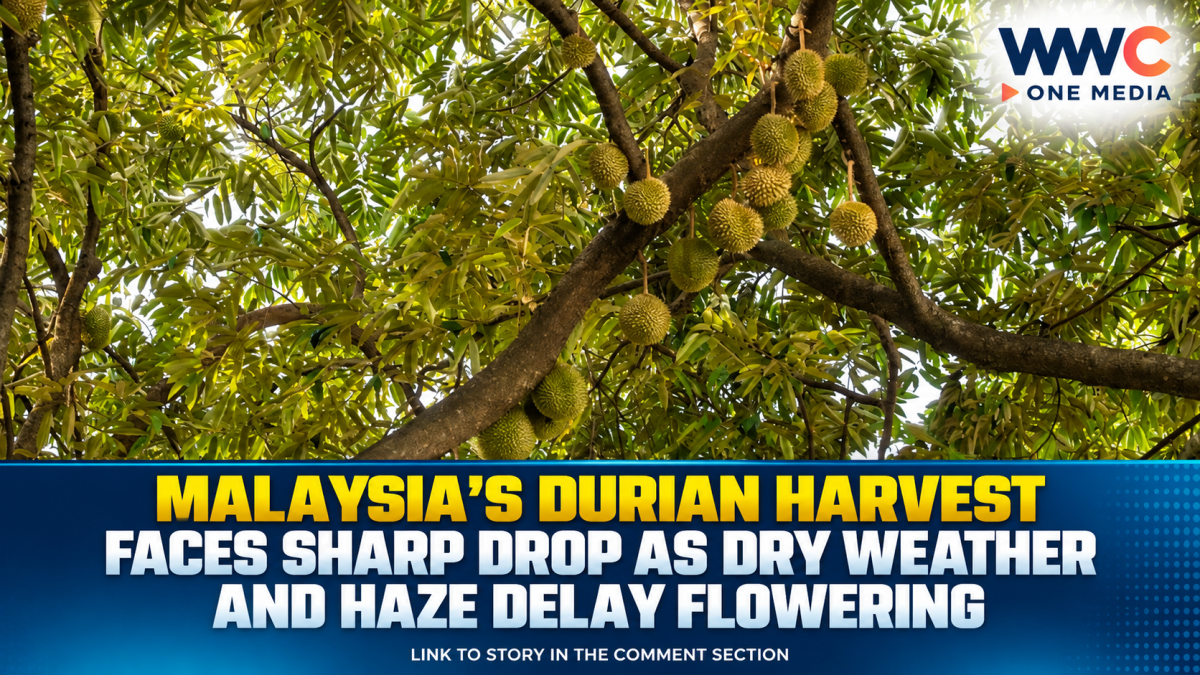
Malaysia’s durian industry is facing an expected drop in harvest after prolonged dry weather and severe haze disrupted flowering in major growing areas, raising concerns about supply in the months ahead.
Durian growers in Johor have reported a significant decline in flowering compared with the June and July harvest period. In some orchards, the number of trees producing flowers has reportedly fallen by about 60 per cent.
The problem comes after Malaysia experienced a major durian supply glut earlier in the year. Large volumes from several producing states pushed prices sharply lower, with some varieties selling at unusually low prices during the peak season.
Now, the weather is creating the opposite problem. While short periods of dry weather can help trigger flowering, prolonged heat and drought can place durian trees under stress, affecting flowering, fruit development and eventual yields.
Farmers in Johor said the combination of extreme dryness and haze has slowed the flowering process. Some trees developed buds but failed to progress normally, leaving expected harvests later than initially anticipated.
One orchard owner said fruit that had originally been expected around the end of January could now be delayed until late February or early March. The delayed flowering could therefore shift the timing of the next major supply window.
The haze is adding another layer of difficulty for agricultural workers. Farmers have reported symptoms including itchy eyes and sore throats while working in smoky conditions, with prolonged exposure also raising concerns about their health.
The latest disruption highlights how quickly Malaysia’s durian industry can move from oversupply to concerns about shortages. Earlier this year, favourable conditions and expanding orchards contributed to a glut, with prices falling dramatically in several producing regions.
Malaysia’s premium durian sector is also increasingly exposed to weather volatility. Growers have faced heavy rainfall, drought, heat and changing flowering patterns in recent years, making harvest timing more difficult to predict.
The industry’s growing importance in the Chinese market adds to the significance of any major production disruption. Malaysian varieties such as Musang King and Black Thorn are particularly sought after by Chinese consumers, while Malaysia competes with Thailand and Vietnam in the expanding regional durian trade.
The latest conditions could therefore affect not only Malaysian farmers but also traders, exporters and consumers if lower production results in tighter supplies and higher prices during the next harvest cycle.
For growers, the immediate priority is managing trees through the prolonged dry spell and monitoring whether flowering resumes as weather conditions change.
The bigger concern now is whether Malaysia’s worsening weather conditions will turn this year’s earlier durian glut into a tighter supply situation — and how much the shift could affect prices when the next major harvest arrives.