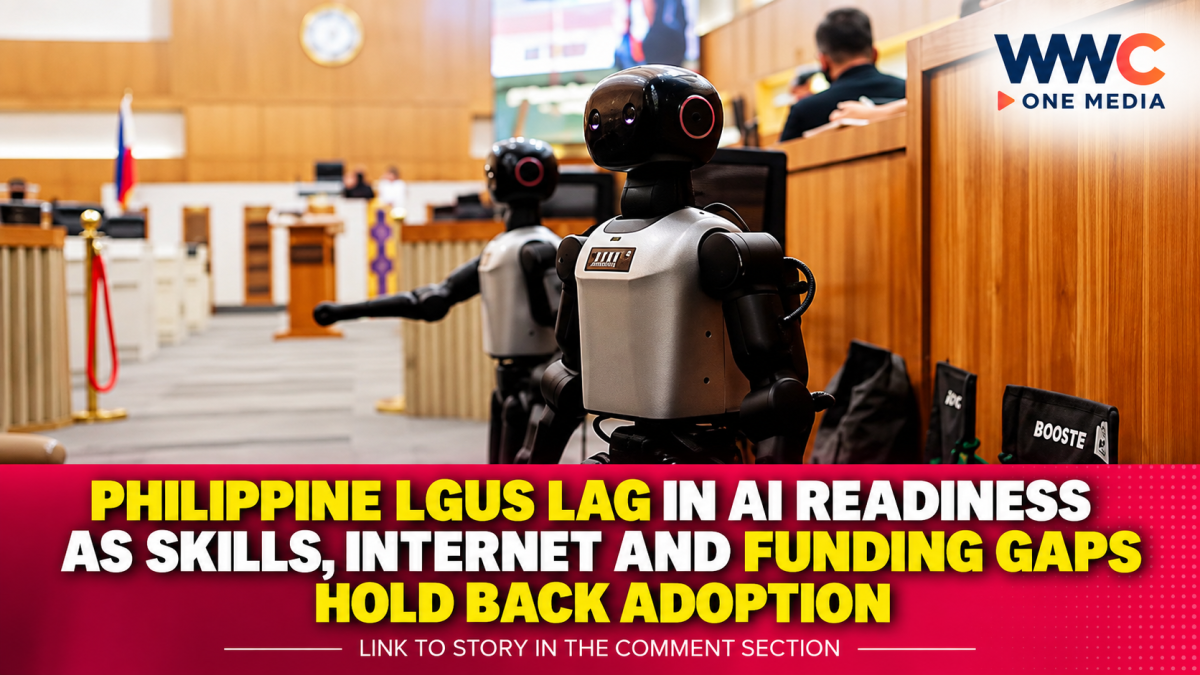
Many local government units across the Philippines remain only low to moderately prepared to adopt artificial intelligence, with major gaps in digital skills, internet connectivity, funding and policy frameworks slowing the transition to AI-powered public services.
The findings come from a Philippine Institute for Development Studies study that assessed 1,695 LGUs using an AI Readiness Index and interviews with local government officials. The study found that most LGUs recorded scores of around 30 to 35 out of 100, placing them in the low-readiness range, while only some were approaching moderate readiness.
Researchers identified shortages of ICT and AI-related skills, weak last-mile internet connectivity and limited funding for digital initiatives as some of the biggest obstacles. The study also found that even some better-resourced first-class municipalities had no short-term plans for AI adoption.
The problem extends beyond technology itself. The study found that unclear policies involving procurement, data management and cybersecurity can create uncertainty for LGUs seeking to introduce AI systems. Employees may also encounter AI mainly through social media rather than structured institutional training, highlighting the gap between exposure to the technology and the ability to deploy it effectively in government.
Researchers warned that existing differences in digital capacity could eventually develop into an AI divide, with a relatively small group of LGUs becoming significantly better equipped to use AI while others struggle to provide comparable digital services.
The situation is particularly significant as local governments are increasingly expected to modernize public services. AI could potentially support areas such as administrative services, disaster response, cybersecurity, agriculture and tourism, but the study indicates that many LGUs still need to establish the basic infrastructure and workforce capabilities required for wider adoption.
Davao City provides an example of how some local governments are moving ahead despite the broader national readiness gap. City officials say the local government is developing AI applications for cybersecurity, public safety, disaster response, tourism and smart agriculture, while also planning robotics-assisted services and a centralized government data center.
The study recommends deploying nationally funded ICT specialists to municipalities and component cities, particularly those with fewer resources, to strengthen local technical capacity. Other recommendations include making digital-skills planning mandatory, improving last-mile connectivity, developing recognized AI certification programs, establishing minimum ICT budget allocations and strengthening national coordination on AI governance and data management.
The findings underline a growing challenge for Philippine local governments: AI adoption is no longer simply about acquiring new technology. Without the people, connectivity, funding and governance systems needed to use it effectively, the gap between digitally prepared LGUs and those still building basic digital capacity could become even wider.