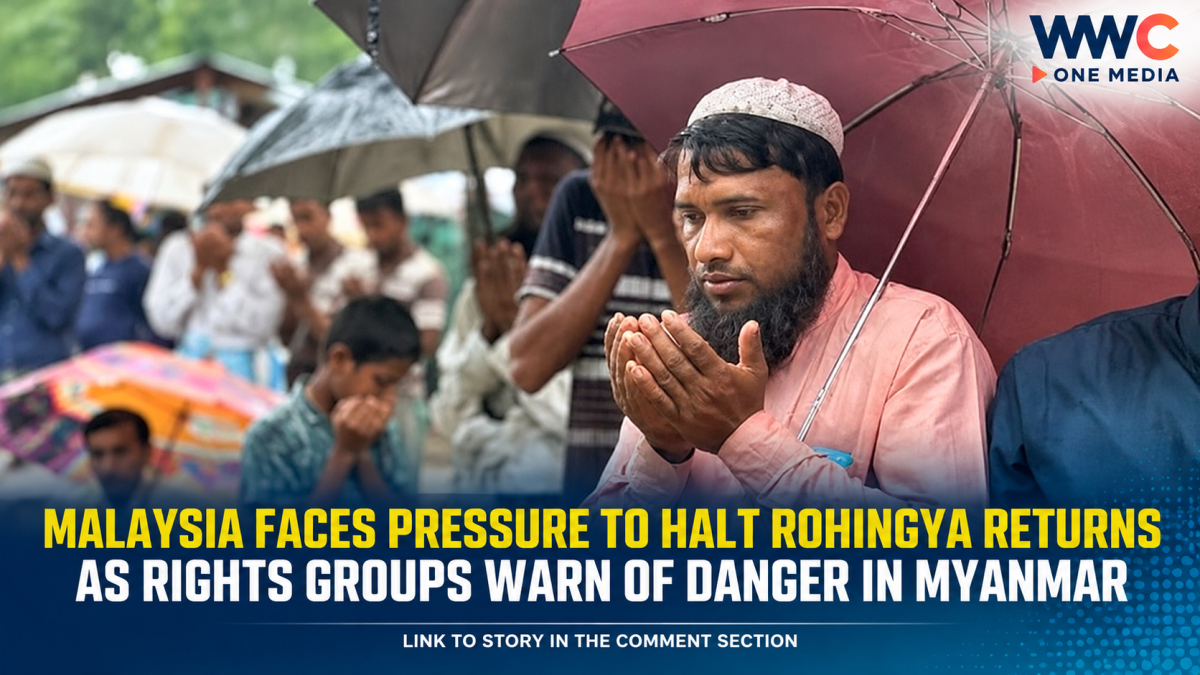
More than 160 civil society organisations are urging Malaysia to halt plans to return Rohingya refugees to Myanmar, warning that ongoing conflict, persecution and the risk of forced conscription could place those sent back in serious danger.
The joint statement, issued on Sept. 23, came as Malaysia prepares to begin the first phase of a repatriation programme involving about 1,500 Myanmar nationals on Sept. 29. The Malaysian government has described the returns as voluntary, while rights groups have raised concerns about whether conditions in Myanmar are safe enough for Rohingya refugees to return.
The controversy has intensified after Prime Minister Anwar Ibrahim said Malaysia could work with Myanmar’s military-appointed leader-turned-president Min Aung Hlaing to facilitate the return of Rohingya refugees. Anwar has argued that Malaysia needs to engage with Myanmar authorities because the continued presence of large numbers of refugees has created economic, social and security pressures inside the country.
The first phase is part of a broader agreement under which Myanmar has agreed to take back about 5,000 people. Malaysian authorities have said the initial group will consist of individuals willing to return voluntarily, but the plan has drawn scrutiny because Myanmar remains affected by armed conflict.
The United Nations refugee agency has said it is not involved in Malaysia’s planned repatriation programme. UNHCR has also warned that Myanmar remains unsafe because of continuing armed conflict and violence, stressing that refugee returns should be voluntary, informed and carried out in conditions of safety and dignity.
For the Rohingya, the risks are particularly significant.
The Muslim minority has faced decades of discrimination and persecution in Myanmar, particularly in Rakhine State. The military’s 2017 crackdown forced more than 700,000 Rohingya to flee across the border into Bangladesh, while large numbers later sought refuge elsewhere in the region, including Malaysia.
The latest concern goes beyond the possibility of renewed violence. Civil society groups say Rohingya who return could face forced recruitment by different armed actors operating in Rakhine State, including the Myanmar military and the Arakan Army. The groups argue that returning people to such an environment could expose them to further human-rights abuses.
Myanmar’s conflict has also become increasingly complicated. The military is fighting the Arakan Army, an ethnic armed organisation that has expanded its control across large parts of Rakhine State. The continuing fighting has created an unstable environment for civilians and displaced communities.
Malaysia itself hosts one of the largest populations of Myanmar refugees in the region. UNHCR figures show that around 193,800 refugees from Myanmar were registered in Malaysia as of February 2026, including a large Rohingya population. Malaysia does not have a formal domestic refugee-protection framework, leaving UNHCR to handle registration and refugee status determination.
The Malaysian government, however, has increasingly faced domestic pressure over the refugee population. Authorities have cited financial costs, social tensions and security concerns when explaining the repatriation policy. Civil society organisations have argued that these concerns should not override protection obligations toward people who could face serious harm if returned.
The dispute also places Malaysia’s regional diplomacy under scrutiny. Kuala Lumpur has previously been among the Southeast Asian governments most outspoken about the Myanmar military’s actions, while simultaneously seeking cooperation from Myanmar’s authorities on the refugee issue.
Anwar’s proposed engagement with Min Aung Hlaing therefore represents a delicate balancing act between Malaysia’s domestic concerns, its relations with Myanmar and the international protection concerns surrounding the Rohingya.
The immediate deadline is now Sept. 29, when the first group is expected to leave Malaysia. Whether the government proceeds as planned, modifies the programme or introduces additional safeguards could shape the future of thousands of Myanmar refugees in the country.
The bigger question is whether Malaysia can reconcile its push to reduce the refugee burden with the growing warnings that returning Rohingya to conflict-hit Myanmar could expose them to dangers they originally fled to escape.