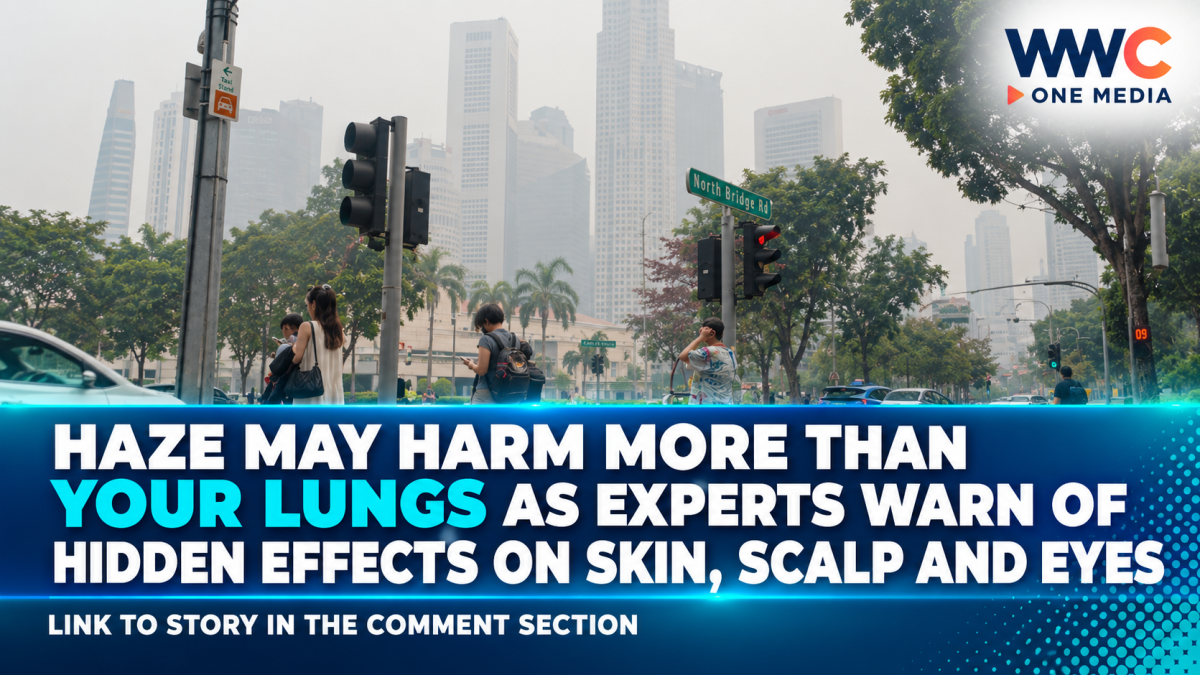
Singapore’s haze warnings usually focus on breathing problems, but medical experts are drawing attention to another side of prolonged exposure: irritation and inflammation affecting the skin, scalp and eyes.
Fine particulate matter, particularly PM2.5, is the main pollutant of concern during haze episodes. These microscopic particles can penetrate deep into the respiratory system, while exposure to polluted air can also aggravate irritation of the eyes, nose, throat and skin. Singapore’s Ministry of Health says short-term haze exposure among healthy people can cause temporary irritation, which generally resolves on its own.
Dermatologists quoted in recent reports say pollution can weaken the skin barrier, contributing to dryness, sensitivity, itching and inflammation. People with existing skin conditions such as eczema or rosacea may be particularly vulnerable because their skin barrier is already compromised.
Pollution can also contribute to oxidative stress and inflammation at the skin’s surface. During hazy periods, experts recommend keeping skincare routines simple rather than adding aggressive treatments. Gentle cleansing, regular moisturising and continued use of broad-spectrum sunscreen can help protect the skin barrier. Strong exfoliants, chemical peels and newly introduced harsh active ingredients may be better avoided when skin is already irritated.
The eyes can be another early warning point. Haze particles may cause redness, dryness, watering, itching and a gritty sensation. Singapore’s National Environment Agency notes that exposure to particulate matter can irritate the eyes, nose and throat even among otherwise healthy people.
The scalp and hair may also be affected when airborne pollutants settle on the skin and hair. Prolonged exposure can leave the scalp feeling irritated or uncomfortable, particularly when combined with sweat and frequent outdoor exposure.
But experts stress that reducing exposure remains more important than buying specialised “anti-pollution” products. The Singapore government’s current haze guidance recommends reducing prolonged or strenuous outdoor activity as air quality deteriorates, while vulnerable groups such as children, elderly people, pregnant women and those with chronic heart or lung conditions should take additional precautions.
Singapore experienced an unhealthy 24-hour PSI reading in September 2026, prompting government agencies to activate haze-related measures and issue regular advisories. The NEA has also emphasised that the health impact depends not only on the pollution level but also on a person’s health status and the duration and intensity of outdoor activity.
For people spending long periods outdoors during poor air quality, reducing exposure time is therefore a key protective measure. When conditions become severe, following the official PSI and PM2.5 advisories is more useful than relying only on whether the sky looks visibly smoky or whether a burning smell is noticeable.
At home, closing doors and windows when outdoor air quality worsens and using appropriate air-conditioning or air-cleaning measures can reduce the amount of haze entering indoor spaces. Wet-cleaning surfaces can also help remove particles that have settled indoors.
For most healthy people, short-term exposure does not automatically mean serious illness. Singapore’s MOH says that short-term exposure generally causes temporary irritation rather than major health problems, although individual responses vary and people who develop significant symptoms should seek medical advice.
The bigger concern is what happens when unhealthy air becomes persistent. As haze episodes become more frequent or prolonged, the question is no longer simply how to protect the lungs—but how much repeated pollution exposure could affect the body’s other protective barriers, from the eyes and skin to the scalp.