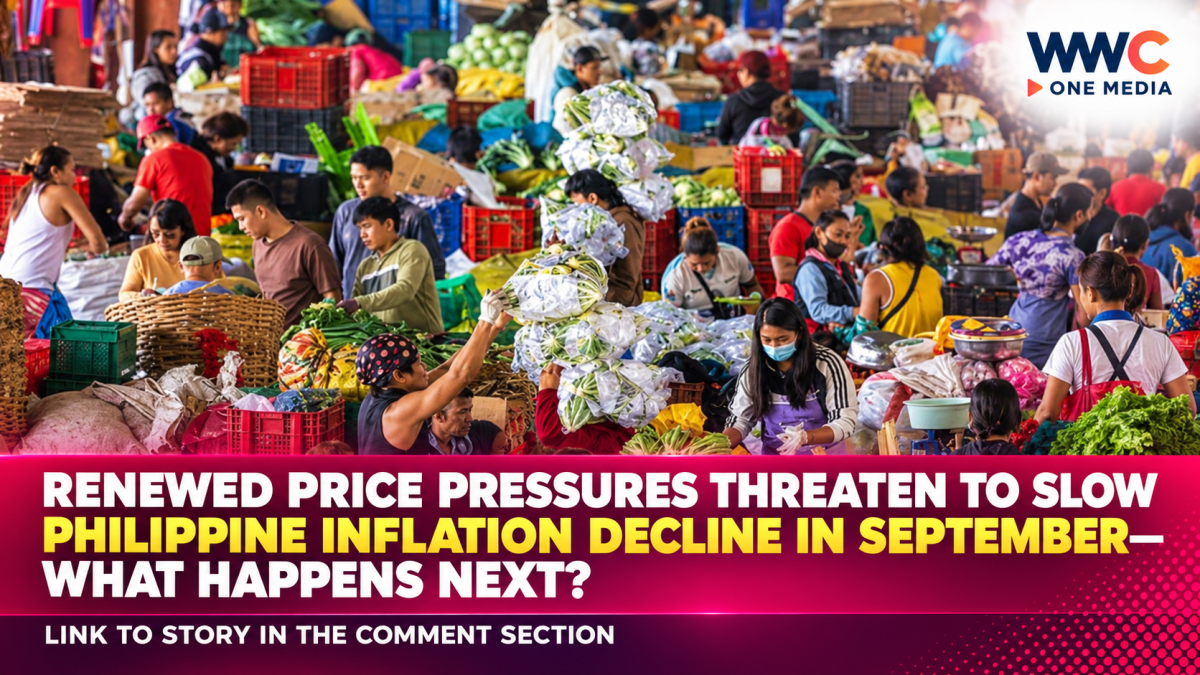
MANILA — The Philippines’ inflation trend could lose momentum in September as renewed pressure from fuel, food, transport and other costs threatens to limit the recent easing in consumer prices.
Inflation slowed slightly to 6.1% in August from 6.2% in July, but economists and analysts are increasingly watching whether rising global oil prices and domestic cost pressures could prevent a more meaningful decline this month. The August reading also left average inflation for the first eight months of 2026 at 5.2%, well above the Bangko Sentral ng Pilipinas’ 2% to 4% target range.
The renewed pressure comes as global crude prices have climbed sharply amid continuing geopolitical tensions in the Middle East. Higher oil prices can feed directly into pump prices and transportation costs while also increasing production, logistics and distribution expenses across the economy.
Recent market analysis has already pointed to oil as a potential reason for inflation to peak earlier than previously expected. UnionBank, for example, projected September inflation at 6.5% under assumptions including oil at $94 per barrel and the peso at around ₱63.30 to the US dollar.
The pressure is particularly significant because transport was already among the fastest-rising components of the August consumer price index. Transport inflation accelerated to 13.5% in August from 11.9% in July, according to the Philippine Statistics Authority. Food and non-alcoholic beverages, housing and utilities, and transport were the three biggest contributors to overall inflation during the month.
Food prices, meanwhile, remain another important source of uncertainty. Although overall food inflation eased in August as vegetable prices declined and fish-price increases moderated, rice inflation accelerated partly because of higher logistics costs. The BSP has also warned that weather disturbances and the developing El Niño episode could create additional supply-side pressures.
The inflation outlook has become even more important for monetary policy after the BSP raised its benchmark Target Reverse Repurchase Rate by 25 basis points to 5% on September 23. The central bank said the measured increases in interest rates were intended to anchor inflation expectations and prevent price pressures from becoming more widespread.
The move signals that the BSP remains focused on inflation risks even as economic growth faces pressure. Analysts have noted that weaker economic activity could argue against additional monetary tightening, while persistent inflation could require policymakers to keep rates elevated for longer.
BMI, the research unit of Fitch Solutions, has said it expects Philippine inflation to accelerate toward the end of the year. It has also warned that weaker growth and elevated inflation could weigh on household consumption and complicate the policy outlook.
The currency is another variable to watch. A weaker peso can make imported fuel, food and other goods more expensive, potentially adding to domestic inflation. On September 24, the peso weakened to ₱62.735 against the US dollar amid concerns over slower Philippine growth and higher inflation expectations.
The Philippines is therefore facing a difficult combination: price pressures remain elevated while economic growth is showing signs of weakness. The OECD has also highlighted weather-related disruptions, global energy-market volatility and exchange-rate movements as risks that could generate renewed inflationary pressure.
For consumers, the immediate impact could be felt through fuel, transportation, food distribution and other everyday expenses if these pressures persist. For businesses, higher input and financing costs could complicate investment and pricing decisions.
The bigger question now is whether September will mark another small step toward easing inflation—or the point when oil, weather and currency pressures begin to push the Philippine price outlook in the opposite direction.