
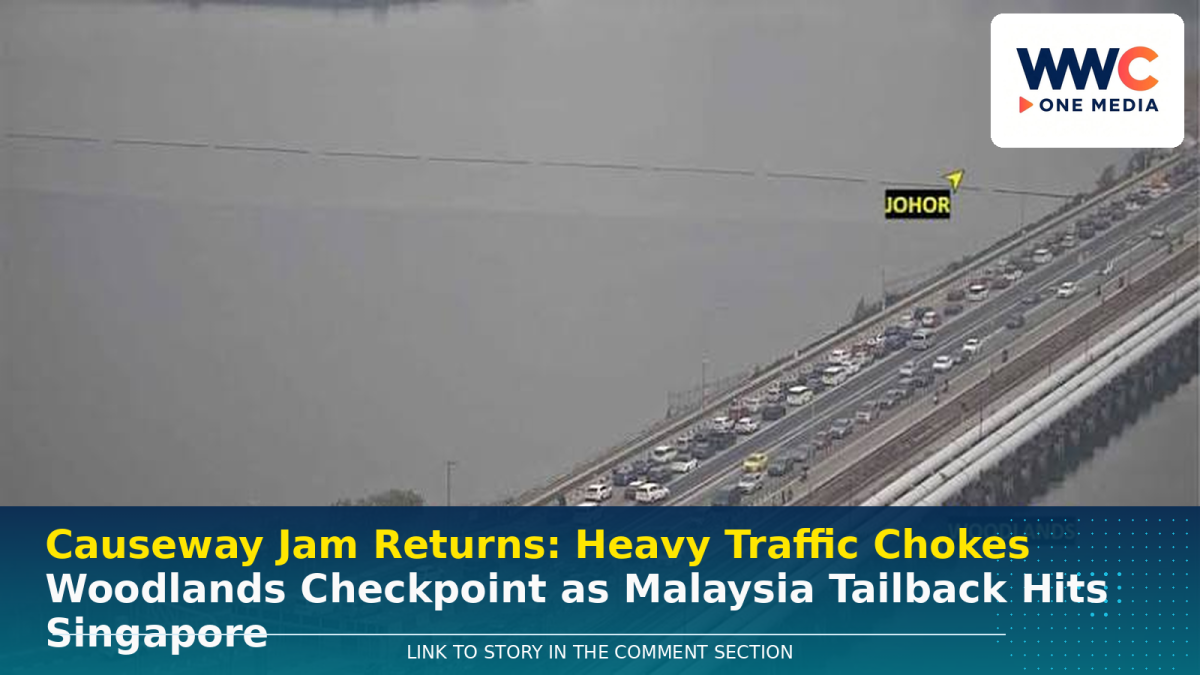
SINGAPORE — Motorists heading into Malaysia on Sunday, Sept. 6, found themselves caught in heavy traffic at Woodlands Checkpoint as congestion from across the border backed up onto the Causeway.
The Immigration & Checkpoints Authority (ICA) said at about 9.42am that there was heavy departure traffic at Woodlands Checkpoint due to a traffic tailback from Malaysia.
By around 11am, traffic camera checks cited by AsiaOne showed the congestion stretching along nearly the entire Causeway.
The latest jam comes as Singapore’s September school holidays drive another surge in cross-border travel — and after authorities had already warned motorists to brace for very heavy traffic at both Woodlands and Tuas checkpoints.
Nearly the entire Causeway hit by congestion
The latest traffic buildup affected motorists travelling from Singapore towards Johor.
According to the AsiaOne report, congestion on the Causeway had become extensive by late morning, stretching along nearly the entire crossing.
However, the situation was different on roads leading towards the checkpoint.
Traffic along Woodlands Crossing and Woodlands Flyover remained smooth at the time of the report, suggesting that the main bottleneck was concentrated closer to the Causeway and immigration crossing.
The problem is coming from across the border
The ICA attributed the heavy departure traffic to tailback from Malaysia.
That distinction matters because congestion at Woodlands Checkpoint does not always begin on the Singapore side.
Traffic can quickly build up when vehicles face slower movement after crossing the Causeway, creating a chain reaction that stretches back towards Singapore.
The Causeway is one of the world’s busiest international land crossings, and congestion on either side can rapidly affect the entire route.
For motorists, that means reaching Woodlands Checkpoint does not necessarily mean the worst of the journey is over.
The bottleneck can extend across the border and continue into Johor.
School holidays are putting extra pressure on the border
The latest congestion was not entirely unexpected.
ICA had warned that very heavy traffic was expected at both Woodlands and Tuas checkpoints from Sept. 4 to Sept. 14, 2026, during Singapore’s September school holidays.
The authority urged travellers to plan ahead and expect longer waiting times during peak periods.
The warning came after more than 2.1 million travellers crossed the Woodlands and Tuas checkpoints during the National Day weekend in August.
On Aug. 7 alone, more than 593,000 travellers cleared immigration through Singapore’s land checkpoints, while motorists departing during peak periods faced waits of up to three hours because of traffic tailbacks from Malaysia.
Sunday’s jam follows another day of Causeway congestion
Saturday was also marked by heavy traffic at Woodlands Checkpoint.
On Sept. 5, ICA similarly warned of heavy departure traffic caused by tailback from Malaysia.
Traffic camera checks that morning showed congestion stretching along the Causeway.
The situation later improved, with ICA saying in an afternoon update that the heavy departure traffic had subsided.
The back-to-back congestion highlights how quickly traffic conditions can change during the current school holiday period.
Why the September rush could mean longer waits
Several factors are contributing to the pressure at Singapore’s land checkpoints.
These include:
- September school holiday travel
- Increased weekend trips to Johor
- Traffic congestion from Malaysia
- Peak-hour surges
- Enhanced security checks at Singapore checkpoints
ICA said security checks at all checkpoints have been stepped up since Feb. 28, 2026, in light of the heightened global security environment and developments in the Middle East.
The authority warned that travellers should therefore expect longer waiting times during peak travel periods.
How bad can the queues get?
Recent travel periods provide an indication.
During the National Day weekend, ICA recorded more than 2.1 million crossings at the Woodlands and Tuas checkpoints.
At peak periods, motorists experienced waits of up to three hours for immigration clearance because of traffic tailbacks from Malaysia.
That does not mean every motorist travelling during the September holidays will face a three-hour wait.
Traffic conditions can vary significantly depending on:
- Time of day
- Day of travel
- Traffic conditions in Johor
- Immigration clearance volumes
- Weather
- Accidents or incidents
- Security checks
But the latest Sept. 6 congestion shows that ICA’s warning of heavy traffic was well-founded.
Woodlands may be jammed, but other roads remained smooth
One notable detail from Sunday’s congestion was that not every road approaching the checkpoint was affected.
AsiaOne’s checks of Land Transport Authority traffic cameras showed that:
- The Causeway was heavily congested
- Woodlands Crossing remained smooth
- Woodlands Flyover remained smooth
That can change quickly, however.
When congestion builds closer to immigration clearance areas, queues can eventually spread backwards and affect connecting roads.
Motorists should therefore avoid relying on an earlier traffic observation before beginning their journey.
A smooth approach to Woodlands does not guarantee a smooth crossing into Malaysia.
ICA urges travellers to plan before leaving
ICA has consistently advised travellers to check traffic conditions before heading to Singapore’s land checkpoints.
During the current September holiday period, motorists are encouraged to:
- Plan journeys in advance
- Travel during non-peak periods where possible
- Check traffic conditions before departure
- Follow instructions from ICA officers
- Maintain lane discipline
- Avoid queue-cutting
ICA has also encouraged eligible travellers to use QR codes generated through the MyICA mobile application for faster passport-less immigration clearance.
However, faster immigration clearance does not eliminate congestion caused by heavy vehicle volumes or tailbacks from across the border.
Why Causeway traffic is becoming a bigger travel story
The Causeway is no longer just a daily commuting route.
It is also a major weekend and holiday travel corridor for Singapore residents heading to Johor for:
- Shopping
- Dining
- Short holidays
- Family visits
- Tourism
That demand can surge dramatically during weekends and school holidays.
When large numbers of motorists make similar travel plans at the same time, the result can be kilometres of slow-moving traffic.
And once Malaysia-bound traffic slows after the border, the congestion can immediately affect vehicles still waiting on the Singapore side.
That is exactly what ICA cited on Sunday: tailback from Malaysia.
What motorists should expect next
The latest congestion could continue to fluctuate throughout the day.
ICA’s advisory covering the Sept. 4 to 14 school holiday period means travellers should continue expecting heavier-than-usual traffic at both Woodlands and Tuas checkpoints.
Conditions may improve during some parts of the day, as happened on Sept. 5, but congestion can return quickly when travel demand rises again.
For motorists planning a trip into Johor, the safest assumption is simple:
Do not expect a normal crossing during peak hours.
The latest Sept. 6 jam showed that even when roads approaching Woodlands Checkpoint appear smooth, the Causeway itself can become heavily congested due to traffic conditions further ahead.
The real problem may not be where the queue begins
For motorists staring at a long queue on the Singapore side, it can be easy to assume the delay is caused entirely by Woodlands Checkpoint.
But Sunday’s advisory tells a different story.
The ICA said the congestion was caused by tailback from Malaysia.
That means the traffic problem was extending beyond Singapore’s immigration lanes.
And during a busy school holiday weekend, one slowdown can create another — until the queue stretches across one of Southeast Asia’s busiest international crossings.
The roads into Woodlands were still moving.
But nearly the entire Causeway was jammed.
And with several more days of school holiday travel ahead, the bigger question is not whether the traffic will clear.
It is how soon the next wave of motorists will bring the queue back.
WWC ONE MEDIA J.M.D




Leave a Reply