Labor groups are pressing the Department of Labor and Employment (DOLE) to act on the stalled Metro Manila wage increase as the legal dispute surrounding Wage Order No. NCR-27 continues to affect workers.
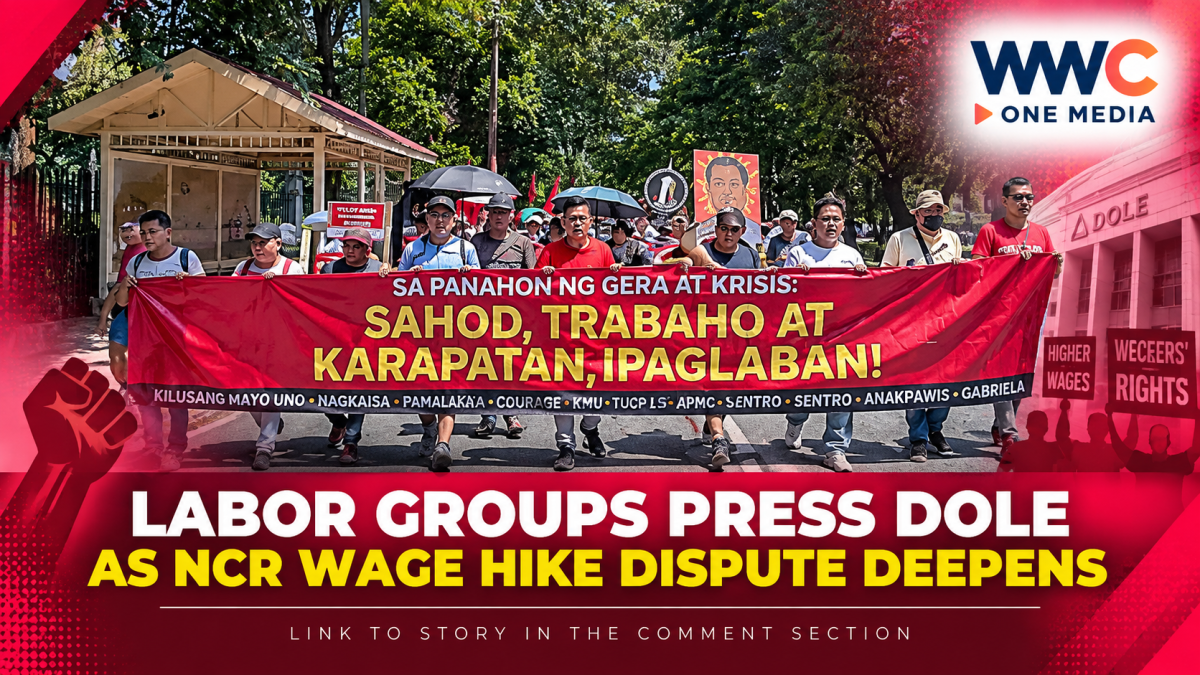
Members of the Kilusang Mayo Uno (KMU) held a lightning rally at the DOLE main office on September 21, demanding action on the wage order and criticizing what they described as the delayed implementation of the increase. The protest was part of broader labor mobilizations held during the anniversary of Martial Law.
The controversy centers on Wage Order No. NCR-27, which approved an ₱85 daily minimum wage increase for workers in the National Capital Region. The increase was structured in two tranches: ₱60 was scheduled to take effect on July 25, 2026, while the remaining ₱25 was scheduled for January 20, 2027.
However, implementation was halted after the Regional Trial Court in Pasig issued an injunction against the wage order following a legal challenge from employers. The wage board’s order remains subject to litigation.
Nagkaisa Labor Coalition said the delay had already resulted in an estimated ₱3.3 billion in foregone additional wages between July 25 and September 21, based on 50 working days. The coalition estimated that around 1.1 million minimum wage earners would have benefited from the ₱60 first tranche.
At the same time, the wage dispute has taken another turn with Wage Order No. NCR-28. The new order provides a ₱60 daily increase and took effect on September 26, raising the minimum wage for non-agricultural workers from ₱695 to ₱755. Agricultural workers and certain smaller establishments covered by the order received an increase from ₱658 to ₱718.
DOLE has maintained that NCR-28 was intended to provide workers with an immediate wage adjustment while the legal issues surrounding NCR-27 remain unresolved. The department has also said it will implement NCR-27 once the court removes or modifies the injunction.
Labor organizations, however, continue to challenge the handling of the two wage orders. Some groups have questioned whether the newer ₱60 increase could affect the legal status or eventual implementation of the original ₱85 adjustment, while others have urged the Supreme Court to resolve the pending petitions involving NCR-27.
The National Wages and Productivity Commission currently lists both wage orders, noting that NCR-27 remains under continuing litigation. If the full NCR-27 order were ultimately implemented, its total increase would reach ₱85 per day, compared with the ₱60 increase under NCR-28.
With the new wage order already in effect and the original ₱85 order still tied up in court, the dispute over Metro Manila’s minimum wage remains unresolved, leaving workers and employers watching the next legal developments closely.